

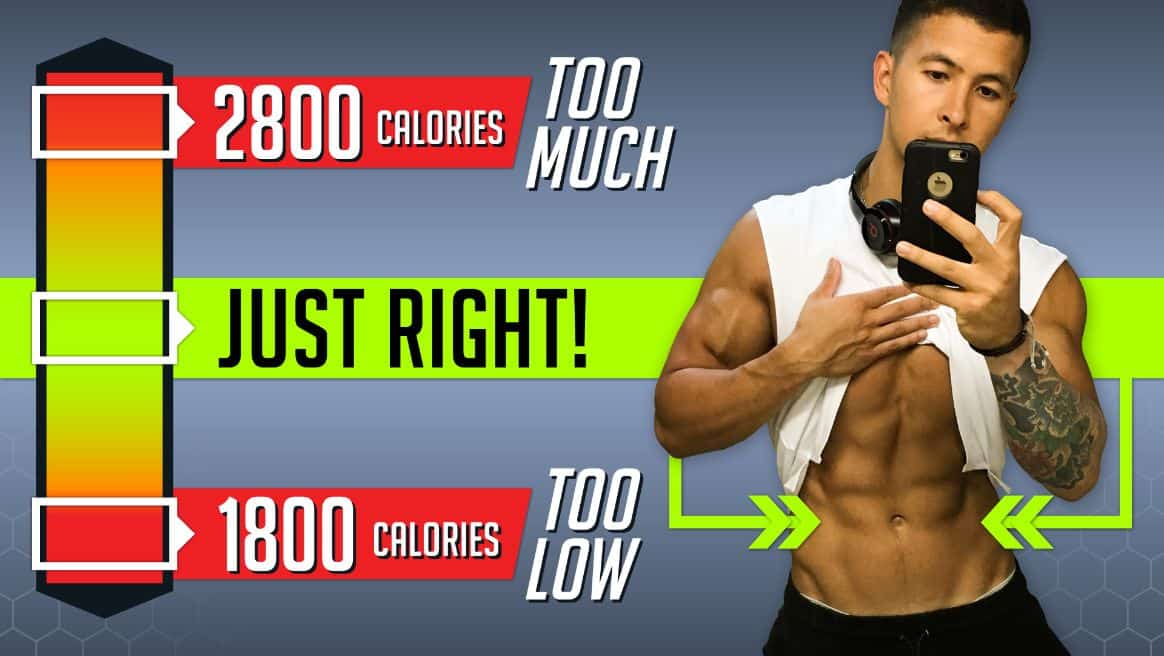
How Many Calories To Eat Daily To Lose Weight? (GET THIS RIGHT!)
If you want to know how many calories to eat to lose weight, start with a target you can actually hold long enough to create a weekly trend.
This guide shows how to estimate your starting number, choose a sustainable deficit, and adjust in small steps so you lose fat while protecting strength and muscle.
Of course, by now, you should know that you need to take care of both nutrition and training to see the best results. So, before we begin:
Click the button below to take my analysis quiz to discover the best program for you:
↓
Quick Answer
To lose weight, you must eat fewer calories than you burn (your TDEE).
A good approach is to start with an estimate, track the weekly trend, then adjust in small steps until the scale moves at a steady pace.
- Start with an estimate (it’s a starting point, not a perfect number).
- Track weekly progress and adjust only after you have enough data.
- Aim for a steady pace rather than an extreme cut you can’t maintain.
- Keep lifting and protein consistent to minimize muscle loss.
- If progress stalls for 2–3 weeks, make a small adjustment and reassess.
Deficit Picker: Choose Your Starting Aggressiveness
- Mild: Slower, easiest to sustain, best if you’re already lean or busy.
- Moderate: Best overall for most people.
- Aggressive: Short-term only — useful for a mini cut, not months.
Step 1: Estimate
The first step is to get a general estimate of the number of calories you should eat per day to start experiencing fat loss, which we can then refine later on. To get this estimate, there’s an overwhelming number of different calculators and equations out there for us to choose from.
But keep in mind that even with the most “accurate” of equations out there, like the Katch-McArdle method, for instance, they are all estimates. They are not 100% accurate methods for pinpointing exactly how many calories you need to lose weight.
Instead, they all require some fine-tuning based on how you progress. And this is what we'll do in step 2.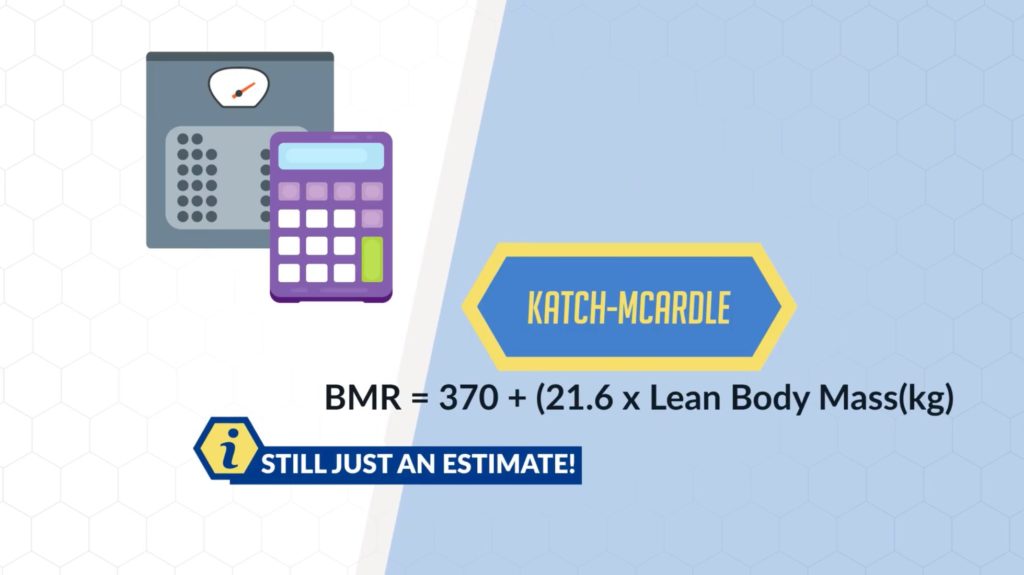
So, to avoid overcomplicating things, what I’d recommend is to instead use a very simple calculation to get into a calorie deficit.
For most people, this will be sufficient to put them in a calorie deficit. And is a good starting point for us to then refine. So, what's this calculation? Well, all you do is take your body weight in lbs and multiply that by anywhere from 10-13. If you’re:
- Younger, leaner, and/or more active - Go with the higher end of this range
- Older, less lean, and/or less active - Go with the lower end of this range
This will then give you a good estimate of how many calories you should start eating per day to lose weight.
For a more personalized starting point, use our calorie deficit calculator which factors in your activity level and body composition.
Step 2: Set Weight Loss Goal
The next step is to determine what an appropriate rate of weight loss would be based on your specific body. This is important for us to get right. Eating too few calories and losing weight too quickly causes 2 issues:
- This is unsustainable for most of us in the long run AND
- Puts us at a greater risk for muscle loss
And of course, we want to avoid losing muscle not only because it will take away from our physiques once we do lose a bunch of weight (we want to end up lean and muscular, not just skinny!), but also because of what happens after we diet.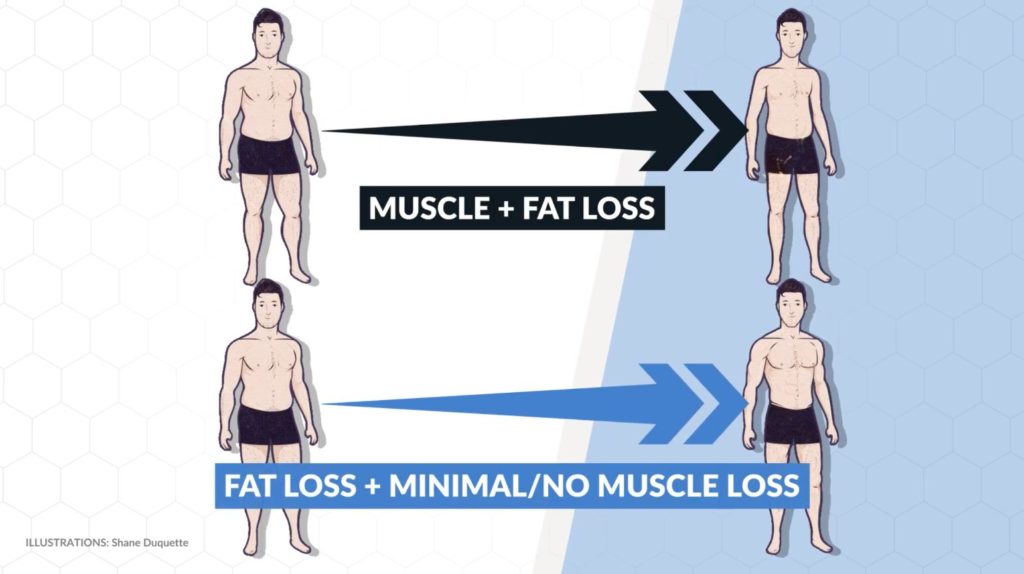
By the way: a huge thanks to Shane Duquette over at Bony To Beastly for the illustrations above!
Now, recent 2020 research found that muscle loss when dieting is associated with an increased appetite and increased weight regain after the diet is over. In turn, leading subjects to end up in a worse position than they were before they started their diets.
Meaning that for the best chances of both short AND long-term success, maintaining your muscle mass as you diet down needs to be your priority. We can do this by using an appropriate rate of weight loss. And a good general guideline to stick to is one recommended by the work of Dr. Helms and colleagues: a rate of weight loss of no more than 0.5-1% of bodyweight loss per week.
How To Calculate The Weight Loss Rate That'll Minimize Your Muscle Loss
However, taking this guideline one step further... We know based on past research that the more body fat you have to lose, the faster you can lose fat without risking muscle loss. This is why we see a range with Dr. Helms’ recommendation.
So, you can refine and personalize this guideline a little. How? Well, by using a simple calculation developed by Greg Nuckols. Which is to take your current estimated body fat percentage, and divide that by 20. The number you get will be a more accurate % rate of weight loss that you’ll want to aim for per week. And will enable you to maximize fat loss with minimal or no muscle loss.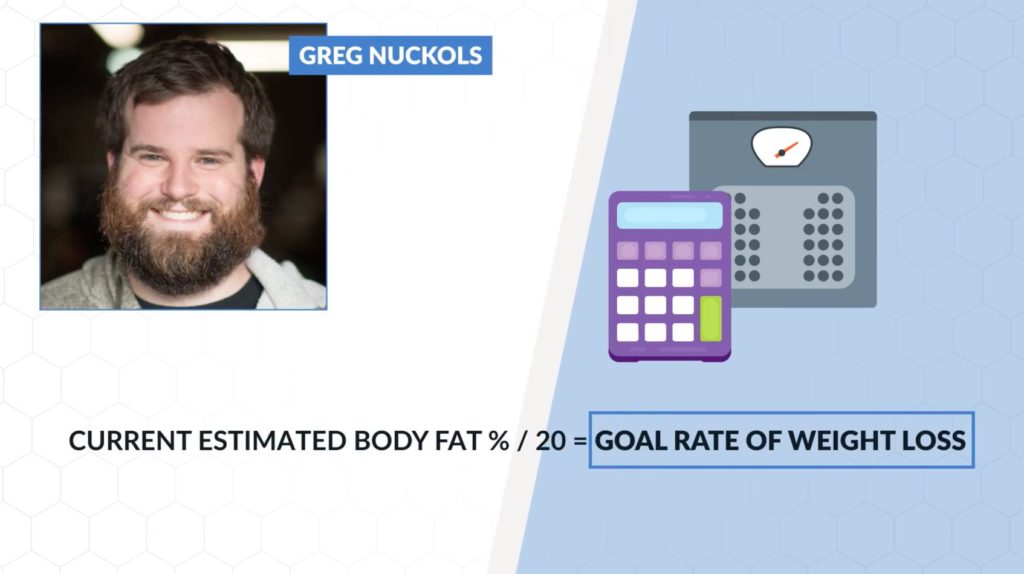
So, for example, let's say you're currently at 20% body fat. This means you can safely lose around 1% of your body weight per week. For a 190lb individual, this would equate to a rate of weight loss of roughly 2 lbs (1.9 lbs) per week.
But in another case, for a 180 lbs individual at 15% body fat, using the bodyfat%/20 calculation they could safely lose around 0.75% of your body weight per week. Which is a slower rate of weight loss of around 1.5 lbs (1.43 lbs) per week.
So, take a look at this body fat chart and estimate your current body fat. Then, use this simple calculation to determine what the appropriate rate of weight loss would be for you.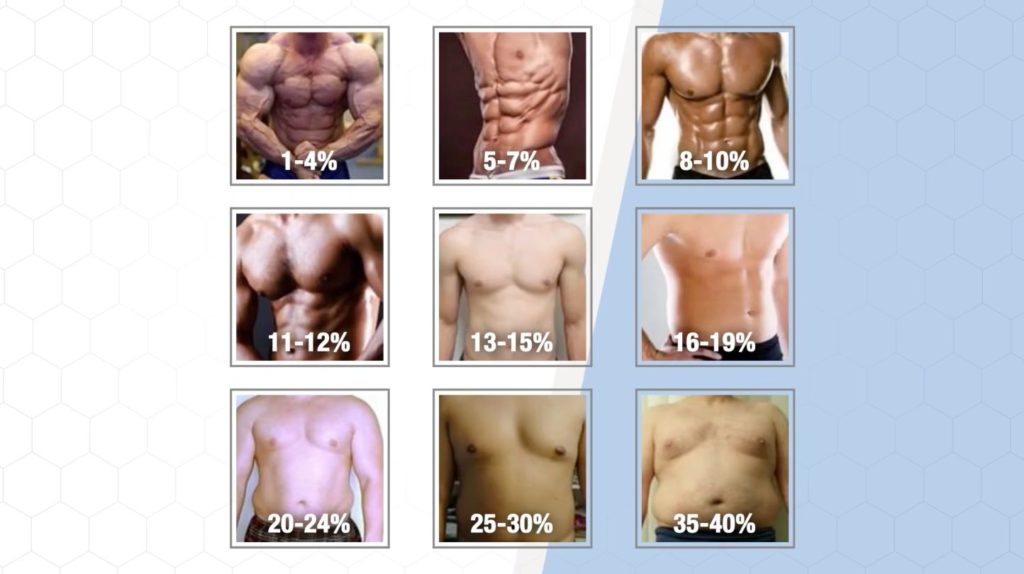
If you're struggling to peg yourself to a definite body fat percentage, and wish to get more guidance on this, don't worry. Our 3-on-1 coaching program can help. I and my team are going to personally determine the rate of weight loss most suitable for you - and help you achieve your dream physique. Sounds good? Let's get started then:
Click the button below to find out more about the 3-on-1 coaching program:
↓
Step 3: Fine Tune
Once you have this number down, it’s time to implement it. In step 3, you also want to fine-tune it. This is where you want to start adhering to and monitoring your daily calorie intake as well as tracking your morning bodyweight.
We’re going to use this data to fine-tune your calorie intake. Doing so means how many calories you need to eat is no longer a rough estimation that'll allow you to lose weight. But, instead, much more accurate and fine-tuned to you specifically. To do so, after about 4 weeks of tracking, analyze the data. We can often dismiss Week 1 since most people will lose quite a bit of water weight during this initial period of dieting.
But in the following weeks, we’ll want to look more closely at the numbers. More specifically, how has your weight changed relative to your calorie intake?
What Does This Look Like In Real Life?
For instance, let’s say Steve (15% body fat, 160lbs) has a goal rate of weight loss of about 1 lb per week. And is eating at 2,000 calories a day to try to achieve that. But after implementing this, from weeks 2 to 4, he found that his actual weight loss was slower than his target. He only lost on average about 0.5lbs per week. This is good, of course. But it does indicate that his estimated calorie intake was a little too high. To adjust, and if he felt he could do so, he would simply drop his calories by another 10% or so (~100-200 calories) to hit his target rate of weight loss more accurately.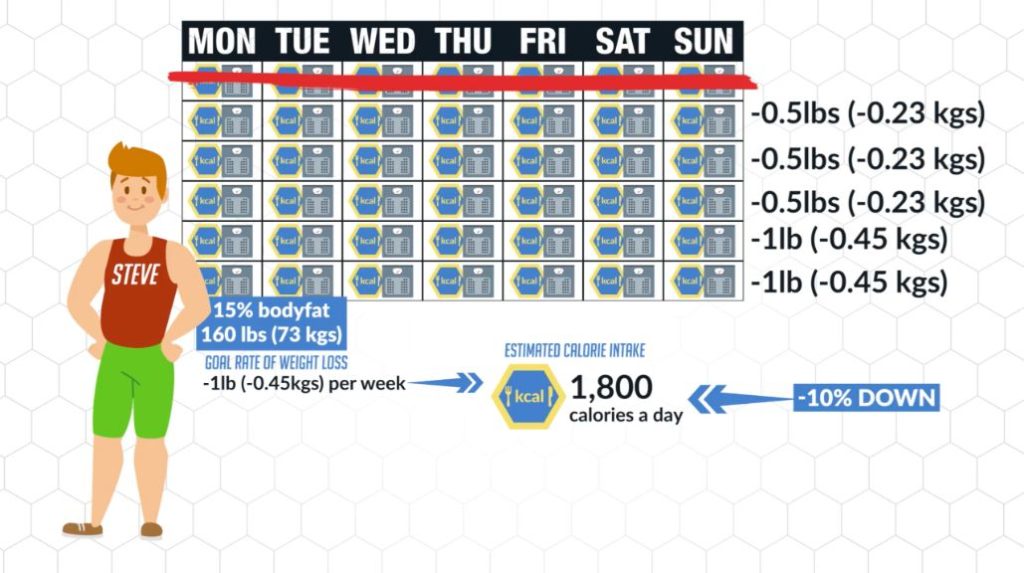
On the other hand, if Steve was losing weight too quickly, so for example 2+lbs per week, then he’d do the opposite. And increase his calories slightly (+200 calories) to slow this down. This will help him minimize the risk of muscle loss.
And that’s basically all there is to it. You put your original estimate into practice and then fine-tune this number based on how your weight progress throughout the weeks. But also take into consideration how sustainable the calorie deficit you’re adhering to is. Science aside... If your recommended rate of weight loss is 2lbs per week, yet you just personally find this pretty difficult and too aggressive of a deficit, then slow it down. It’s not a race. Stick with a rate of weight loss that’s sustainable for you. That’s ultimately what’s most important for long term success.
Quick Adjustment Rule (After 2–3 Weeks)
- If your weekly average isn’t moving — reduce calories slightly or add a small amount of steps
- If you’re dropping too fast and performance is crashing — increase calories slightly
- If your trend is steady and workouts feel good — keep the plan the same
Avoid Making This Mistake When Dieting!
Now, with that being said, there’s one all too common mistake that people make with these 3 steps. And this is something you’ll want to avoid. This is none other than attempting to eat back the calories you burn from your workouts or from exercise in general. Doing so is problematic for a couple of reasons.
The Number Of Calories You Burn Is Almost Always Overestimated
The first reason is that fitness trackers, cardio machines, and even us as humans, are terrible at estimating the calories we've burned through exercise - which is terrible news for weight loss. In fact, these figures tend to be overestimated by at least 20%!
In a typical weights workout, for example, you actually don’t burn very many calories at all. Illustrating this is a 2019 paper covering the calorie-burn during a full-body resistance training workout. The average calorie-burn is as follows:
- Male subjects - About 160 calories during the workout
- Female subjects - About half that at about 80 calories
Plus, an additional yet insignificant 8 calories burned from the “afterburn” effect (post-exercise energy consumption).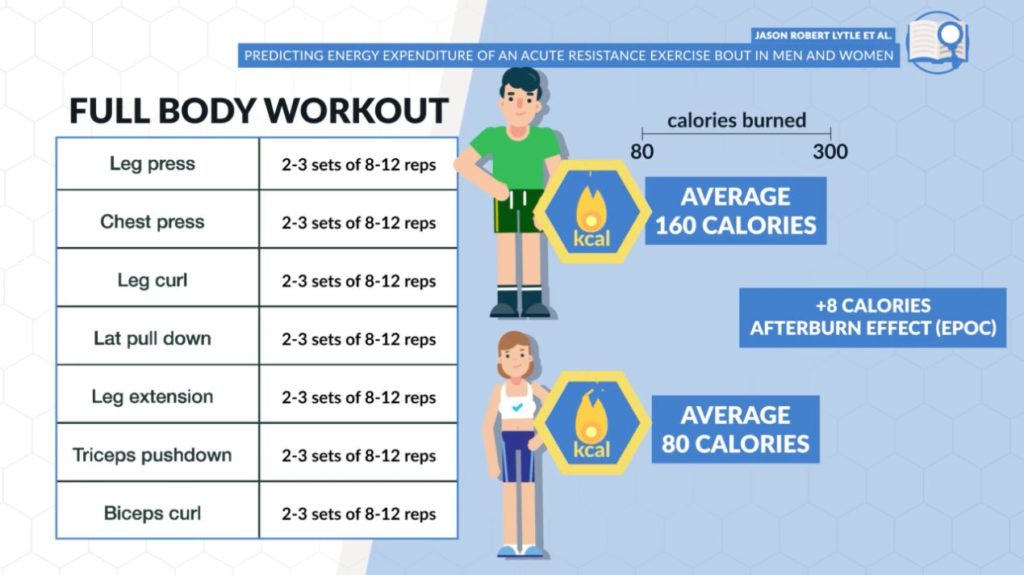
This isn’t much at all. And becomes problematic because after a grueling leg day, for example, oftentimes we’ll have a “cheat meal” or just eat everything in sight. We think that we’ll easily offset it from the calories burned during the big workout. But this just isn’t true. Cardio is admittedly a little better at burning calories. But still, people overestimate the calories they burn here just as bad.
The Calculation Already Accounts For Your Activity Levels
And secondly, the 3 step method I previously went through already takes into account and averages your activity levels! Therefore, the calories you burn from physical activity and throughout the day are already accounted for. And if you do end up losing weight too quickly because of your additional exercise? Then you would just adjust this by eating more as we discussed earlier.
So just keep it simple. The only times when this would potentially apply is if you’re an athlete and have a big sports event, competition, or two-a-day training session coming up. These are indeed events where you would burn considerably more calories than you normally would. In this case, it would be advised and recommended to bump up your intake for this day mainly with carbs to fuel your performance.
'How Many Calories Should I Eat To Lose Weight?' Action Plan
- Estimate your starting calories (maintenance and a small deficit).
- Stick with it for 14–21 days while tracking a 7-day average weight.
- If the trend is too slow or too fast, adjust by ~100–200 calories/day and repeat.
- Keep protein and strength training consistent to reduce muscle loss while cutting.
And that’s pretty much all there is to it! This does however assume that you’re tracking accurately in the first place and being consistent with your activity levels. So don’t overlook these other variables as well as they are just as important.
And for a step-by-step program that shows you how to easily set up, track, and monitor each of these important variables while equipping you with a science-based nutrition and training program designed to transform your body as efficiently as possible, then:
Click the button below to take my analysis quiz to discover the best program for you:
↓
Anyways that’s it for today guys! I hope you all enjoyed it! Don’t forget to give me a follow and connect with me on Instagram, Facebook, and Youtube as well, in order to stay up to date with my content.
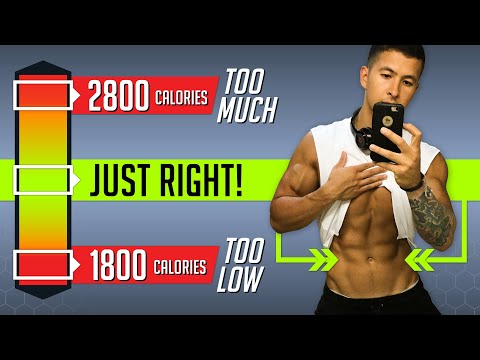
By the way, here’s the article summed up into a YouTube video:
FAQs
How many calories should I eat to lose weight?
You need to eat below your maintenance calories (your TDEE). Start with an estimate, track your weekly trend, then adjust in small steps if progress is too slow or too aggressive.
What’s a realistic rate of weight loss per week?
A steady pace you can sustain while keeping training quality high is usually best. If your strength, sleep, or hunger tanks, the deficit is probably too aggressive.
How do I find my maintenance calories (TDEE)?
Maintenance calories are based on your TDEE (your total daily burn including activity). Use an estimate to start, then calibrate it using your 2–3 week weight trend. If you want the quick distinction between TDEE and BMR and which one matters for targets, see TDEE vs BMR.
Why am I not losing weight even though I’m eating less?
Most often, intake is higher than you think (snacks, oils, weekends) or activity is lower than assumed. If your 2–3 week trend is flat, change one variable (food or activity) and reassess.
Should I cut calories or add cardio to lose weight?
Either works if it creates a deficit, so choose what you can sustain. Many people do better with a small calorie cut plus more daily movement because it’s lower fatigue.
Do I need to track macros, or are calories enough?
Calories drive the deficit, but protein makes fat loss easier by protecting muscle and improving fullness. If tracking everything is too much, track calories + protein first.
What if I feel hungry all the time on my calorie target?
That’s usually a sign the deficit is too steep or food choices aren’t supporting satiety. Increase protein/fiber and consider a smaller deficit you can stick to consistently.
Do I need different calories on training days vs rest days?
You don’t have to — consistency works well for most people. If you do cycle calories, keep the weekly average aligned with your goal so you don’t erase the deficit.
How long should I wait before adjusting calories?
Give it 2–3 weeks of consistent tracking to see a real trend, since daily weight fluctuates a lot. If the weekly average isn’t moving, make one small adjustment and reassess.
How do I avoid losing muscle while dieting?
Keep resistance training consistent and keep protein high while dieting. If strength is falling fast, the deficit is likely too aggressive or recovery is too low.