
Bulk Vs Cut: Which Should You Do First? (3 Questions To Ask)
If you’re stuck on bulk vs cut, you don’t need a debate — you need a clear starting call you can commit to for 8–12 weeks.
This guide gives you a simple decision framework (based on leanness, goal, and adherence), plus what to track so you know when you’ve earned the right to switch phases.
For bulk vs cut, it's quite simple. All that your body needs in order to look “better”, is a combination of:
- More muscle AND
- Less body fat
And there are 3 approaches you can take to achieve this:
- Bulk first
- Cut first
- Body recomp
As you can tell, to build a better-looking physique, you don't only have 2 choices: bulk vs cut. You also have a third option: body recomp.
Below, I explore the pros and cons of each approach (i.e. bulk vs cut vs body recomp) so you can decide which is best for you.
By the way: if you're looking for a training program that'll help you gain muscle and lose fat in the quickest possible way, I've got just the thing for you. Every BWS program is designed to help you transform your physique in the most time-efficient manner. And best of all? It's all rooted in science. For more information on how BWS programs can help you to look better - FAST:
Click the button below to take my analysis quiz to discover the best program for you:
↓
Quick Answer: Should You Bulk Or Cut First?
If you’re relatively lean and under-muscled, a controlled bulk usually makes sense first.
If you’re carrying more body fat and want to lean out, start with a cut — and if you’re newer to training, a short recomp phase can also work.
- Bulk first if you’re lean and want to prioritize building muscle.
- Cut first if you’re carrying more fat and want to get leaner sooner.
- Recomp is most realistic for beginners or people returning after time off.
- Run the approach long enough to see a trend (not a 1-week decision).
- If unsure, default to maintenance for 2–3 weeks, then reassess.
Maintenance simply means eating at your current TDEE without intentionally gaining or losing.
Decision Tree: Choose Your Starting Phase
-
If you’re gaining weight easily and your waist is trending up: Start with a cut.
-
If you’re fairly lean and your strength has stalled for months: Start with a lean bulk.
-
If you’re new/detrained or carrying extra body fat: Start with recomp (maintenance or small deficit).
What To Track (So You Don’t Second-Guess Weekly)
-
Weekly average weight (not single weigh-ins).
-
Waist 1x/week (same conditions).
-
2 key lifts: If strength nosedives, your cut is too aggressive; if nothing improves in a bulk, you’re not fueling enough.
Approach 1: Bulk First
The first option is to start with a gaining phase. Or, what most people know as a “bulk”. Now when I say bulk, I don’t mean a crazy dirty bulk where you put on 20lbs in a month. I’m referring to a very slow and controlled calorie surplus. This is where the primary goal is to gain muscle at a steady rate - without gaining unnecessary amounts of additional fat.
Depending on your:
- Training experience
- Genetics AND
- Size of your calorie surplus
...Typically about 50-85% of the weight that you put on during this phase will be muscle. And the rest often inevitably being fat gain.
The idea here is that you spend some time in this phase, pack on a bunch of muscle, and then, later on, commit to a cut to strip off your body fat. And reveal the muscle that you put on.
Pros And Cons Of Bulking First Instead Of Cutting
The pros of this approach are:
- You’ll look bigger and better in clothes
- You’ll get stronger much faster
- You’ll have a bunch of energy and your workouts with generally be more fun
The cons of this approach however are:
- You’ll accumulate more body fat than you currently have now. You won’t look as impressive without a shirt on. Plus, all the extra fat will hide much of the muscle that you’re building.
- You have to be willing to go into a calorie deficit to strip off the fat afterwards
- Your risks for health ramifications increase when your body fat gets past 20%
Who Is This Approach Most Suitable For?
Now based on the pros and cons of this approach, it’s typically ideal for:
- Those who are currently skinny with very little muscle
- Those who want to prioritize building muscle and strength first rather than getting lean
- Those who have a relatively low body fat percentage of around 10-15%
Here’s one of our Built With Science members, Eshan. He used this approach to first bulk up and increase his weight by 20lbs (158 to 178) over the course of 4 months. And then, over the course of another 4 months, stripped off the excess fat to reveal his new gains at a much leaner and stronger 150lbs.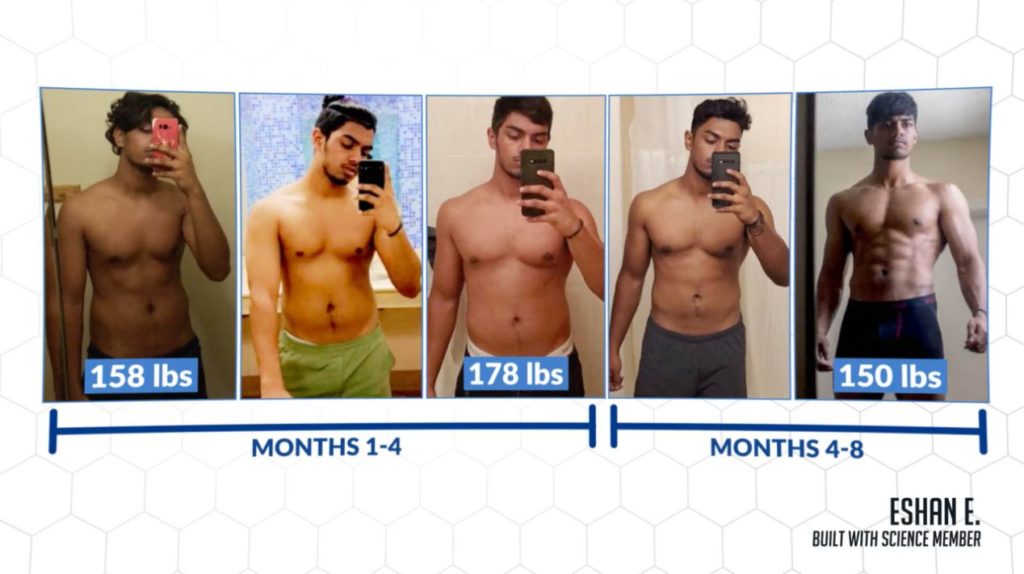
As you can see, he has significantly more muscle and less fat than he did when starting out despite actually weighing less now.
Is Bulking First A Suitable Approach For Those With A Higher Body Fat Percentage?
Do note that even if you’re let’s say at 15% body fat, this option may still be a viable and effective option for you. In the past, it was a common belief and even something I advocate in my content, that your body puts on muscle more effectively when you’re under 15% body fat. This idea has been recently challenged by researcher Eric Trexler and colleagues. After having done an in-depth analysis of the current research, they've found that there’s currently not enough compelling evidence to suggest that you’ll boost muscle growth by getting lean beforehand. Further research would definitely help clarify this.
That said, I wouldn’t advise gaining past 20% body fat because of potential health ramifications. But just be aware that even if you’re not very lean, a gaining phase is likely still a good option for you if you’re well aware of the pros and cons I mentioned earlier.
Approach 2: Cut First
The next option is a cut (or a fat loss phase) where the main goal is to maintain muscle while decreasing your body fat. This approach will require a calorie deficit.
Regardless. It should be noted that some individuals, primarily:
- Beginners
- Detrained individuals, OR
- Those at a high body fat %
...May be able to build a little bit of muscle throughout this process.
The idea here is that you’d get lean first, and then decide to either:
- Maintain your leaner body OR
- Commit to a gaining phase to then focus more on adding more size
Pros And Cons Of Cutting First Instead Of Bulking
The pros of this approach are:
- You’ll look better without clothes. And you'll see results much faster in terms of muscle definition and decreased body fat. Which often comes with more confidence, motivation, and enjoyment of the process.
- It puts you in a good position to gain afterwards if you’re starting out with a relatively higher body fat %
- If you’re at higher body fat or inexperienced, you’ll likely be able to build some muscle as you cut
- Once you do lean down, you’ll get a better sense as to whether or not you think you have enough muscle or would like to focus on adding more
The cons of this approach however are:
- Your strength gains won’t progress as well
- Your workouts will likely be less enjoyable
- If you’re skinny, you’ll look leaner afterwards but probably not as much muscle as you’d like
Who Is This Approach Most Suitable For?
Based on the pros and cons of this approach, it’s ideal for:
- Those who have a relatively higher body fat % (over 15%)
- Those who want to first prioritize losing fat and getting lean rather than putting on more size
Here’s one of our members, Anthony. He used this approach to first strip off the excess fat he was carrying and reveal his muscle definition. He’s now transitioning to a lean bulk to focus more on adding size.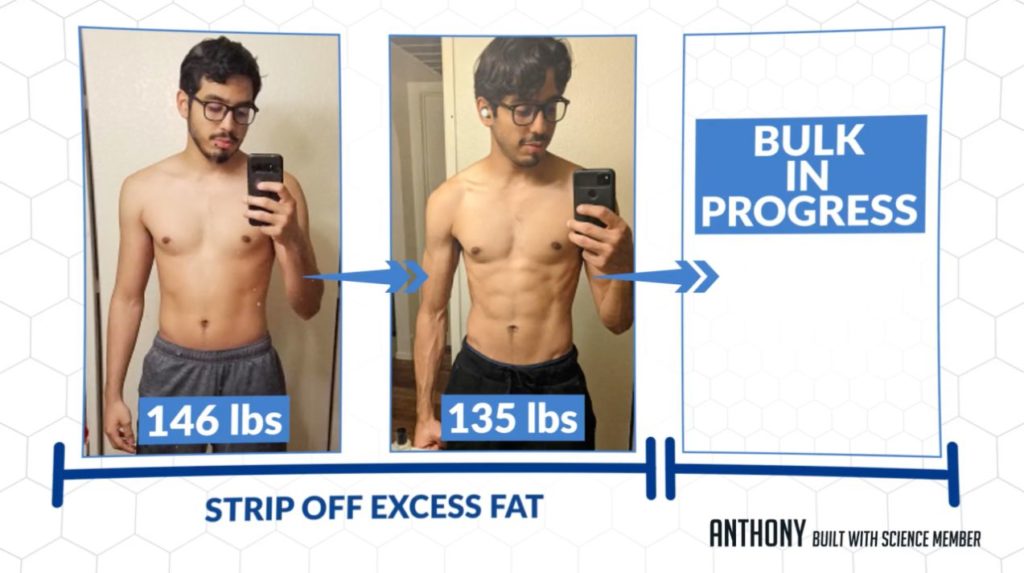
And here’s another example from another Built With Science member, Andrew. Likewise, he first leaned down by losing over 30 lbs of fat. And then shortly after committed to a gaining phase where he’s now slowly gaining more muscle and size.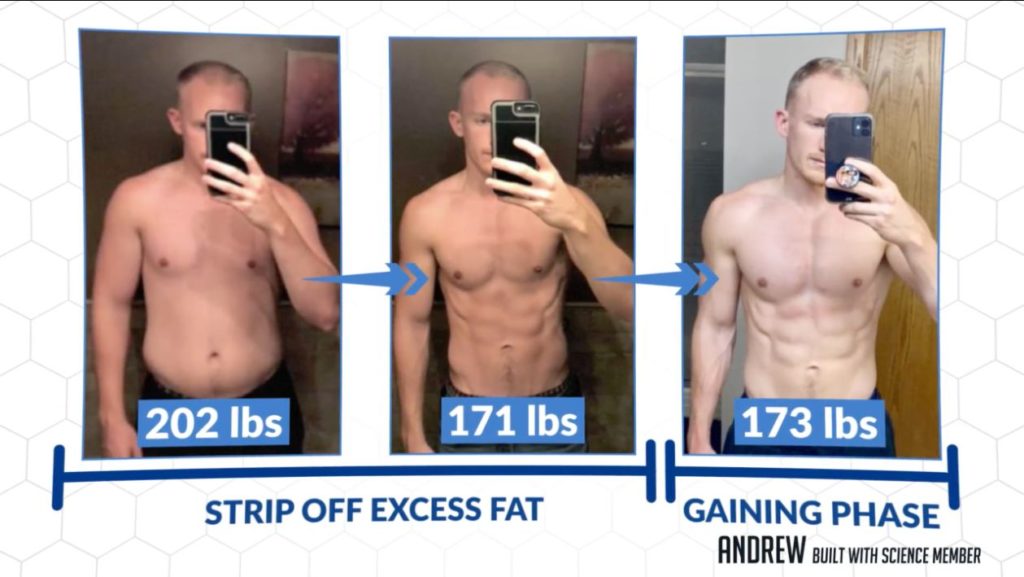
Inspired by the results Anthony and Andrew have gotten? Then our 2-on-1 coaching program will be of interest to you. This is where my team of qualified personal trainers and nutritionists (plus myself!) will guide you through the process of achieving your dream physique in the most science-backed, time-efficient way possible. Find out more here:
Click the button below to find out more about the 2-on-1 coaching program:
↓
Approach 3: Body Recomposition
The last approach is what’s called a body recomposition (i.e. body recomp). This is a term used to describe simultaneous fat loss and muscle growth, with your weight remaining fairly stable throughout the process. To implement it, typically you would eat at a very small calorie deficit (~250 calories below maintenance).
Now, obviously, this is a win-win scenario. And is something that everybody wants. But the rate at which we can achieve this diminishes quickly with training experience and is highly individual. It’s also very difficult to measure and assess progress since:
- You can’t rely on the weight scale as much
- Visual progress tends to be quite slow AND
- It’s hard to tell how long this phase will last
It's also worth noting that as we mentioned earlier, in many cases you still are able to achieve a simultaneous muscle gain and fat loss with a normal cut where your bodyweight decreases.
Pros And Cons Of Body Recomp
The pros of this approach are:
- Get to build muscle and lose fat at the same time
The cons of this approach however are:
- Highly individual (some see better success with recomp than others)
- Difficult to measure
- Visual progress is quite slow
- Hard to tell how long it will last (usually a few months)
- Many individuals can still build muscle & lose fat on a normal cut
Who Is This Approach Most Suitable For?
Nonetheless, it still is a viable option primarily for:
- Beginners, detrained individuals, or those who have never trained/dieted optimally and are sitting at around 15% body fat
- Those who want to prioritize getting bigger and stronger while slowly getting leaner
But if you do decide to go with this option, you’d be best to take it on with an expert. Or, at least a well-guided program, so that you’re not left spinning your wheels for a couple months.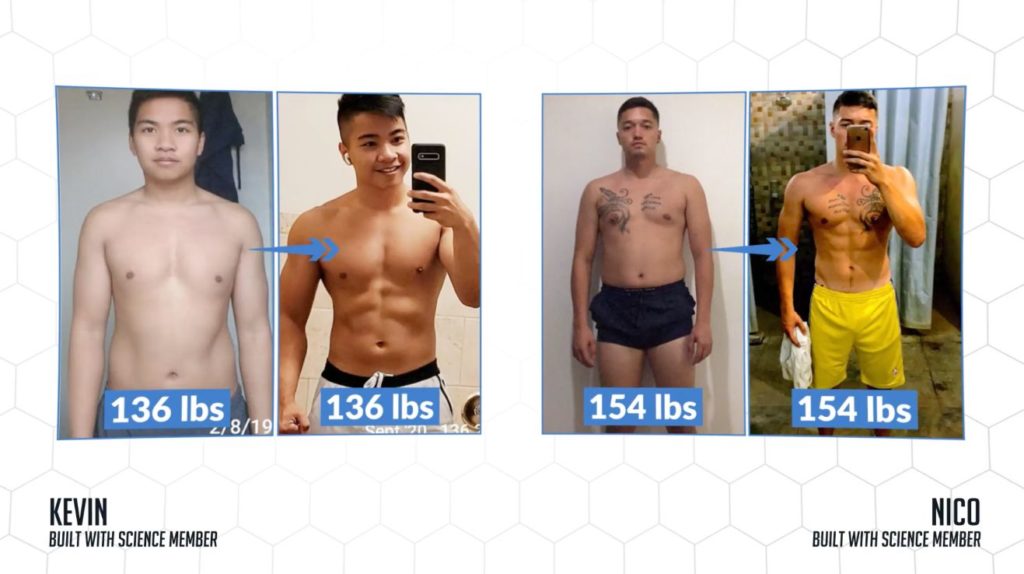
To illustrate an example of this, here are two Built With Science members, Kevin and Nico. They weigh the exact same in their before/after photos - but look significantly better in the after photo because of the body recomposition they went through to increase their muscle mass while decreasing their excess fat.
Bulk Vs Cut Vs Body Recomp: Questions To Ask If You Still Can't Decide
So, now that you have the 3 options laid out for you, you should have a good indication as to what approach would be best for you, your body, and your goals.
Still confused? Not sure which option to choose between bulk vs cut vs body recomp? Don't worry. First, ask yourself these 2 simple questions.
- What is your main goal and what are you most excited for right now?
- What is your current body fat %?
If your main goal right now is to add more size, build muscle, gain strength, and set PR’s in the gym, then a gaining phase is probably the best option as long as your current body fat % is around 10-15%. But if it’s closer to 20% or above that, then start with a cut.
If your main goal and what you’re most excited about right now is to get lean, reveal your muscle definition, and see visual progress quickly, then a cutting phase (i.e., a calorie deficit) is probably the best option. Obviously you can choose to cut regardless of what your body fat percentage is.
And then, ask yourself if you're eligible for a body recomposition.
- Am I eligible for a body recomp?
As we mentioned earlier, this is best suited for true beginners and detrained individuals sitting around 15% body fat with the main goal to build muscle and strength while slowly getting leaner. It can be tricky. And you’ll likely need guidance, but it is an option to consider.
Whichever path you choose, start by finding your baseline with our calorie calculator.
Common Mistake: Switching Too Early
If you change direction every 1–2 weeks (e.g., changing between bulk and cut every week), you can never get a clean signal. Pick a phase, run it long enough to see a weekly trend, then adjust using your tracking — not emotions.
Key Takeaways
- If you’re already lean, a slow lean bulk usually makes sense; if you’re higher body fat, cut first so the bulk is more productive.
- Beginners can often recomp at maintenance or a small deficit — you don’t always need a hard bulk to get started.
- Use weekly averages: scale weight, waist, and gym performance — then adjust calories in small steps.
- The “right” choice is the one you can stick to for the next 8–12 weeks — consistency wins.
The End Goal Is The Same No Matter The Approach You Pick
Now, to conclude, just realize that whatever it is you choose (i.e. bulk vs cut vs body recomp), it’s just the starting point to your journey. The end point and end goal are all the same: a lean muscular physique with more muscle and less fat than you currently have. And you can eventually get their regardless of what approach you choose.
So, try not to overcomplicate things. This is especially if you’re a complete beginner just getting started in the gym. Eat primarily whole food sources, learn your movements, focus on progressing them to continuously challenge your body, and you will transform overtime.
And for a step-by-step all in one program that uses science to not only start you out with the best initial approach for you and your body, but then also guides you through the different phases needed afterwards to achieve a lean and muscular physique just like it has done successfully for thousands of our members, then:
Click the button below to take my analysis quiz to discover the best program for you:
↓
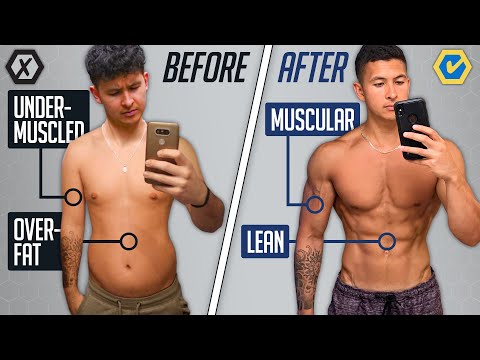
By the way, here’s the article summed up into a YouTube video:
FAQs
How do you know whether to bulk or cut first?
Decide based on your current body composition and your primary goal. If being leaner is the priority, cut first; if building size is the priority and you’re already fairly lean, bulk first.
What if you’re "skinny fat"?
A short cut first or a recomp approach usually works best. The goal is to reduce body fat while building strength so you’re set up for a cleaner bulk later.
How big should a bulk surplus be?
Smaller surpluses are usually easier to manage and reduce unnecessary fat gain. If the scale is jumping quickly, the surplus is likely too large.
Can beginners build muscle while cutting?
Often yes. Beginners and people returning after time off can sometimes recomp for a period, especially with high protein and consistent lifting.
How long should you commit before switching?
Long enough to see a real trend — usually several weeks, not a few days. Frequent switching is one of the fastest ways to stall progress.
How do you find maintenance calories?
Maintenance calories are based on your total daily burn (TDEE). If you want the detailed breakdown of TDEE vs BMR, see TDEE vs BMR.
What’s the simplest option if you’re unsure?
Hold maintenance for 2–3 weeks while training consistently and tracking weight trend. Then choose bulk or cut based on whether you want to push leaner or bigger.