The PERFECT Full Body Workout Routine (3x/Week: 6 Exercises + 1 Bonus)
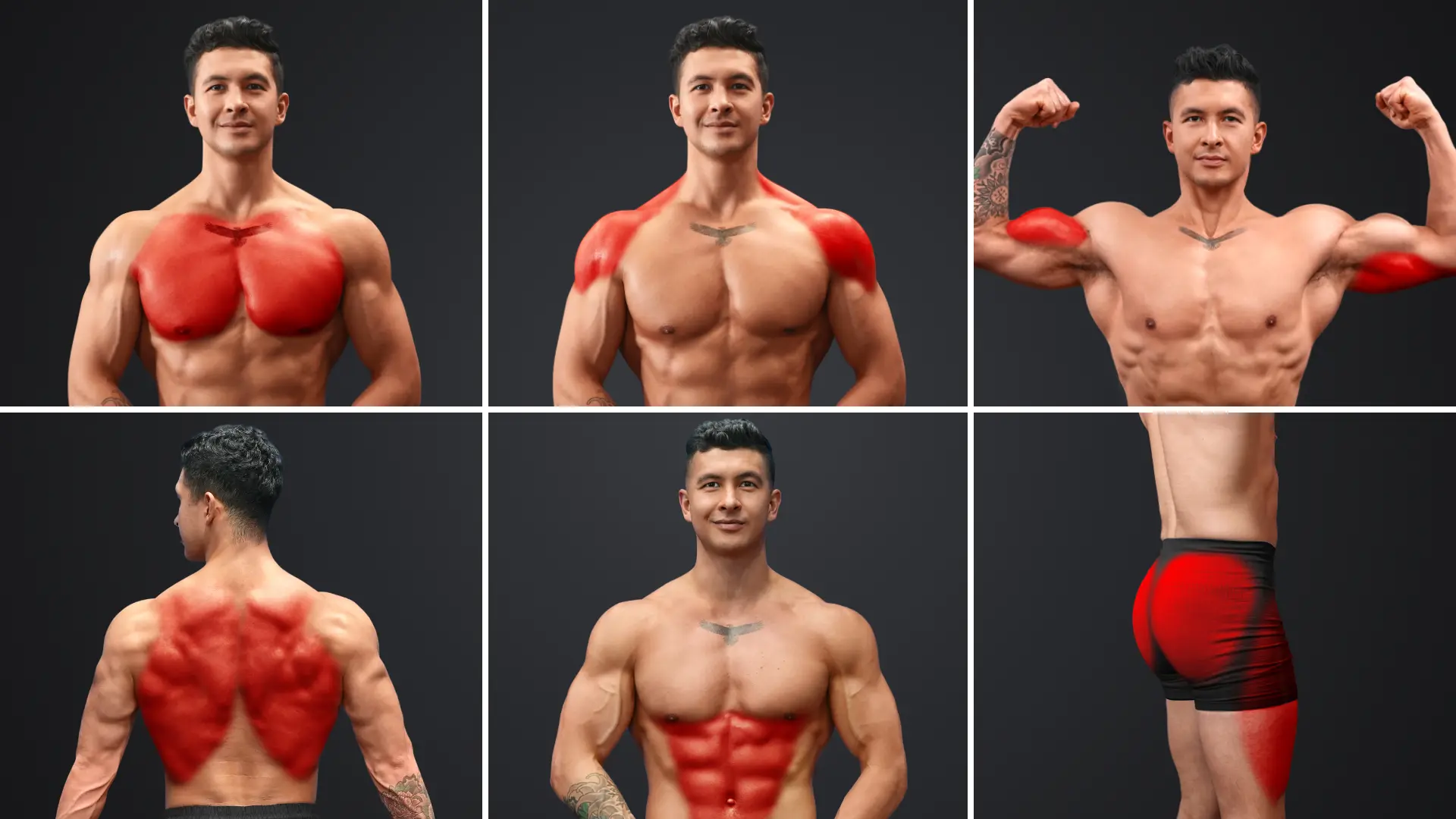
Three days a week. Full body. Best bang for your time. This full body workout routine gives you 6 main lifts, plus 1–2 add-ons customized to you.
After 10+ years of testing every workout split and coaching thousands of people, I’ve found that a full body workout routine run 3x/week gives you the best results in the least amount of time. But the key is choosing the right exercises, and modifying them based on your body structure, your experience level, and your goals.
This full body workout routine is built around 6 main exercises, plus a bonus one we’ll customize based on your weak points.
The 10-Sec Version
If you want the best results in the least amount of time, I’ve found that a full body workout routine run3x/week works incredibly well — as long as you choose the right exercises and modify them based on your body structure, your experience level, and your goals. In this article, I share a full body workout routine that consists of 6 main exercises, plus one bonus add-on you customize based on your weak points.
The 6 Main Exercises + The Bonus Add-On
Here’s the foundation of this full body workout routine:
- Low Incline Dumbbell Press
- Squat
- Pull-Ups
- Romanian Deadlift
- Cable Row
- Lateral Raise Superset
Bonus: Choose one or two accessory movements to add your full body workout routine based on your weak points.
The Full Body Workout Routine
1) Low Incline Dumbbell Press
Let’s start with a unique exercise that’s been shown to grow your chest just as well as flat presses … but with the added bonus of more upper chest growth for our full body workout routine.
It’ll even strengthen your shoulders and triceps as well, making it a no-brainer inclusion in our full body workout routine.
It’s the low incline dumbbell press — one of the only 2 chest exercises that actually grew my chest.
Pick An Incline That Actually Matches Your Body (Sternum Test)
To find it, stand against a wall with your back flat. Place your phone on your sternum.
- If your sternum angle is flat like me, use an incline of just 1 notch up from the bottom otherwise your shoulders can end up dominating the movement.
- If it angles back towards you, you have a steeper sternum and will want to use a bit higher of an incline, usually 2 notches up from the bottom, to unlock more of your chest fibers.
Elbows: Stop Pressing In A Wide “T”
Most people also press in a wide “T” shape, which limits how deep you can go and is a riskier position for shoulder injury. Instead, tuck your elbows slightly so you’re pressing more like an arrow. You’ll get a deeper stretch and your shoulders will instantly feel better.
Sets & Reps
If you’re a beginner, you’re going to feel a little wobbly at first — and that’s completely normal. Stick with higher reps, around 10–15 per set. It gives you more practice and keeps you safe while your stabilizers catch up.
Women actually have an advantage here: you can usually handle higher reps better than men, and so that same 10–15 rep range works really well.
But once you’re more advanced, treat this as a strength builder by going heavy and dropping the reps down to 6–8 per set.
2) Squat
Next up in our full body workout routine is a true lower-body cheat code.
An exercise that’s been shown to grow your glutes just as good as this, strengthens your lower back just like this does, grows your quads just as well as this does, and even strengthens and grows your inner thighs like this… but it does it all in one. The barbell squat.
The Goblet Squat First (To Clean Up Form)
Before you load up a barbell, there’s a massively underrated exercise almost everyone can use to clean up squat form: the goblet squat. Holding the dumbbell at your chest forces you to properly brace your core, and fixes 90% of squat problems instantly. And you can go surprisingly heavy.
I’d stick with this in your full body workout routine until you can hit 10 reps with at least half your bodyweight. If you weigh one-sixty, that’s an eighty-pound dumbbell.
Then Personalize The Barbell Based On Your Goals
Once you can do that, the barbell becomes the easiest way to add more weight — and you can personalize it based on your goals.
- If you want to bias your quads, elevate your heels. This lets your knees travel forward and keeps your torso upright, which your natural hip and ankle structure might not allow on its own.
- Whereas if you want more glutes and less quads, set a box or bench behind you. Push your hips back and keep your shins vertical to get a deeper stretch on your glutes. Lightly tap the box, then drive your hips forward.
And for all barbell squats, don’t be afraid to go heavy — 6 to 10 reps works great in this full body workout routine.
Your Hip Structure Determines Your Best Stance
Here’s something most people don’t realize: the hip structure you're born with determines what squat stance will feel the best. In my experience, half the people I train feel strongest around shoulder-width with a slight toe-out. A smaller group prefers a narrow, toes-forward stance, and the rest do best going a bit wider with the toes way out. Try all three and stick with whichever feels the most natural for your full body workout routine.
3) Pull-Ups
Next up in our full body workout routine is the exercise that, if you get really strong at, completely transforms your back and just looks really impressive: the pull-up.
Quick Targets
Let’s quickly set some targets. For men, zero to one rep is beginner, two to five is average, six to twelve is fit, thirteen to twenty is advanced, and twenty-plus is elite. For women, here’s the equivalent. (On-screen graphic.)
If You Can’t Do A Single Pull-Up Yet: Follow This Exact Progression
If you can’t do a single pull-up yet, start with inverted rows for your full body workout routine to build your back and core strength. Once you can do 3 sets of 15 with good form, move to neutral grip pull-ups. Most people are stronger using this grip.
You can use a band or assisted machine at first if you need it, but the goal is to work up to sets of ten unassisted. Once you can do that, you’re ready for overhand pull-ups in your full body workout routine. You might only get half as many reps as you can with the neutral grip, but that’s fine. Just aim for 3 sets of five to eight strict reps.
Then once you can do more than 8 reps, start adding weight with a dumbbell or belt. And every time you hit 8 clean reps again, add a bit more. Here's more guidance on going from 0 to 10+ pull-ups.
4) Romanian Deadlift
Now let’s shift to an exercise in your full body workout routine that strengthens your lower back, builds your hamstrings, and has even been shown to reduce hamstring injury risk — the Romanian deadlift.
Stance + How To Find It
Unlike the squat, almost everyone performs best with their feet about hip-width and toes forward. A quick way to find your stance is to hop in place and “stick” the landing — where your feet naturally land is usually the sweet spot.
Learn The Hinge (Without Bending Through Your Back)
From here, the key is to learn to hinge at your hips rather than bend through your back.
The easiest way to learn this is to start with a single dumbbell held by the ends. Brace your core and push your hips back while keeping a slight bend in your knees. Keep shoving your hips back until your hamstrings reach their limit, then drive your hips forward to return to the top.
Once that feels natural, switch to two dumbbells. Keep the weights close to your legs as you slide them down your thighs and shins — this shortens the moment arm and takes unnecessary stress off your lower back.
Want More Glutes Instead Of Hamstrings?
If you want to target more glutes instead of hamstrings in your full body workout routine, bend your knees a little more on the way down to resemble more of a squat.
Sets & Reps
Stick to higher reps here, in this full body workout routine: 10–15 per set.
For advanced lifters, the barbell becomes more convenient once you’re strong enough. But don’t chase a range of motion your structure isn’t built for. Some people can reach the floor; others like me have to stop below the knee. Both are correct as long as your back stays flat and you feel tension in your hamstrings.
I also prefer going heavier here for 6–10 controlled reps, since I’ve found higher reps with heavy loads here are just very taxing on the body.
5) Cable Row
Alright, now let’s finish off your back in our full body workout routine.
We already trained some of the back muscles with pull-ups earlier, but to build real thickness through your mid and upper back you need to target the muscles between your shoulder blades. Most people don’t train these properly, which is often why their back looks flat, feels tight, and can’t support good posture.
To fix this, grab a lat pulldown bar with a grip just outside shoulder width. Plant your feet high on the platform, sit tall, and brace your core. Now think of your hands simply as hooks attached to the bar. You’re going to instead pull with your elbows, driving them back in an arrow shape as you squeeze your shoulder blades together. Keep pulling until the bar almost touches your lower chest then control the weight back down.
I prefer lighter weight for 10–15 reps here because it’s such an easy movement for other muscles to take over.
If You Can’t Feel Your Back Working
Start by keeping your arms straight and practice letting your shoulder blades slide forward to open up, and then squeezing them back together. Once you can feel that mid-back engagement, keep that same motion and add the full row.
If You’re More Advanced
Use that same shoulder blade drill, but this time do your normal reps to failure and then use it just as a burnout after your normal reps to guarantee your back muscles actually reach failure. You should be able to get 3–5 more squeezes at the end of your sets during your full body workout routine.
6) Lateral Raise Superset
The last exercise before we get to personalizing the full body workout routine is for your shoulders.
Most people think the shoulders just have 3 heads, but research shows they actually have up to 7 different heads. Which just means you’ll want to hit them from all sorts of angles with some of the best shoulder exercises out there.
We’ll do that by using a lateral raise superset. Start by laying your back on a high incline bench, and doing a lateral raise by sweeping your arms out in a wide Y shape. This hits the mid and even some of the front segments to help widen your shoulders.
Once you reach failure there, flip around, lean your chest on the bench, and with the same dumbbells raise them out and slightly back.
This still targets the side but now shifts more tension to the rear segments to round out the back of your shoulders. And if you’re a lady and lying chest-down is uncomfortable, put a sweater or pad under your torso to create space between your chest and the bench.
In all cases, you’ll wanna go higher reps here, 10–20 per set. But use light weight. Even for me, 25 lbs is more than enough.
Accessory Picker (The Bonus)
Okay, so those six exercises give you the full-body foundation. This is where your full body workout routine gets tailored: choose one or two accessory movements to match your goals.
- Dead bug
- Hip abduction
- Calves
- Arm superset
- Upper traps shrugs
- Upper chest fly
Beginner: Dead Bug
If you’re a beginner, I recommend adding a core exercise like the dead bug to your full body workout routine.
You flatten your lower back into the floor, slowly extend your opposite arm and leg, then bring them back together. Building core strength here will instantly help your squats and deadlifts feel more stable.
Glute Focus: Hip Abduction
If you wanna focus more on glutes, target the glute medius with a hip abduction machine in your full body workout routine. This is the muscle that creates the upper glute shelf most people want but rarely train directly.
Calves
Next, if you pick this as your accessory for your full body workout routine, I respect you… Calves. Just know that research shows straight-leg calf raises grow them better than bent-knee variations, so standing calf raises or a leg press version works best.
Arms
If you want more arm development, go with an arm superset. Something like incline dumbbell curls for the biceps, followed by an overhead extension to grow the parts of the triceps we haven’t trained yet.
Upper Chest (Common Advanced Weak Point)
Lastly, the one area where I’ve found almost all advanced lifters are weak is the upper chest. My favorite exercise here is a fly, which you can also do on the pec deck, but instead of having your back straight up, lean forward which will line up the tension perfectly with the highest part of your upper chest to help thicken it.
Copy/Paste Routines (Beginner / Glute Emphasis / Advanced)
Beginner (Full Body Workout For Beginners)
Low Incline Dumbbell Press: 3 Sets x 10-15 Reps
Goblet Squat: 3 Sets x 10-15 Reps
Neutral Grip Pull-Ups: 3 Sets x 5-8 Reps
Dumbbell Romanian Deadlift: 3 Sets x 10-15 Reps
Cable Row: 3 Sets x 10-15 Reps
Lateral Raise Superset: 3 Sets x 10-20 Reps
Optional Add-Ons:
Dead Bug: 3 Sets x 5 Reps/Side
Arm Superset: 3 sets x 8-12 Reps
Glute Emphasis (Full Body Workout Glute Focus)
Low Incline Dumbbell Press: 3 Sets x 10-15 Reps
Box Squat: 3 Sets x 6-8 Reps
Inverted Row: 3 Sets x 10-15 Reps
Dumbbell Romanian Deadlift (Glute-Focused): 3 Sets x 10-15 Reps
Cable Row: 3 Sets x 10-15 Reps
Lateral Raise Superset: 3 Sets x 10-20 Reps
Optional Add-Ons:
Glute Hip Abduction: 3 Sets x 10-20 Reps
Advanced
Low Incline Dumbbell Press: 3 Sets x 6-8 Reps
Barbell Squat: 3 Sets x 6-8 Reps
Weighted Pull-Ups: 3 Sets x 5-8 Reps
Barbell Romanian Deadlift: 3 Sets x 6-10 Reps
Cable Row: 3 Sets x 10-15 Reps
Lateral Raise Superset: 3 Sets x 10-20 Reps
Optional Add-Ons:
Incline Kelso Shrug: 3 Sets x 8-12 Reps
Lean Forward Chest Fly: 3 Sets x 10-15 Reps
The Next Step
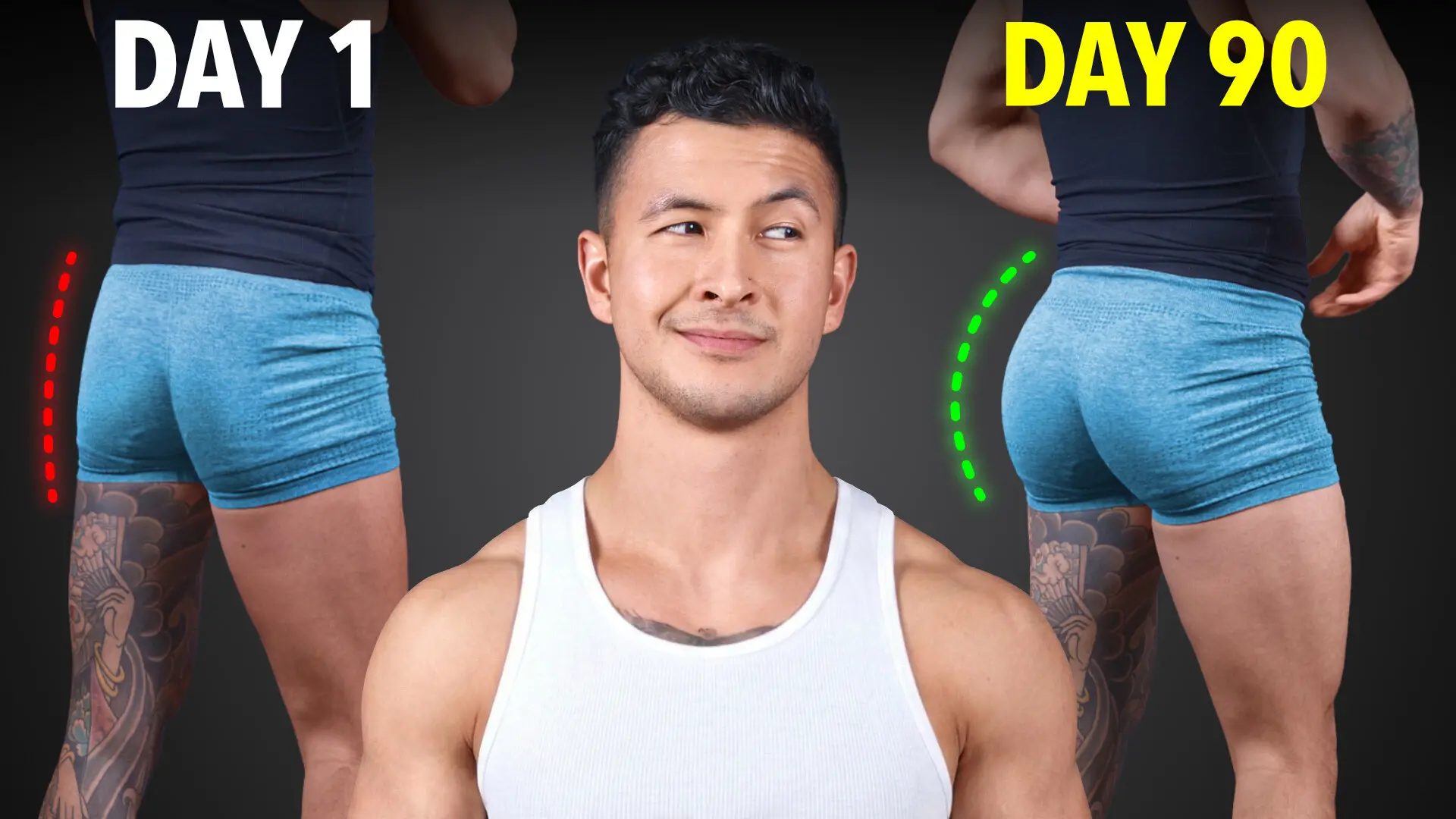
Do this 2–3 times per week and you can get some pretty impressive results. But if you want the best results, transformations like these ...
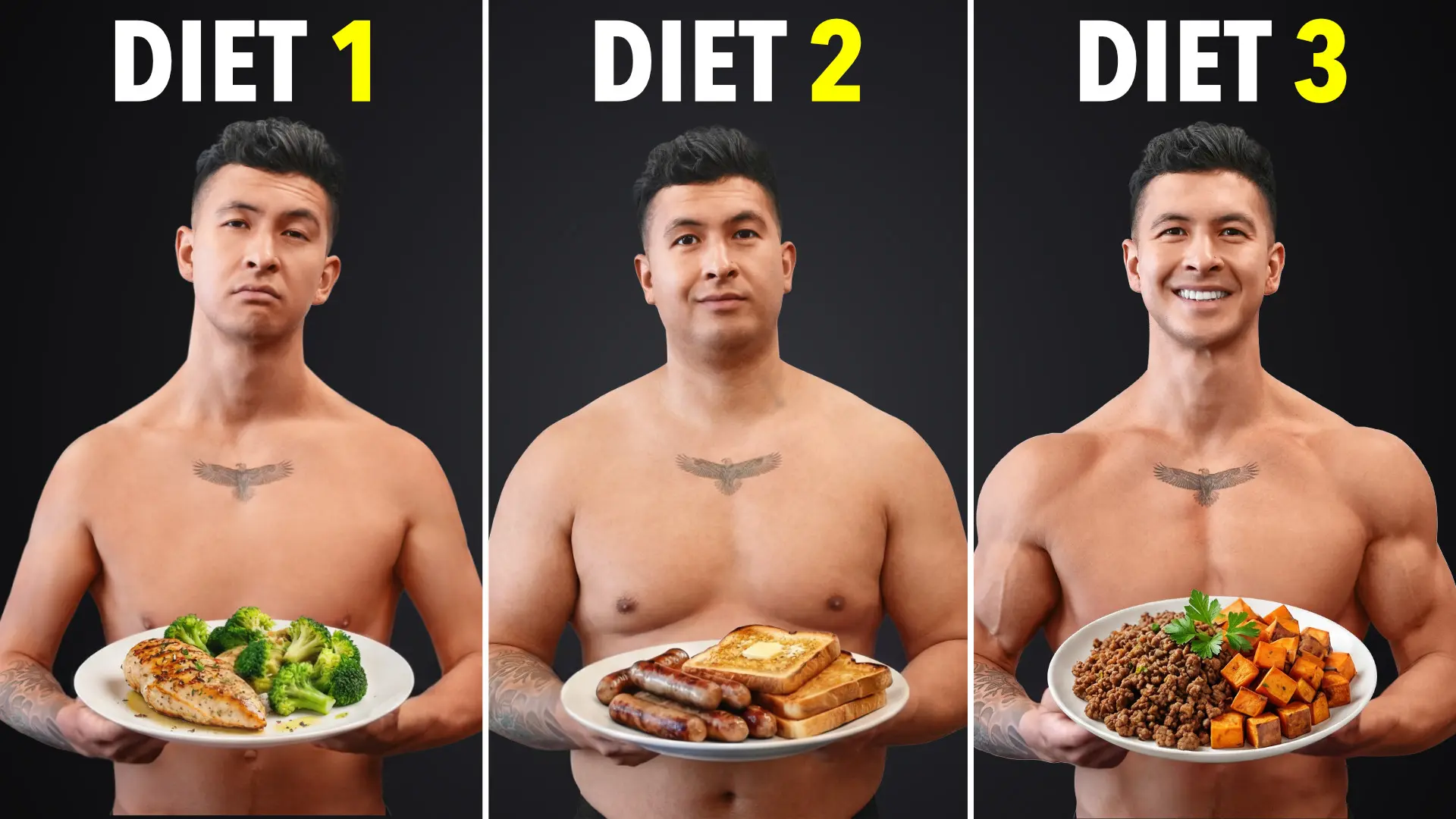
Then you need to adjust your workouts as you get stronger and pair your training with the right diet.
If you want all that guesswork handled for you, so all you have to do is follow a plan personalized to you, you can try my BWS+ app free for two weeks by clicking the button below.
Click the button below to try the BWS+ app for 2 weeks, for free, no strings attached:
↓
FAQ
Is a full body workout 3 times a week enough?
Yes — if you train full body 3 times per week, you can get impressive results when you choose the right exercises and adjust them to fit your structure, experience level, and goals.
How many sets and reps for a full body workout routine?
This plan uses 3 sets per exercise in the templates. Rep ranges depend on the lift and your level: pressing starts around 10–15 for beginners and 6–8 when advanced; squats work well at 6–10; RDLs are 10–15 (or 6–10 controlled when advanced); rows are 10–15; lateral raises are 10–20.
What if I can’t do pull-ups yet?
Start with inverted rows and build to 3 sets of 15 with good form, then move to neutral grip pull-ups, work toward sets of ten unassisted, then overhand pull-ups for 3 sets of five to eight strict reps, and finally weighted pull-ups once you can do more than 8 reps.
What squat stance should I use?
Try three stances — shoulder-width toe-out, narrow toes-forward, and wider with toes way out — and stick with whichever feels most natural, because hip structure determines what stance will feel best.
What accessories should I add?
Choose one or two based on your weak points: beginners can add dead bug for core stability; glute focus can add hip abduction; arms can add an arm superset; advanced lifters often benefit from an upper-chest fly with a forward lean.
By the way, here’s the article summed up into a YouTube video: