

Stretch Mediated Hypertrophy: What Our $40K MRI Study Reveals About Muscle Growth
For years, lifters have heard that going deep in the stretch is the “secret” to size. In this article, we break down what our $40K MRI experiment on stretch mediated hypertrophy actually found: when stretch really helps, when it doesn’t, and how to use it intelligently in your training.
In the past few years, everyone in fitness has become obsessed with the same thing.
Jeff Nippard: “I’m all on the Stretch Wave these days.”
Dr. Mike with Jessy James: “Ultra focus on the stretch.”
Eric Helms on Revive Stronger: “How do I get myself into the most stretched position possible, using a cable.”
Including me.
“Most people don’t know how to target the stretch properly.”
Underneath all of this is one big idea: stretch mediated hypertrophy – the belief that hammering a muscle in its deepest stretch automatically leads to more growth.
We told you regular curls and lateral raises weren’t enough.
That if you weren’t doing these fancy “S-tier” movements designed to hit the stretch the hardest, you were leaving serious gains on the table.
But the more I looked into stretch mediated hypertrophy, something felt off.
If we’re overhauling how everyone trains based on a handful of studies on stretch mediated hypertrophy — shouldn’t we be absolutely sure the science holds up?
To find out, I spent over $40,000, brought in custom machines, and ran one of the most comprehensive studies ever done to answer one question:
Is stretch mediated hypertrophy really the key to building more muscle?
How Stretch Mediated Hypertrophy Became the New Muscle-Growth Dogma
But before we get there, it’s important to understand what “the stretch” actually means, where all the hype came from, and why people started talking about stretch mediated hypertrophy in the first place.
From Chicken Wings to Human Calves: Early Stretch Mediated Hypertrophy Experiments
We’ve actually known about the benefits of stretching a muscle for growth since the 1970’s.
It started when researchers hung weights from the wings of chickens to stretch their lat muscles. An odd experiment, I’ll admit, but just from this stretch alone the chickens’ lats grew by 170%.
That was one of the earliest hints of what we now call stretch mediated hypertrophy.
Then in humans, they tried something similar: extreme loaded stretching.
They tested this on the chest and even on the calves, where my friend Dr. Eric Helms wore an intense stretching calf boot for an hour a day.
Both muscle groups saw almost as much growth from loaded stretching as you would expect from normal strength training — more evidence that stretch mediated hypertrophy might be a real thing, even without traditional reps.
This gave researchers a clue that something about stretching a muscle seems to be a powerful signal for growth – a textbook example of stretch mediated hypertrophy.
So they wondered: how can we transfer these odd “stretch benefits” into normal training?
Transferring “Stretch Benefits" Into Normal Training
One way they tested this was by comparing tricep pushdowns to overhead triceps extensions, which places the long head of your triceps into a deeper stretch.
That deep stretch led to 1.4x the growth.
This became one of the classic “proofs” people pointed to for stretch mediated hypertrophy in real exercises.
Remember this exercise, because later on you’ll learn why exactly it worked so well for the triceps.
But what if you didn’t just stretch the muscle more, but actually challenged the muscle most when it’s stretched?
To test this, researchers had people hold a max contraction with their legs fixed at different angles.
When their leg was more bent — which challenges the quads in a more stretched position — their muscles grew up to twice as much as when their leg was straighter and the quads not as stretched.
They didn’t stop there.
They tested it again using real reps — comparing the bottom half of a leg extension to the top half.
And again, the version that hit the stretch harder led to way more growth, which people took as even stronger support for stretch mediated hypertrophy.
That’s when the trend exploded…
Suddenly, stretch-focused training — and the idea of stretch mediated hypertrophy — became the answer to everything.
Faster gains. S-tier results. Weird optimized exercises that looked nothing like what we used to do.
The Gaps in the Stretch Mediated Hypertrophy Research
But the deeper I looked… the more I realized there were 3 serious gaps in the stretch mediated hypertrophy research that no one was really talking about.
Three Problems No One Mentions When They Talk About the Stretch
First of all, almost every study showing that training in the stretch helps muscle growth – what we’d now call stretch mediated hypertrophy – has only been done on the biceps, quads, or calves, because they’re easier and cheaper to test.
But other muscles don’t stretch the same way, and some are built completely differently.
One muscle in particular, research has shown, gets crazy growth from the stretch that we don’t see in others. I’ll reveal it at the end, plus how to train it.
Second, many of these stretch mediated hypertrophy studies compare totally different exercises.
For example, preacher curls versus incline curls. Preacher curls hit the biceps hardest in the stretch and did show more growth, but they also lock your arms in place, making it harder to cheat.
So was the growth from the stretch, or just the extra stability, or both?
And third — this one’s a bit more technical — but most studies measure growth using ultrasound.
It’s fast, cheap, and I’ve used it myself in past videos.
But it has limits.
Not every muscle can be measured with ultrasound, and for the ones that can it only provides a snapshot of a muscle by looking at the thickness at a certain point.
This is an issue especially with stretch mediated hypertrophy research, as muscles don’t grow evenly from top to bottom. So while one region might look like it grew more, it could have grown less in other areas.
These issues sound small — but once you see how they played out in our study, you’ll understand why they matter so much.
The Study: The Cleanest Test of Stretch Mediated Hypertrophy Yet
But now comes the hard part: how do you actually design a study that fills in these 3 gaps in the stretch mediated hypertrophy research?
Designing a Study to Fix the Gaps
First, I reached out to my local university and put together a research team.
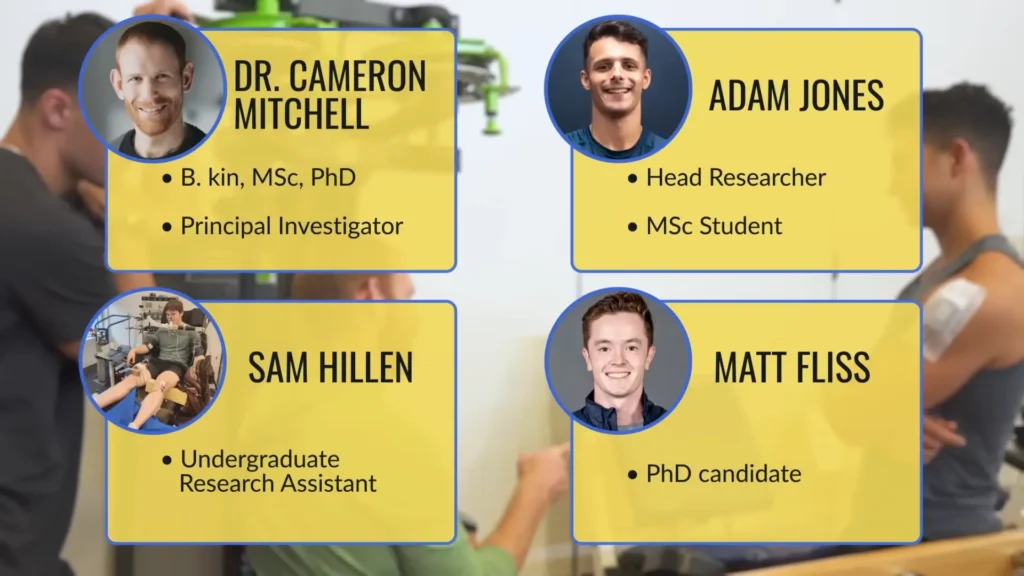
We also collaborated with some of the smartest minds in the field — including Bret Contreras (i.e., "The Glute Guy") and Kassem Hanson — to build the plan.
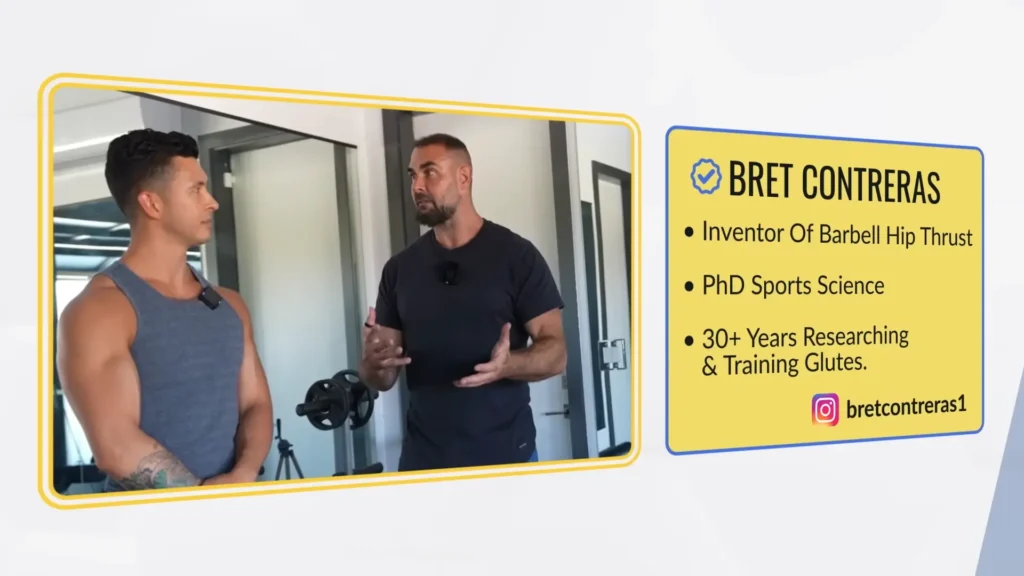
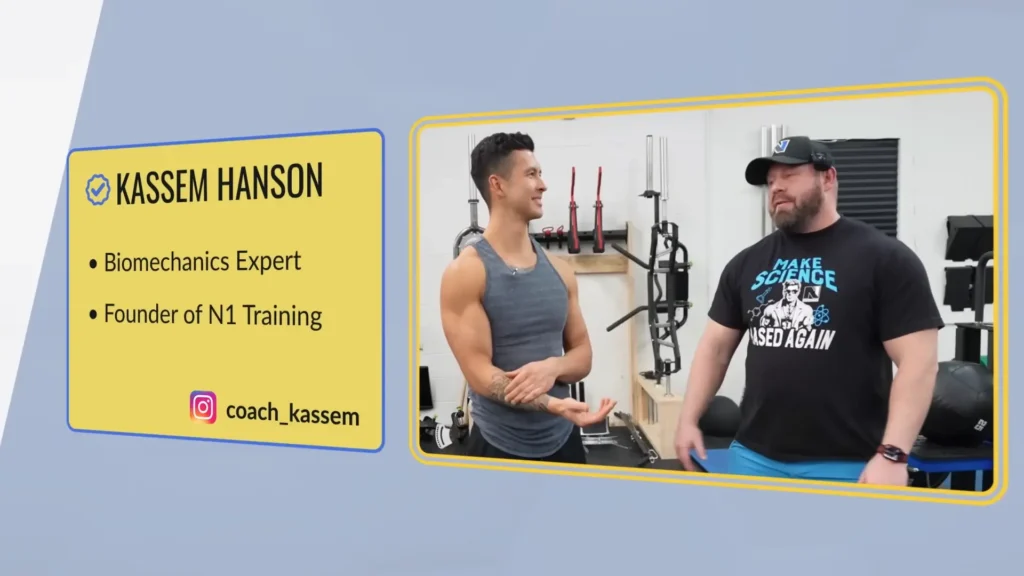
The goal? To test muscles that rarely ever get studied, and to see if the benefits of the stretch, which worked for the quads, calves, and biceps, would hold up when applied to muscles like the chest, glutes, side delts, and rear delts.
In other words, we wanted to know if stretch mediated hypertrophy would actually show up in these under-studied muscles.
And because these are exercises that can’t be measured using ultrasound, we needed to get the gold standard: MRI scans.
MRI gives us a full 3D model of each muscle — it’s incredibly precise for picking up real stretch mediated hypertrophy effects across the whole muscle, not just at one point.
But it’s also insanely expensive, costing roughly $1000 an hour.
For our study, we needed at least 20 hours… and well, you can do the math.
This was a huge chunk of the budget, and I’m incredibly grateful that Bret Contreras stepped in to graciously help us fund it.
Which left us just one problem left to solve.
We wanted to test if an exercise that’s hardest in the stretch actually builds more muscle compared to if we could somehow make that same exercise hardest in the squeeze instead.
If the stretch won, it would validate every exercise swap and adjustment science-based lifters have been recommending for years in the name of stretch mediated hypertrophy.
But if the squeeze won?
That would mean all those recommendations weren’t necessary, or even worse, were actually hurting your gains.
But how do you take the exact same exercise and make it harder in the stretch for one group — and harder in the squeeze for another, while keeping everything else equal so you’re truly isolating stretch mediated hypertrophy?
Custom Machines: Stretch vs Squeeze with One Turn of a Knob
That’s where our equipment became the key to the whole experiment.
Prime Fitness USA provided us with three custom-built machines for lateral raises, hip extensions, pec flyes, and reverse flys.
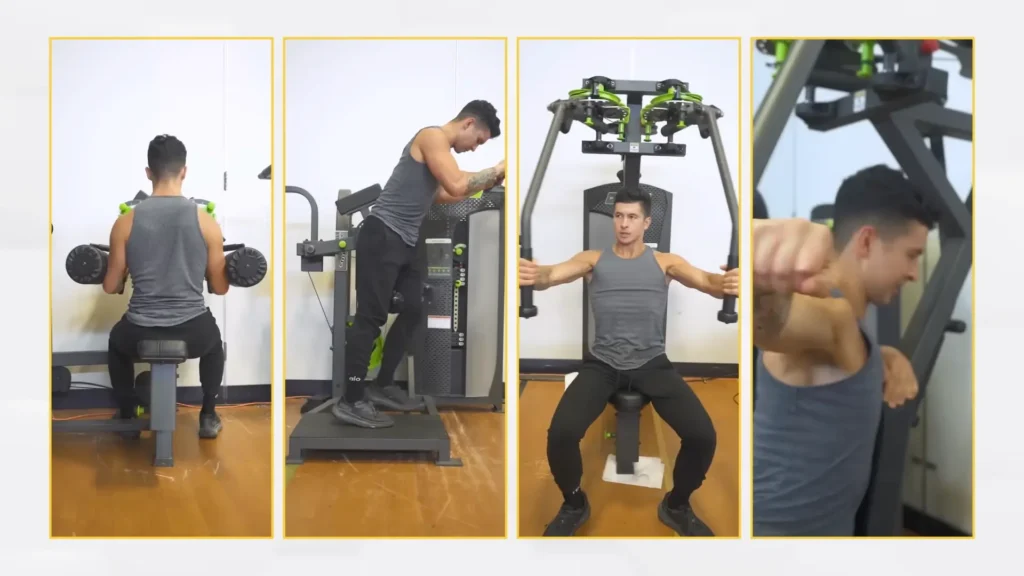
But here’s the cool part: with a simple turn of a knob, we could change the resistance profile instantly.
So for something like the pec flyes, we could make it brutally hard in the beginning when the chest is stretched — or hardest at the top when it’s fully squeezed.
Aside from that one change, the exercise and range of motion stayed exactly the same. Meaning the only thing that could affect growth… was whether the movement was hardest in the stretch or in the squeeze.
It was the cleanest test of “stretch vs squeeze” — and of stretch mediated hypertrophy — ever done.
Subjects, Blinding, and 200 Hours of MRI Analysis
From here we recruited 20 subjects — both men and women.
And while 20 people might sound like a small sample size, we used a unique design that controls genetics, diet, and all the other individual variables that usually muddy the results.
It’s called a “within-subjects” design, which splits each person in half.
One side of their body did the “stretch-focused” training, and the other side did the “squeeze-focused” training.
This makes our 20-subject study statistically much stronger than a regular study with well over 40 subjects when you’re testing something like stretch mediated hypertrophy.
What We Expected vs What Lifters Felt
My hypothesis, as well as the hypothesis from the rest of our research team, was that the stretch side would outperform the squeeze side.
However, when I got to talk to some of our test subjects, most of them were predicting the exact opposite.
Because most subjects felt the most “burn” in the squeeze-biased exercises, their hypothesis tended to resemble a simple “more pain must equal more gains” assumption — even if that didn’t necessarily line up with how stretch mediated hypertrophy is supposed to work.
But to ensure no one’s bias would influence the results, we blinded everything.
Neither the MRI analyst nor our statistician knew which side was which, and I didn’t see any results until the stats were finalized.
Analyzing the MRI data alone took Adam Jones, our head researcher, over 200 hours, as every single image had to be manually outlined and measured.
But our adherence was insanely high — 97 percent.
Out of 400 possible workouts, 388 were attended.
And as a result, most people’s muscles grew by around 20%, which is excellent for just 10 weeks and makes it much more likely that if there was a difference favoring one side, we’d be able to catch it.
And the results we found didn’t just challenge the advice I’ve been giving for years — they also challenged Jeff Nippard, who has been pushing the stretch-based approach and the idea of stretch mediated hypertrophy… and he had some interesting thoughts about my study, but we’ll get into that in a bit.
The Results: What Happened to Stretch Mediated Hypertrophy?
So which side grew more?
Stretch, or squeeze? Before I say the winner, I want you to take a guess which side won.
No cheating by skipping ahead. Stretch or squeeze?
Okay, so after $40,000 spent and a year of work testing stretch mediated hypertrophy, our results were:
- Chest – no difference.
- Side delts – no difference.
- Rear delts – no difference.
- And glutes… no difference.
Every single muscle grew the exact same amount on both sides.
There weren’t even trends suggesting one side performed better for stretch mediated hypertrophy.
We reported growth at three points along each muscle, top to bottom, to see if maybe the stretch affected certain regions more, as well as one total volume comparison.
Still, no difference.
I was honestly shocked. But when I dug deeper into the data, which I’ll show you in a second, it actually explained how so many of us got misled about stretch mediated hypertrophy — which leads me to our final question: what do these results really mean, and what are the “stretch-focused” exercises that actually matter?
What This Means: Where Stretch Mediated Hypertrophy Actually Fits
So after comparing data from our study against past research in the field, I noticed a few things.
First, when it comes to the “stretch” everyone keeps talking about, it’s not all one thing. In fact, I would say it’s actually three different ideas that often get mashed together whenever people talk about stretch mediated hypertrophy.
The Three Different “Stretches” Everyone Mashes Together
Degree Of Stretch
First, there’s something I call the Degree of Stretch.
Not all muscles are built to stretch the same way. Some — like your hamstrings, quads, calves, and triceps — are bi-articulate.
That means they cross two joints, which lets them stretch further than most muscles.
And here’s the important part: studies consistently show that exercises that stretch these muscles more, grow them faster.
This is probably the clearest example of stretch mediated hypertrophy in action. And because these muscles are also some of the easiest and cheapest to test, it makes sense why so many studies found stretch training to be more effective.
Range Of Motion
The second way “the stretch” gets applied to training is through basic range of motion – how deep you go on each rep.
And again, studies find that the stretched position — often the bottom part of a movement — tends to be the most important for growth.
So if you’re simply not going deep enough on an exercise to reach that point, that will limit your gains, regardless of how you think about stretch mediated hypertrophy.
Again, nothing in our study contradicts these findings, as both our stretch group and our squeeze group were still completing a full range of motion for each rep.
Resistance Profile
What our study tested was the third — and most misunderstood — piece of the stretch conversation: the resistance profile.
Does making a lift harder in the stretched position actually lead to more growth?
This is the version of stretch mediated hypertrophy that really blew up online: the idea that if you bias the hardest part of the lift toward the stretch, you’ll automatically grow more.
From our study, the answer is a clear no.
As long as the exercise takes your muscle through a full range of motion — and there’s at least some tension in the stretch — it doesn’t seem to matter if the hardest part is at the bottom or the top.
These findings actually line up with another study published earlier this year that compared cable lateral raises to dumbbell lateral raises.
Even though one was hardest at the bottom (in the stretch) and the other was hardest at the top (in the squeeze), both led to similar shoulder growth.
In other words, when it comes to resistance profiles, stretch mediated hypertrophy doesn’t seem to give cables a magic advantage over dumbbells.
Now here’s where things get even cooler — some muscles do still respond differently to the stretch.
I’ll show you which ones in a second, but I first want to cover some of the limitations of our study.
Limitations Of Our Study
For one, we used untrained subjects.
Some argue that beginners grow from almost anything, so they’re not ideal for detecting smaller differences between training methods, including more subtle stretch mediated hypertrophy effects.
And while that’s a fair point, it’s also worth noting that most research in this area does use untrained participants — and still finds clear differences between groups.
But I do think for well-trained lifters like myself, doing something new can often spark growth.
I actually think this happened to me. After years of only doing dumbbell lateral raises, switching to cable lateral raises at hip height to maximize the stretch seemed to grow my shoulders much faster.
Whether it was the new stretch challenge that I wasn’t used to, or simply me enjoying the exercise more and pushing harder, it worked.
That doesn’t prove stretch mediated hypertrophy on its own — but it does show that changing how an exercise loads the muscle can still be a useful tool.
And the good news?
This isn’t an either/or situation. While we still don’t know if combining both stretch- and squeeze-biased exercises leads to better long-term results or more stretch mediated hypertrophy, it’s a smart way to cover your bases.
However, although we tested muscles that had rarely been studied before, there are still others that may have responded differently.
Take the calves, for example.
They seem to be one of the few muscle groups that respond especially well to training in the stretch. So much so that one study even found that doing just half reps at the bottom — in the stretched position — led to more growth than doing full-range reps.
That’s a strong case where stretch mediated hypertrophy really seems to matter.
But here’s what I think is actually encouraging: even though this is just one study, if future research on more muscles continues to align with what we found, it means something important.
What This Means For Exercise Selection And Training
As long as you’re training hard and not cutting your range of motion short, there’s actually a wide range of exercises that can be effective for growth.
- Hip thrusts can be just as good as squats for glutes.
- Reverse dumbbell flys can be just as good as cables.
- And chest flys might just build your chest as much as bench press.
Which is good to know if you’re working around an injury, limited on equipment, or just want something easier to recover from.
It also means stretch mediated hypertrophy is more like a small tuning knob than the main driver of your gains.
The key is consistency, and to keep building off the progress you make.
So even though our study didn’t find a difference between the stretch and squeeze for muscle growth overall, personally, I still love the deep stretch I get on my muscles — so I’ll keep using a lot of stretch-focused movements.
I just no longer assume I’m getting some huge stretch mediated hypertrophy bonus every time I bias the stretch.
And now, I’m way more open to the simpler “lower-tier” options I used to skip.
When Extra Stretch Still Helps (Bi-Articulate Muscles)
And for those handful of bi-articulate muscles that do benefit from extra stretch, I’ve included a list of exercises that researchers have found a benefit for and would probably be a good idea to include in your routine:
- Quadriceps – lean-back leg extensions
- Hamstrings – choosing seated hamstring curls instead of lying hamstring curls
- Calves – choosing standing (or any straight-leg) calf raises instead of seated calf raises where your knees are bent
- Triceps – overhead extensions instead of pushdowns
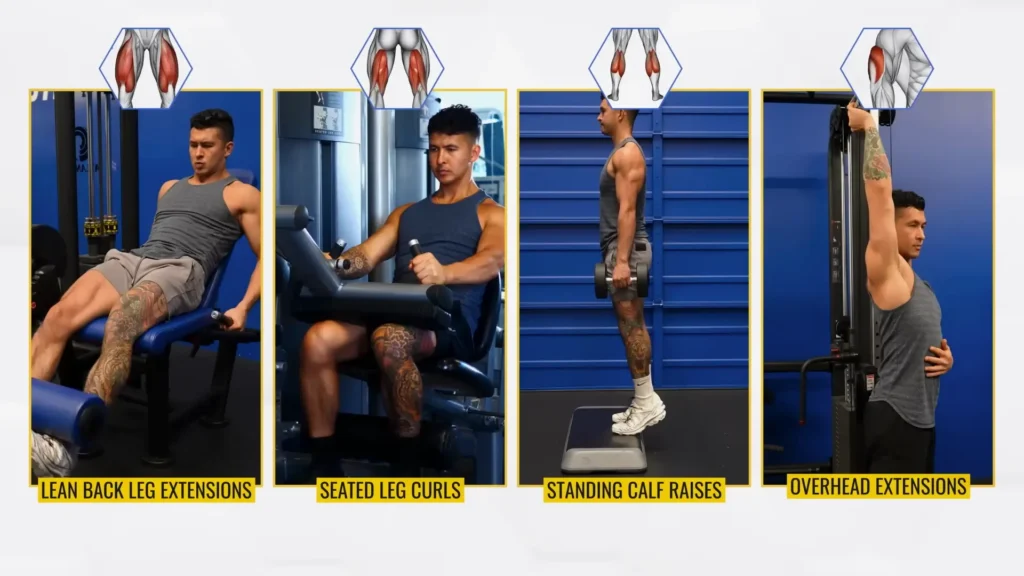
These seem to be the places where stretch mediated hypertrophy is most worth deliberately chasing.
The lats might be another exception, but we just don’t have the data yet.
But that’s just my opinion, and I want to confront one of my fellow science nerds who’s been a huge advocate for the stretch-based approach, to see if any of our research changes his recommendations.
What Does Jeff Think?
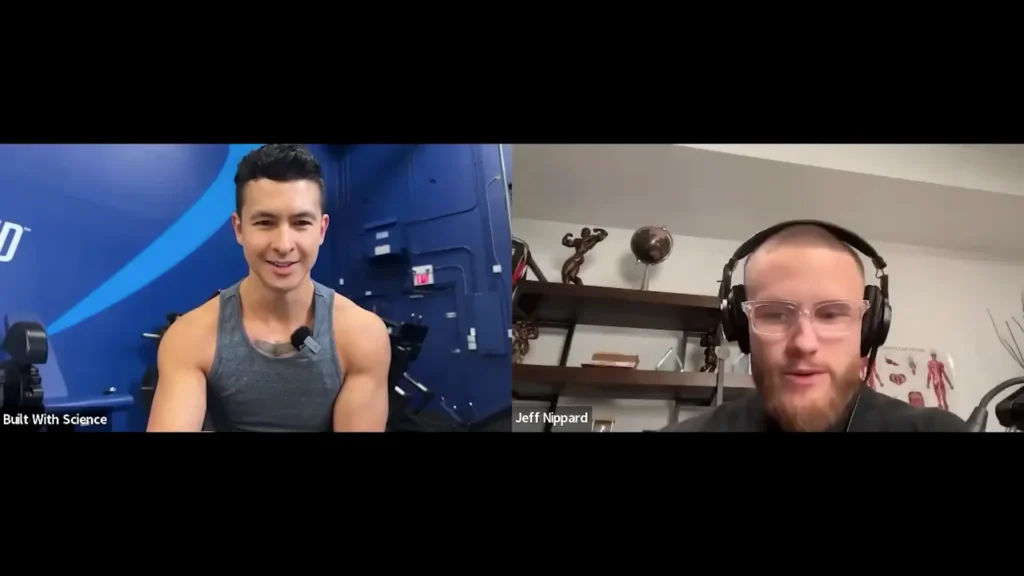
Jeremy:
“Now that you’ve had a chance to read the results I’m really curious to hear what you think?”
Jeff:
“Yeah. It looks amazing, by the way. Like. Oh, man, I didn’t realize you were using MRI for it.”
“I think it’s a really, really important area that you’ve helped kind of fill in — you know, this study is going to help us get a better picture of what’s really going on.”
Jeremy:
“Do these findings change your, I guess, your thoughts on some of the exercises that you may have thought are better for growth?”
Jeff:
“Kind of, yeah. I mean, I think with the pecs… “That’s probably the one that I’m like, okay, well now you know what? You don’t get a little bit of extra range of motion by doing the bench press like that. As long as you’re training hard and, you know, doing enough sets, maybe it doesn’t matter so much. So that’s a cool finding.”
“I think my takeaway based on this new study… “Is that there’s just flexibility, right? And I think this gets to a deeper point about what science-based training should be and how it should be communicated. I don’t think there’s anyone in the evidence-based field who would be like, no, no, no, the stretch is literally number one — more important than training hard, more important than how much volume you do, more important than controlling the weight and progressive overload and consistency and all this stuff. Like, that’s not a take.”
“We kind of have a lot of the puzzle pieces in place when it comes to those fundamental variables. And these are just the final few pieces that we’re trying to fit in. And I think we had a piece that was fitting really, really well. And then it’s like, oh, wait a minute, okay, maybe it actually goes over here. So it’s like there’s small shifts, but the overall picture that we’re creating is still quite clear, if that makes sense.”
Jeremy:
"Yeah. And that was one of the goals with our study — to take this one piece of the puzzle, stretch mediated hypertrophy, and see where it really fits."
But running my own study gave me a whole new respect for how complex research really is.
There are so many variables at play — and it’s made me a lot more cautious about how I interpret and communicate new findings.
TL;DR
- A $40K MRI study tested stretch mediated hypertrophy head-to-head against squeeze-biased training across the chest, glutes, side delts, and rear delts to see if “stretch-focused” exercises really grow more muscle.
- Despite the hype around stretch mediated hypertrophy, the study found no meaningful difference in muscle growth between stretch- and squeeze-biased resistance profiles when range of motion and effort were matched.
- The ‘stretch’ everyone talks about is actually three different ideas — degree of stretch (bi-articulate muscles like quads, hamstrings, calves, triceps), range of motion, and resistance profile — and only the last one failed to show extra gains in this study.
- For most lifters, full range of motion and hard training matter far more than whether an exercise is hardest in the stretch or the squeeze, which means exercises like hip thrusts vs squats, cables vs dumbbells, or flyes vs bench can be equally effective for hypertrophy.
- Stretch mediated hypertrophy still seems especially important for certain muscles (like calves and other bi-articulate muscles), but overall the data suggests more flexibility and exercise choice than the current “S-tier stretch-only” trend implies.
How We’re Using This to Build A Better App (and New Studies)
But none of this would be possible without you guys. And actually, this study is just the beginning. We’ve already started our next study, the first of its kind.
I’ll give you a sneak peek of that in a bit.
When I started this channel seven years ago, one of my biggest dreams was to run studies like this — and now, because of your support and everyone who’s joined our Built With Science app, that dream is real.
We take a portion of the app’s profits and put it directly into funding studies like this.
And in return, you get your own science-based pocket coach that builds your workouts, tracks your progress, and helps you train and diet smarter, all based on the latest research — including new work clarifying where stretch mediated hypertrophy actually matters and where it doesn’t.
That’s exactly why we’re running our first-ever MRI study on back growth, comparing rows versus pulldowns, so when you follow the app’s workout routines, you know you’re doing what’s truly most effective.
Tons of our users have also been loving the new AI version of me, which is trained with all of my knowledge, our dietitians, and the latest science. It looks at your strength data, gives you personalized coaching whenever you need it, and as a result our members have been getting some insane transformations.
And the best part is you can try it completely free for two weeks! PLUS, for Black Friday, if you end up joining, you’ll get a special 20% off, valid only from right now until December 1st.
Just click on the link below.
Click the button below to try the BWS+ app for 2 weeks, for free, no strings attached:
↓
And if you’re reading this after the deadline, use code BUILT10 at checkout for 10% off your first year of BWS+.
Also, if you want to read the pre-print of my new study, click here. Thanks for sticking to the end and I’ll see ya next time!
By the way, here’s the article summed up into a YouTube video: