How to Bulk Without Getting Fat: The 90-Day Lean Bulk vs Fast Bulk vs Maingaining Test
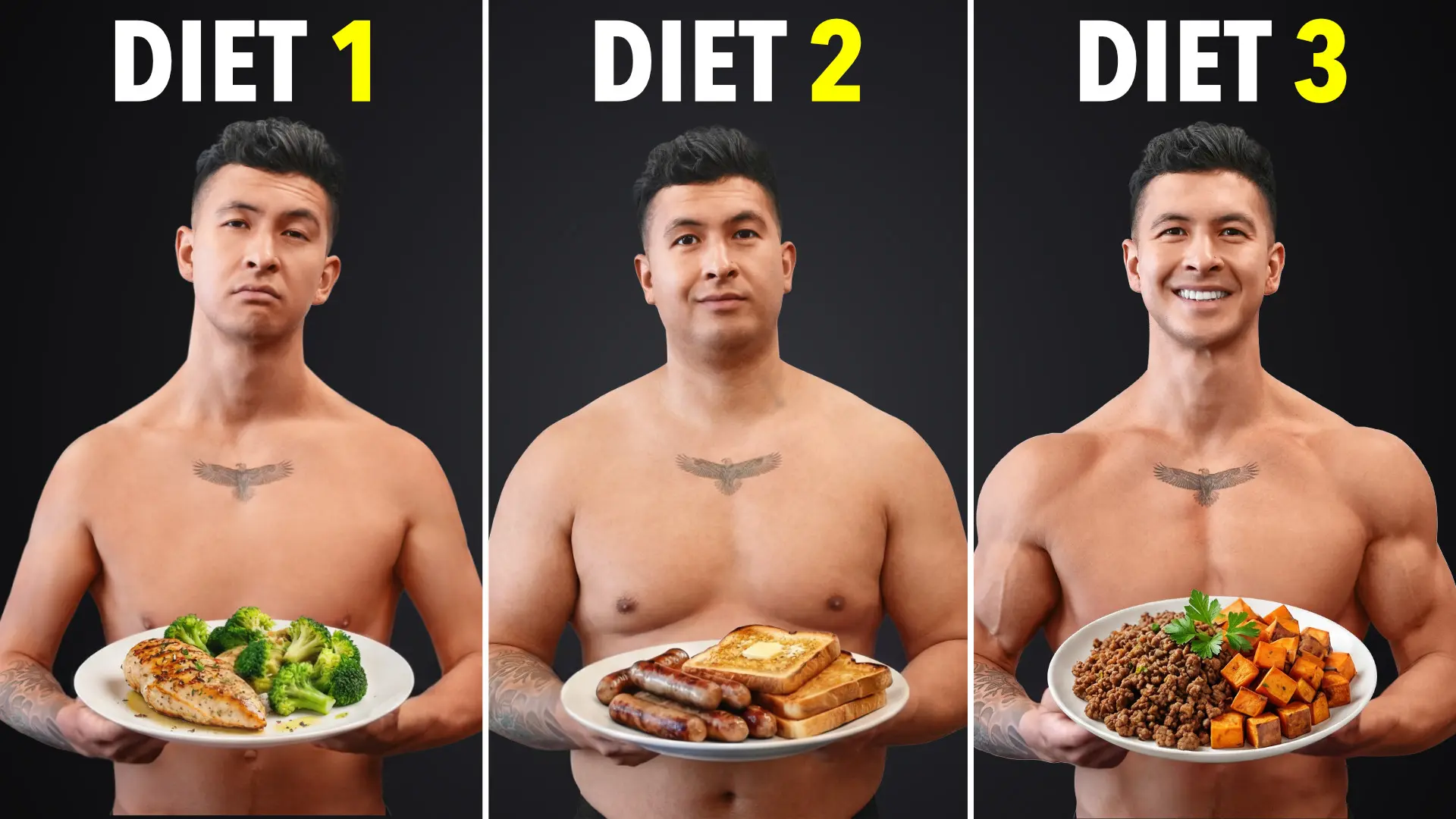
If you want to know how to bulk without getting fluffy, it comes down to one decision: lean bulk, fast bulk, or maingaining.
In this 90-day experiment, Dayton (my brother-in-law) tested all three. We tracked his results with DXA scans plus ultrasound/skinfolds/circumference measurements and compared them to what happened in the gym — because the scale alone can’t tell you if you’re gaining muscle or fat.
TL;DR: How To Bulk (Based On This Experiment)
- Lean bulk (maintenance+~250 calories/day) was the best overall.
- Fast bulk (maintenance+~500 calories/day) built the most muscle — but also the most fat.
- Maingaining (maintenance) still built meaningful muscle and helped tighten his waist.
How To Bulk: The Exact Calorie Targets Used In This Test
Dayton’s maintenance intake was ~2,300 calories/day.
From there, we tested:
- Lean bulk: Maintenance+~250 calories/day
- Fast bulk: ~2,800 calories/day (~500 calories above what he burns)
- Maingaining: Maintenance (Hold bodyweight steady)
For protein, Dayton aimed for at least 100g/day from a variety of sources, and the plan left room for carbs to support training.
And if you'd like to hit your protein requirements without breaking the bank, I show you exactly how you can build an effective and healthy muscle-building meal plan on a budget here.
What We Measured (And Why This Matters For How To Bulk)
To see what actually happened — not just what the scale suggested — we used:
- DXA scans before and after each 30-day phase
- Ultrasound/skinfolds/circumference measurements to support DXA, since short-term DXA can be less reliable
- Strength tracking across the same key movements, so we could compare gym progress to muscle gain
Why Most Bulks Fail (And Why This One Didn’t)
Most people don’t fail because they don’t know what a calorie surplus is.
They fail because life hits:
- Stress spikes appetite
- Family events derail tracking
- Grief breaks routine
- Progress feels slow, so they overcorrect
- Fat gain becomes overwhelming, and they quit
This experiment included all of that — and still produced strong results — because Dayton did one thing right no matter what: he didn’t miss workouts.
Dayton's How To Bulk Experiment: Days 1-90
Days 1–30: The Plan Was Maingaining… Then Life Turned It Into An Accidental Lean Bulk
Dayton wasn’t new to change. Last year, he went from ~33% body fat to ~17%. Now he wanted something different — a bigger physique, permanently — without regaining the fat he worked so hard to lose.
So, to kick off our how to bulk experiment, we started with maingaining: train hard while eating at maintenance, with the idea that stored body fat can help supply energy for muscle growth.
The Training Setup In This How To Bulk Experiment (Minimal Equipment, Serious Intent)
Dayton trained 5 days/week using:
- Adjustable dumbbells
- A bench
- A pull-up bar (Added specifically as an upgrade from his dumbbells-only workouts to build his back/lats)
He was convinced his lats “just wouldn’t grow,” so we used different pull-up grips to hit the back from multiple angles.
Then The Experiment Got Real
About ten days into our how to bulk experiment, Dayton’s life wasn’t set up for perfect adherence.
- He was under stress from his roommate moving out and having his business struggle
- His grandfather passed away from cancer — a major father figure, especially after Dayton’s dad died when Dayton was seven (also from cancer)
So when Dayton joined my family's Thanksgiving dinner, he ate till he was sick.
Now, this is the part that matters for anyone learning how to bulk: the plan only works if it survives your hardest month.
Dayton could have quit. He didn’t.
He didn’t miss a single workout.
Day 30 Check-In
- Scale change: +~1.8lb
That wasn’t the strict maintenance outcome we aimed for — but it’s common. In one 2023 study researchers tried to test what’s better for building muscle: gaining weight slowly, or gaining weight quickly.
But even though participants had weekly check-ins with a diet coach to keep them on track, by the end of the study everyone ended up gaining a similar amount of weight.
So the level of precision I’m asking Dayton to stick to here isn’t easy. Luckily, his overeating actually lines up perfectly with the next phase we had planned: a lean bulk. That’s where you take your maintenance calories and bump them up by about 250 calories, which typically results in around two pounds of weight gain per month.
So we adapted and did what most lifters need to do: use what happened, not what “should” have happened.
We treated this phase as an accidental lean bulk.
Days 1–30 Result (Accidental Lean Bulk)
- Estimated muscle gain: ~1.35lb
- Fat gain: Some, but “not excessive” based on waist/ultrasound/skinfolds
As for whether that muscle gain rate is “good” or not, in a 2020 meta analysis from a huge number of short term training studies, participants gained roughly 2.4 pounds of actual muscle — but it took them 10 weeks to do so compared to just 4 weeks for Dayton.
Plus, the last time I seriously assessed my rate of muscle gain, it took me 60 days to put on just half a pound of muscle. So Dayton clearly still has the ability to build muscle quickly; a great sign for him in this how to bulk experiment.
Days 31–60: Fast Bulk — The Most Muscle, With A Tradeoff
After the first check-in, we ran a fast bulk: ~2,800 calories/day, stated as ~500 calories above what he burns.
The goal was simple: gain about ~4lb in 30 days and see if the extra food accelerated muscle gain.
Why Fast Bulking Feels Amazing (At First)
With more calories, Dayton felt so good he started adding extra sets to workouts.
Most studies wouldn’t allow that, but real-life bulking has an indirect advantage: more food can mean more output, which can mean more growth.
Outside the gym, his momentum even spilled into his business. He started recording TikToks, and his transformation content began pulling in more attention and messages.
The Downside Showed Up Right Where It Always Shows Up
Dayton started noticing more belly fat.
We’ll find out soon whether that’s just in his head or not, but there are a couple factors that should be working in Dayton’s favor.
For starters, a study on untrained lifters found that a fast bulk led to huge muscle gains over the course of 8 weeks, with minimal fat gain.
But when a fast bulk was tested on more experienced lifters, most of the extra weight gain now came from fat, not muscle. In other words, fast bulking works best when your body can actually use those extra calories to build muscle.
I learned this the hard way.
When I first started lifting, I did a dirty bulk — sometimes even drinking a gallon of milk a day — and it worked. I put on a lot of size without much fat. But when I tried the same approach a few years later, it just made me fluffy, and I had to spend months dieting that fat off — with very little extra muscle to show for it.
And while Dayton isn’t a total beginner, he’s still in his first year of proper training, which means there’s a real chance a fast bulk actually works out best for him in this how to bulk experiment.
Day 60 Check-In
- Scale change in this phase: +~4lb
- Subjective changes: Felt bigger, fuller, stronger, more energetic
- Back progress: Noticeably improved
- Pull-up strength since Day 1: Doubled
How To Bulk Experiment Days 31–60 Result (Fast Bulk)
- Estimated muscle gain: ~1.8lb (Stated as ~30% more than the lean bulk phase)
- Fat gain: ~3x higher than the lean bulk phase
Story takeaway: Fast bulking delivered the most muscle — but it started pushing Dayton toward a result he knew he’d regret if it continued.
Days 61–90: Maingaining — The Phase Dayton Didn’t Want, But Needed
After fast bulking, we returned to maintenance.
Dayton joked about it (and mourned the loss of “tons of ground beef”), but the emotional reality was simple: maintenance feels like you’re losing momentum, even when you’re not.
See, while Dayton might not be thrilled about scaling his calories back, if he sticks to the plan, he should still be able to build muscle — and instead of gaining fat, actually lose some.
That’s because while muscle growth does require energy, that energy doesn’t have to come directly from the food you eat. Most people carry well over 100,000 calories stored as body fat, and your body can tap into that energy to fuel muscle growth.
In fact, when Dayton first started working with me on a fat-loss diet, he was still able to build muscle — not as quickly as during his bulks, but at a solid rate of about 0.7 pounds of muscle per month.
And instead of gaining fat, he was losing about 5 pounds of pure fat each month.
And he’s not some rare exception. We see it all the time in studies, and I’ve seen it countless times with our BWS+ app members. Even people who’ve trained for years start dropping fat while building new muscle because for the first time in their lives they’re actually following a proper plan.
The Calorie Shift
So now, at this point of our how to bulk experiment, relative to fast bulking, Dayton was now eating about 500 fewer calories/day. To make it sustainable, he built small “treat” solutions into the plan — like a chocolate peanut-butter frozen yogurt that still fit his calories.
The Bigger Shift Wasn’t Food — It Was Environment
Dayton’s brother moved in, which gave him a training partner and a better routine.
And the training wasn’t just physical anymore. Dayton openly connected working out to staying sober — routine and structure that kept him grounded during grief.
The Hardest Part Of Maingaining: The Scale Stops Validating You
Now, here's the difficult part of maingaining. When your weight stays flat, it’s easy to believe you’re spinning your wheels.
But if your exercises stay consistent and strength is going up mainly in the 6–12 rep range, that’s a strong sign you’re building muscle — even if the scale doesn’t move.
We’ll see how that plays out soon, but I’ll be honest — maingaining isn’t for everyone.
If you’re already pretty lean — say under 15% body fat for men or 25% for women — your body may not have enough stored energy to reliably fuel muscle growth, which can leave you spinning your wheels. And if you’re underweight like I was growing up, you’re not going to gain 20 pounds by maingaining.
But if you have enough body fat, you’re newer to training, or you’ve never trained or dieted properly, maingaining can be a great alternative to constantly cycling between bulking and cutting.
Which is why at the end I’ll showcase the results from all three diets in our how to bulk experiment and explain which one will work best for you, based on your body.
How To Bulk Experiment Day 90 Check-In
Dayton’s weight stayed essentially the same for the entire 30 days — and that was the point.
Days 61–90 Result (Maingaining)
- Estimated muscle gain: ~1.1lb (only 15% less than his lean bulk and 37% less than his fast bulk)
- Fat change: He lost a bit of fat (Waist tightened; belly fat reduced)
How To Bulk Experiment Results: Lean Bulk vs Fast Bulk vs Maingaining (90 Days)
Total Muscle Gained
Across all three phases:
- Total estimated muscle gain: ~4.4lb in 90 days
An important practical lesson: Dayton’s strength gains matched his muscle gain surprisingly well. If you don’t have access to DXA scans, tracking your lifts is one of the best real-world indicators of progress.
Which Worked Best For Dayton (And Why)
Based on the results:
- Fast bulk built the most muscle — but came with disproportionate fat gain
- Maingaining built surprisingly strong muscle while leaning out slightly
- Lean bulk made the most sense for Dayton long-term because he felt best with more calories but didn’t want the fat gain that came with the fast bulk
That’s why the recommendation for Dayton was a leaner bulk moving forward.
How To Choose The Best Bulking Strategy For You
Maingaining isn’t for everyone. So I made this chart to help guide your decision.
How To Bulk Based On Your Body
Diet Who How Maingain • Higher body fat lifters (≈20%+)
• Returning to gym after time off
• Want muscle without bulking• Eat at maintenance calories
• Keep bodyweight the sameLean Bulk • Novice / Intermediate / advanced lifters
• Muscle gains have slowed down
• Want to stay lean while gaining• ~250 calorie surplus
• Gain ~1% bodyweight / month (~1–2 lb / month)Fast Bulk • Naturally skinny lifters
• Brand new lifters (newbie gains)
• Struggle to gain weight• ~500 calorie surplus
• Gain 2–3% bodyweight / month (~3–5 lb / month)Don't know your maintenance calories? Here's our simple calorie calculator that'll help.
FAQ: How To Bulk
How many calories should I add to bulk?
In our how to bulk experiment:
- Lean bulk used maintenance+~250 calories/day
- Fast bulk used ~2,800 calories/day (~500 above burn)
Can I build muscle at maintenance calories?
Yes. Dayton gained ~1.1lb of muscle in 30 days at maintenance during this how to bulk experiment while tightening his waist.
How do I know if my bulk is working without DXA?
- Track strength trends
- Keep exercises consistent
- Watch progress in the 6–12 rep range
Does fast bulking always mean fat gain?
Not always, but in Dayton’s case during our how to bulk experiment, fast bulking came with about 3x more fat gain than the lean bulk phase.
Now That You Know How To Bulk... What's Next?
If you want a plan that handles the hardest part — staying consistent when life gets chaotic — that's exactly what you get with the Built With Science plus app. You enter your info, it gives you a personalized diet and training plan so you quickly see results and then it adjusts your plan over time based on how your body responds.
And you can try it completely free for two weeks here:
Click the button below to try the BWS+ app for 2 weeks, for free, no strings attached:
↓