
He Took Fake Steroids For 100 Days — Here's What Happened
Quick Answer: Can Fake Steroids Produce Real Results?
Sort of — but not the way it sounds. Ray believed he was taking steroids for 100 days, but the pills were actually flour placebos. He still went from 19.4% to 11.9% body fat, gained around 10 pounds of lean mass, and got significantly stronger. That progress wasn't caused by the placebo, though: his training, nutrition, and adherence were overhauled at the same time, and some of his early gain was muscle he regained after time off. The placebo may have influenced his effort and performance, but this experiment can't isolate that effect, and it didn't reproduce steroid physiology.
Key Takeaways
- Ray spent 100 days believing he was on oral steroids. The capsules contained flour, and he had signed a consent form noting he might receive a placebo.
- His results were real: 19.4% to 11.9% body fat, roughly 10 pounds of lean mass gained, and improvement on every strength test (bench 185 lb rose from 3 to 8 reps; pull-ups from 16 to 20).
- The placebo did not cause those results. Optimized training frequency, cleaned-up technique, calorie and protein tracking, coaching, and high adherence all changed at once.
- An estimated 3–5 pounds of his early lean mass was likely muscle he regained after four weeks off following appendix surgery — not brand-new muscle.
- His testosterone rose about 22% (519 to 634 ng/dL), but that is most likely normal fluctuation or improved diet rather than the flour pills.
- The placebo effect can change how you feel and perform, but it does not reproduce the physiological effects of real steroids — which carry serious health risks.
- Feeling "stuck" usually means there is room to improve in training, nutrition, and consistency, not that you have hit your natural limit.
Meet Ray, a longtime lifter who came to me convinced he needed steroids to build the physique he wanted.
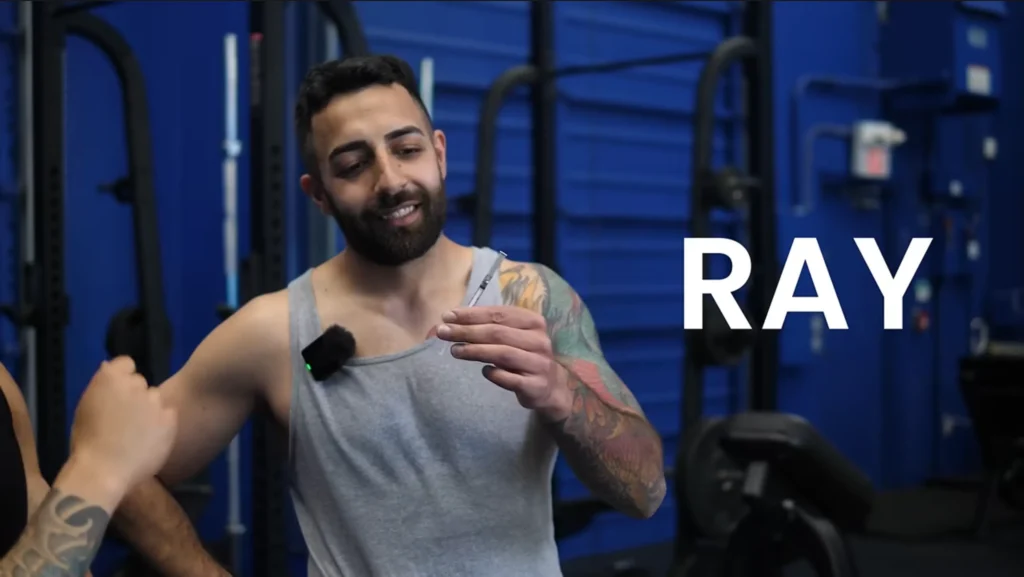
Instead of putting his health at risk, I gave him flour pills he believed were oral steroids and put him through 100 days of science-based training and nutrition — a real-world look at the steroid placebo effect.
By Day 100, Ray's results were far better than I expected. But this experiment can't prove the placebo caused them. We also completely overhauled his training and nutrition; his adherence climbed, and some of his early gain was likely muscle he had recently lost and then regained.
So what actually happened?
Why Did Ray Think He Needed Steroids?
Ray had already been training for more than a decade, but he still wasn't happy with his physique.
When he reached out to me, he told me he hadn't been able to achieve the body he wanted naturally. His goal wasn't necessarily to become enormous. He wanted to look obviously muscular, including without a shirt, and pointed to physiques like mine and Anatoly's as examples.
The strange part was that Ray already had a good amount of muscle.
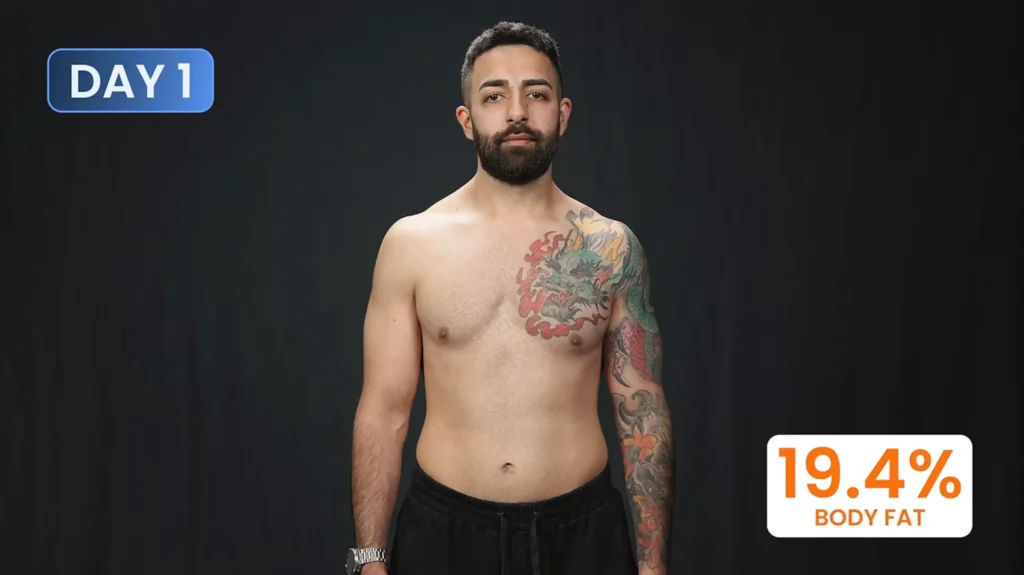
On Day 1, he could bench 185 pounds for 3 reps, squat 185 pounds for 6 reps, and perform an impressive 16 pull-ups. When he took his shirt off, I thought he already had great size.
Ray didn't see himself the same way.
He told me that when he wore a shirt, he didn't feel like he looked like somebody who worked out. Yet even someone like Anatoly can disguise how muscular he is simply by wearing baggy clothes.
That made me question whether steroids were really the solution to Ray's problem.
It also became clear that Ray hadn't fully reconciled what taking them could mean for his health. He told me he wanted children someday, so I pointed out that impaired fertility was one of the risks he would potentially be signing up for.
When I asked what made that risk worthwhile, he hesitated.
He simply wanted a better body.
I believed we could get him much closer to that body naturally.
So I decided to test it.
How Did The 100-Day Fake Steroid Experiment Work?
For 100 days, Ray would follow an optimized training and nutrition program while believing he was also taking steroids.
There was one major ethical safeguard: I couldn't simply lie to Ray without his consent. The contract he signed contained a clause explaining that he could receive a placebo. If he noticed the clause and figured out the experiment, it was over.
He signed it without catching on.
From there, we tracked his body composition, strength, blood work, training, nutrition, and body weight while comparing his progress with research on natural and steroid-assisted muscle growth.
How We Measured Ray's Progress
We used three main measures.
First, DXA scans tracked changes in Ray's lean mass and body fat. We measured him at the beginning of the experiment and planned additional scans around Days 50 and 100.
Second, we tested his testosterone levels through blood work.
Third, we measured his strength.
His Day 1 numbers were:
- Bench Press: 185 pounds × 3 reps
- Squat: 185 pounds × 6 reps
- Pull-Ups: 16 reps
These gave us objective benchmarks to compare against his final results.
What Was Actually In The "Steroids"?
Ray's fake steroids were capsules filled with flour.
Initially, we considered making the deception look even more convincing with an injection, but I thought getting him to inject a placebo into his body would be too unethical.
Instead, after checking his allergies, we used flour pills and told him they were oral steroids.
Ray initially took one pill every other day. Later, we would tell him his "dose" was increasing to one pill every day.
The challenge was convincing him that any changes he experienced were coming from the drug.
That became difficult almost immediately.
After researching oral steroids and even talking with ChatGPT late into the night, Ray started asking questions. It was only Day 1, and he was already suspicious.
If the experiment was going to survive 100 days, we needed to make his results convincing.
How Do Steroids Affect Muscle Growth?
Anabolic steroids can increase muscle growth partly through their effects on androgen receptors in muscle tissue.
Some muscles, particularly the traps and delts, are believed to contain more androgen receptors than others. That may help explain why steroid users can develop especially large shoulders and traps.
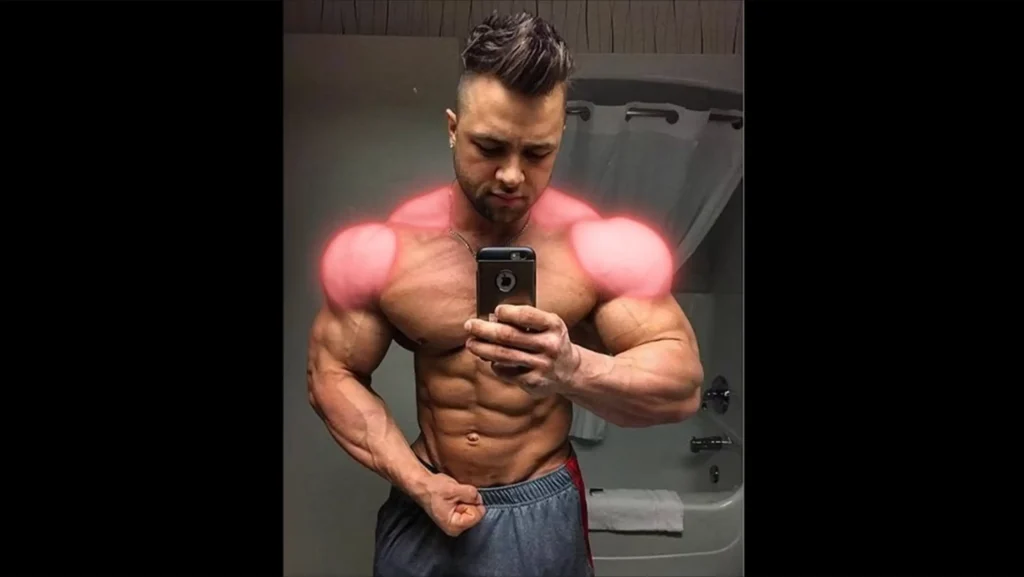
So if I wanted Ray to develop more of the "enhanced" look he was chasing without actually taking steroids, those muscles were an obvious place to focus.
I incorporated effective exercises for his traps and shoulders into his new program.
But changing a few exercises wasn't going to be enough.
Ray had already trained for years, making him an intermediate lifter. Building new muscle should therefore be considerably harder for him than for a beginner.
When I looked closely at how he had been training, though, I found three major opportunities for improvement.
What Was Wrong With Ray's Training?
Ray's problem wasn't necessarily that his genetics or testosterone were preventing him from growing. His existing training and nutrition left significant room for improvement.
We changed his training frequency, improved his exercise execution, and started controlling his nutrition much more closely.
Can Training A Muscle Twice Per Week Build More Muscle?
Ray was following a traditional bro split, training each muscle hard only once per week.
That approach can work. Training a muscle more frequently can be useful for distributing more weekly training volume, so I moved Ray onto an upper/lower split with a fifth accessory day, letting him train each muscle more frequently.
Why Did Ray Need To Use Less Momentum?
Ray told me he had continued getting stronger without seeing the amount of muscle growth he expected.
His technique offered one possible explanation.
During some exercises, he was using considerable momentum. On his pressing movements, for example, his hips could come off the bench as he moved the weight.
That might allow him to lift heavier, but some of that performance was coming from momentum rather than the target muscle.
We lightened the weight and made his repetitions more controlled.
The goal wasn't to make the exercises easier. It was to make the muscles we were trying to grow do more of the actual work.
Ray immediately noticed the difference. He told me he felt much more pumped.
Why Did Tracking His Nutrition Matter?
The third change may have been the most important: Ray started tracking his food.
In one study, researchers put 30 trained lifters through the same workout program but divided them into three groups. One followed a tracked high-protein diet at maintenance calories, another followed the same type of diet in a slight calorie deficit, and the third trained without tracking its nutrition.
After 10 weeks, both groups tracking their diets gained more than 2 pounds of lean mass while losing substantial fat. The group that didn't track its nutrition didn't experience a meaningful change in either direction. View the study on PubMed.
For Ray, we set his initial target at 2,300 calories per day — a slight deficit to strip fat — with at least 120 grams of protein to support muscle growth.
He tracked everything through the Built With Science app, which allowed us to adjust his calories based on his actual progress.
And Ray committed.
Within his first week, he was pushing hard through his workouts and tracking his meals. He even reported feeling more energetic in the gym and wondered whether the "test" was giving him extra fire.
That raised the question at the center of the entire experiment.
Could believing he was on steroids actually change how he performed?
How Powerful Can The Placebo Effect Be?
The placebo effect can influence strength performance when someone strongly believes they are receiving a real performance-enhancing substance.
And remarkably, something similar to our experiment had been tested decades earlier.
In 1972, researchers recruited trained college athletes and first put them through seven weeks of standardized training.
During those seven weeks, their bench press improved by an average of about 10 pounds and their squat by about 6 pounds.
Then the researchers gave them a placebo they were told was an approved steroid.
Over the following four weeks, their bench press increased by almost 30 pounds and their squat by approximately 40 pounds.
In other words, their strength improvements were roughly three to seven times greater despite occurring in nearly half the time — and after they had already made their initial training gains. View the study.
Ray certainly seemed to believe something was happening.
He started attributing more than just gym performance to the pills. At one point, after reacting unusually quickly to something at a butcher shop, he told me that the steroids were "definitely working."
But there was another part of Ray's expectations that presented a much bigger problem.
Why Did We Manipulate Ray's Scale?
Ray expected steroid use to make his body weight increase dramatically even while he lost fat.
At the beginning of the experiment, his DXA scan put him at 19.4% body fat. Ray wanted to reach roughly 12%.
But he also told my producer that he wanted to weigh 180 pounds by the end.
He started at around 156 pounds.
For Ray to become dramatically leaner while simultaneously increasing his weight to 180 pounds, he would need to gain roughly 30 pounds of muscle while losing fat.
A steroid user can potentially gain muscle rapidly enough that body weight rises even while fat is being lost.
For a trained natural lifter like Ray, however, what he expected was virtually impossible.
If he saw his real weight dropping as he got leaner, I worried that he would interpret it as proof that the "steroids" weren't working.
So our engineer modified an inexpensive scale.
Behind the scenes, we could see Ray's actual weight so the app could adjust his nutrition appropriately. But we could change the number displayed to Ray.
The plan was to increase the number he saw by roughly one pound each week.
Even if Ray was losing weight, he would think he was gaining.
It worked — until the scale broke.
What Happened After 30 Days?
By Day 30, Ray believed the steroids were affecting his energy, performance, and recovery.
When our feed from the modified scale failed, we needed an excuse to get it back without revealing what we had done.
Fortunately, Day 30 was also when I had told Ray we would increase his dose.
We brought him into the studio, told him the scale needed a battery replacement, and kept him training downstairs while our engineer frantically repaired it upstairs.
During the workout, I asked how the experiment was going.
Ray admitted that he wasn't gaining a "crazy amount" of muscle and couldn't tell whether his progress was coming from the diet and training or from the steroid.
But he also thought he had more energy on the days he took the pill.
So we increased his fake dose from one flour pill every other day to one every day.
As we waited for the scale repair, Ray kept training.
He hit a deadlift PR comfortably and started talking about how differently steroids made him feel.
He said he now understood why steroids were illegal in sports. He believed they were giving him more power, better performance, more energy, and better recovery.
At one point, he said:
"I feel like I can do anything. I feel like I can fly."
After finishing a set of muscle-ups, his conclusion was simple:
"The steroids are working."
He was even beginning to interpret some experiences as negative steroid side effects.
The placebo seemed convincing.
Then one mistake nearly exposed everything.
Why Did Ray's Testosterone Test Nearly Ruin The Experiment?
Ray's first blood test showed testosterone within the normal range but lower than he expected, and that result made him question his progress.
Originally, the blood work was supposed to happen on Day 1.
Because of a scheduling problem at the lab, however, Ray couldn't get tested until roughly two weeks into the experiment.
That was dangerous for the deception.
If Ray had really been taking steroids for two weeks, he expected his blood work to look different.
Instead, his testosterone came back around the middle of the normal range.
Ray was disappointed. He expected to be somewhere in the 900s and began wondering whether his testosterone explained why he had struggled to build the physique he wanted.
This is where a lot of lifters can get discouraged.
They train for years, don't achieve the results they expected, see that their testosterone isn't at the very top of the normal range, and conclude that their hormones must be holding them back.
But within the normal range, being somewhat higher or lower doesn't appear to make an enormous difference for muscle growth. Many professional natural bodybuilders have average or even slightly below-average testosterone levels.
We've also seen Built With Science members assume their hormones are the problem, only to make progress once their training and nutrition are properly dialed in.
Steroid use is different because testosterone can be pushed far beyond the natural range.
And because Ray believed he had already been taking steroids for two weeks, his completely ordinary result got inside his head.
The experiment was suddenly on thin ice.
We needed something convincing on his Day 50 DXA scan.
We got it.
How Much Muscle Did Ray Gain By Day 50?
After 50 days, Ray's DXA scan showed 8.7 pounds of additional lean mass and 6.5 pounds of fat loss.
His body-fat percentage had fallen from 19.4% to 14.7%.
Even more surprising, his weight had increased from 155.6 to 157.4 pounds despite the substantial fat loss.
Those numbers were far beyond what I expected from a trained natural lifter in only 50 days.
When compared with research data, Ray's lean-mass gain was even in the territory we'd expect from subjects taking a starting dose of steroids over a similar period.
At that point, even I was becoming skeptical.
I asked Ray whether he was taking anything else.
He wasn't.
He told me he had simply been sticking closely to his diet and working hard.
There was, however, another important explanation we needed to account for.
How Much Of Ray's Progress Was Muscle Regain?
Some of Ray's extraordinary early progress was probably muscle regain rather than entirely new muscle.
About a month before contacting me, Ray had his appendix removed. That forced him to take roughly four weeks away from the gym.
Previously trained muscle can often regain lost size and strength faster during retraining. One proposed explanation is the retention of myonuclei acquired during earlier training, although much of the direct mechanistic evidence for this comes from animal research. View the study.
Based on Ray's recent training history, we estimated that roughly 3–5 pounds of his Day 50 lean-mass gain could be explained by muscle he was regaining rather than brand-new muscle.
That makes his results less mysterious.
But it doesn't make them unimpressive.
Even after considering muscle regain, Ray had built substantial lean mass while simultaneously losing a large amount of fat.
And with most of that regain likely accounted for during the first half, the next 50 days would give us a better look at what happened once the easy gains were gone.
Why Was Getting To 12% Body Fat So Difficult?
Getting from relatively lean to extremely lean becomes increasingly difficult, and Ray's target was far more unusual than he seemed to realize.
My team and I analyzed more than 9,000 DXA scans from American men.
Out of all of them, only one person was below 12% body fat.
At Ray's Day 50 measurement of 14.7%, he was already around the top 2% for leanness in that dataset. Reaching the physique he was chasing would put him around the top 0.1%.
Yet social media can make physiques that should be extraordinarily rare feel completely normal.
Ray talked about the bodies he constantly saw online.
I understand that feeling. Even I sometimes look at physiques on my feed and feel like I'm behind.
When somebody spends years seeing exceptional physiques every day — while also seeing more people openly discussing steroid use without necessarily showing the consequences — their perception of what a normal body looks like can become distorted.
And despite the progress Ray had already made, he wasn't necessarily becoming more satisfied.
At one point during the second half of the experiment, he told us he still felt fat and didn't think he'd made much progress.
That raised a bigger question.
Even if Ray reached 12%, would he finally think he was lean enough?
What Are The Risks Of Taking Steroids?
Steroid use can produce substantial muscle growth, but it also carries serious health risks.
One problem occurs when steroid use stops. Natural testosterone production can fall, potentially contributing to fatigue, impaired recovery, libido issues, and other problems.
For some users, natural production may not fully recover.
There is also a dose-response relationship between steroid use and muscle gain: taking more can produce more muscle.
For certain personalities, that can create a dangerous cycle.
Ray had already talked about potentially trying other compounds such as Dbol or HGH. That was exactly the progression I worried about.
As steroid exposure increases, so can the risks, including problems involving acne, hair loss, fertility, and cardiovascular health.
Steroids don't affect only skeletal muscle. They can affect the heart as well.
One study analyzed autopsy reports from six male bodybuilders who died prematurely from cardiovascular-related events. Their average age at death was approximately 36, and their mean heart weight was 74% greater than the reference male population. View the study.
Those were the kinds of risks I hoped Ray would ultimately decide he didn't need to take.
But first, we had to see what 100 days of natural training had actually accomplished.
What Happened After 100 Days Of Fake Steroids?
After 100 days, Ray was dramatically leaner, stronger, and more muscular — despite never actually taking steroids.
The final tests measured the same major variables we'd assessed at the beginning: strength, blood work, and body composition.
How Much Stronger Did Ray Get?
Ray improved on every strength test.
His results were:
| Exercise | Day 1 | Day 100 |
| Bench Press At 185 Pounds | 3 Reps | 8 Reps |
| Squat At 185 Pounds | 6 Reps | 10 Reps |
| Pull-Ups | 16 Reps | 20 Reps |
His pull-ups were particularly notable because he had already started the experiment at 16 clean reps.
Did Ray's Testosterone Increase?
Ray's testosterone increased from 519 ng/dL to 634 ng/dL, an increase of approximately 22%.
But there's no reason to conclude that his placebo pills increased his testosterone.
The change was most likely normal day-to-day fluctuation or potentially related to improvements in his diet rather than the placebo.
Remember: the pills contained flour.
Did Ray Reach 12% Body Fat?
Yes.
Ray started at 19.4% body fat.
After 100 days, his final DXA result was 11.9% body fat.
He had reached the goal that originally helped convince him he needed steroids.
Yet his first reaction was revealing.
He still wasn't completely satisfied.
He wanted to be even leaner.
I had to remind him how extraordinary his progress actually was.
Over those 100 days, Ray had gained roughly 10 pounds of lean mass while simultaneously losing a substantial amount of fat.
That was some of the fastest progress I'd ever seen.
How Did His Muscle Gain Compare With Natural And Steroid Results?
Ray's muscle growth slowed during the second half of the experiment, but his overall results remained unusually strong.
That slowdown made sense.
By Day 50, Ray was already below 15% body fat. Building muscle while continuing to lose fat becomes considerably less likely at that stage.
Yet he still managed to add some lean mass.
When you line up steroids vs natural results from controlled research, Ray's overall muscle growth remained consistent with the low end of what's seen in some subjects taking steroids — and was almost triple what we'd expect from an average natural result.
There is still an enormous caveat.
Some of Ray's initial gains were probably muscle regain.
A previous experiment I conducted also illustrates the difference. Over 100 days, our natural subject gained roughly 5 pounds of lean mass without losing fat, while the enhanced subject gained approximately 13 pounds of lean mass while losing more than 20 pounds of fat, dropping from around 19% to 7% body fat.
The enhanced transformation was considerably more extreme and came with unfavorable side effects.
Ray's results shouldn't therefore be interpreted as evidence that a placebo physiologically reproduces steroid use.
But even after accounting for his likely muscle regain, what he achieved naturally was remarkable.
And that set up the most important part of the experiment.
What Happened When Ray Learned The Steroids Were Fake?
After Ray saw his final results, I asked whether he thought he could have achieved them naturally.
His answer was interesting.
He thought he probably could have.
In fact, he said part of him wished he had tried three months of natural training first and then compared it with three months on steroids.
That's when I brought out the contract he'd signed 100 days earlier.
I asked him to read the section explaining that he might receive a placebo and that no steroids would be administered as part of the experiment.
Then I told him the truth.
He hadn't been on steroids.
Not for a single day.
The pills he'd been taking contained flour.
His average testosterone result suddenly made sense. So did the strange things happening with his scale.
Everything he had accomplished over those 100 days had been done naturally.
Did Ray Decide To Take Real Steroids?
No. After discovering that he'd achieved his transformation naturally, Ray chose to remain natural.
But I wanted that choice to be his.
So after revealing the placebo, I gave him two options.
One was to keep the fake flour pills and continue training naturally.
The other was to pursue the path he'd originally wanted and begin taking real steroids, with professional guidance intended to reduce — though not eliminate — the risks.
Ray didn't answer immediately.
He genuinely considered it.
But after spending three months believing he was already on steroids and then discovering that he had achieved the entire transformation naturally, he decided he wanted to stay natural.
That was the outcome I'd hoped for from Day 1.
What Does This Experiment Actually Show?
Ray's transformation doesn't prove that believing you're taking steroids can reproduce the physiological effects of steroids.
There were simply too many other variables.
We improved his training frequency. We cleaned up his technique. We emphasized muscles that would help create the physique he wanted. We controlled his calories and protein. He tracked his nutrition. The Built With Science app adjusted his plan as he progressed. His adherence and motivation were extremely high.
And some of his early lean-mass gain was likely muscle he was regaining after several weeks away from training.
The placebo may have influenced how Ray felt and behaved.
He repeatedly reported more energy, greater confidence, better performance, and better recovery. He pushed himself hard because he believed something powerful was helping him. Previous research suggests that believing you've received a performance-enhancing drug can influence strength performance.
But we can't separate that effect from everything else we changed.
The bigger lesson is simpler.
Ray came into this experiment after more than a decade of lifting convinced that he had reached the limits of what his natural body could achieve.
One hundred days later, he was stronger, dramatically leaner, and carrying substantially more lean mass.
And he did it without steroids.
Sometimes being "stuck" doesn't mean you've reached your genetic limit. It may mean there are still meaningful improvements available in your training, nutrition, execution, and consistency.
Ray was capable of far more than he thought.
He just needed the right plan.
To celebrate, I surprised Ray and his mom with flights to see family they hadn't seen in more than a decade.
If you're feeling stuck the way Ray was, you can try the same training and nutrition app he used, free for two weeks, at builtwithscience.com.
By the way, here’s the article summed up into a YouTube video:

Frequently Asked Questions
Can The Placebo Effect Make You Stronger?
It can influence strength performance, but it doesn't build the underlying physiology that real steroids do. In a 1972 study, trained athletes made much larger strength gains after being given a placebo they believed was an anabolic steroid. That doesn't mean the placebo directly changed their muscle tissue or reproduced the physiological effects of steroids.
Can Placebo Build Muscle?
This experiment can't show that a placebo directly builds muscle. Ray gained substantial lean mass while believing he was on steroids, but his training, nutrition, tracking, adherence, and recent muscle regain all changed at the same time — so the muscle can't be pinned on the belief itself. The most careful takeaway is that the placebo may have influenced Ray's behavior or effort, but this experiment can't isolate how much that contributed to his muscle gain.
Can You Build Muscle Without Steroids?
Yes. Over 100 days, Ray gained around 10 pounds of lean mass and dropped from 19.4% to 11.9% body fat without taking any steroids — just optimized training, controlled nutrition, and high adherence. Results like his are unusually fast and partly reflect muscle he regained after time off, so they shouldn't be treated as typical, but they show how much is possible naturally.
Why Do Steroids Make Your Traps Bigger?
The traps and delts are believed to carry more androgen receptors than most other muscles, which may make them especially responsive when someone takes anabolic steroids. That's thought to be part of why many steroid users develop noticeably large traps and shoulders. The mechanism is still described as "believed" rather than fully settled.
Does Your Testosterone Level Affect Muscle Growth?
Within the normal range, being somewhat higher or lower doesn't appear to make a large difference for muscle growth. Many natural pro bodybuilders have average or even slightly below-average testosterone levels. Steroids are different because they push testosterone far above the natural range.
Can You Gain Muscle While Losing Fat?
Yes — Ray gained lean mass while losing fat, and even saw his scale weight rise slightly as his body fat fell. It's most achievable when training and nutrition are dialed in and there's muscle to regain, and it gets much harder the leaner you become. Ray's specific rate was exceptionally fast and isn't a typical expectation.
How Fast Can You Regain Lost Muscle?
Recently lost muscle tends to come back faster than entirely new muscle is built. Research suggests trained muscle retains cellular "infrastructure," including extra myonuclei, that primes it to regrow after a break, though the human evidence is still developing. For Ray, an estimated 3–5 pounds of his early gain was likely muscle he regained after time off following appendix surgery.
Can Steroids Affect Fertility?
Yes — impaired fertility is one of the recognized risks of anabolic steroid use, which is why it came up early with Ray, who said he wants kids one day. Steroid use can suppress the body's own hormone production, and for some people that doesn't fully recover after stopping. That risk was one reason he ultimately chose to stay natural.