
High Volume Low Calorie Foods: I Tested the Most Filling Diet
Quick Answer: Can You Lose Weight With High Volume Low Calorie Foods?
Yes, for 30 days, two experienced lifters lost substantial fat on a diet built around high volume low calorie foods, without counting a single calorie and rarely feeling hungry. Melody lost just over 8 pounds and dropped from 32.5% to 29.7% body fat, while Manson lost 10.4 pounds, 10.2 of it fat, and dropped from 24.7% to 20.7% — with no muscle loss on either final scan. But eliminating hunger did not make the diet easy: food variety, convenience, cravings, and social situations turned out to be the real challenges.
The question I wanted to answer was simple: is it possible to lose fat while constantly feeling full?
So I designed what I hoped would be the world's most filling diet built off high volume low calorie foods, recruited two people who wanted to get leaner but hated the hunger that normally came with dieting, and had them follow it for 30 days.
The catch? They wouldn't count a single calorie.
Key Takeaways
- Manson and Melody did not count calories. They instead followed a strict food-selection and meal-structure system for 30 days.
- Every meal combined protein, high-volume food, and one measured serving of fat. Protein and volume foods could fill the rest of the designated bowl.
- The diet was designed around high volume low calorie foods. Low-calorie fruits, vegetables, lean proteins, konjac noodles, and sugar-free Jell-O allowed them to eat very large portions.
- Hunger became a minor problem. Both participants frequently reported being extremely full, and at times struggled to finish their meals.
- Carbonation, soup, and slower eating were added over time. These strategies were used to push fullness even further.
- Fullness did not automatically equal easy adherence. Monotony, cravings, family meals, barbecues, and the sheer volume of food all created challenges.
- Variety made a major practical difference. Melody continually created new meals, while Manson repeatedly ate the same foods and became increasingly tired of the plan.
- Melody lost just over 8 pounds. Her body fat fell from 32.5% to 29.7%, with essentially all of the measured loss coming from fat.
- Manson lost 10.4 pounds. His final scan indicated that 10.2 pounds were fat, while his body fat fell from 24.7% to 20.7%.
- Neither participant lost muscle according to their final scans. Both also continued resistance training throughout the experiment.
- The experiment was intentionally strict. It was designed to test an extreme fullness-focused approach over 30 days, not to establish that everyone should diet this way indefinitely.
What Was The World's Most Filling Diet?
The diet was built around three rules designed to let Manson and Melody eat an enormous amount of food while quietly keeping them in a calorie deficit — without ever counting one.
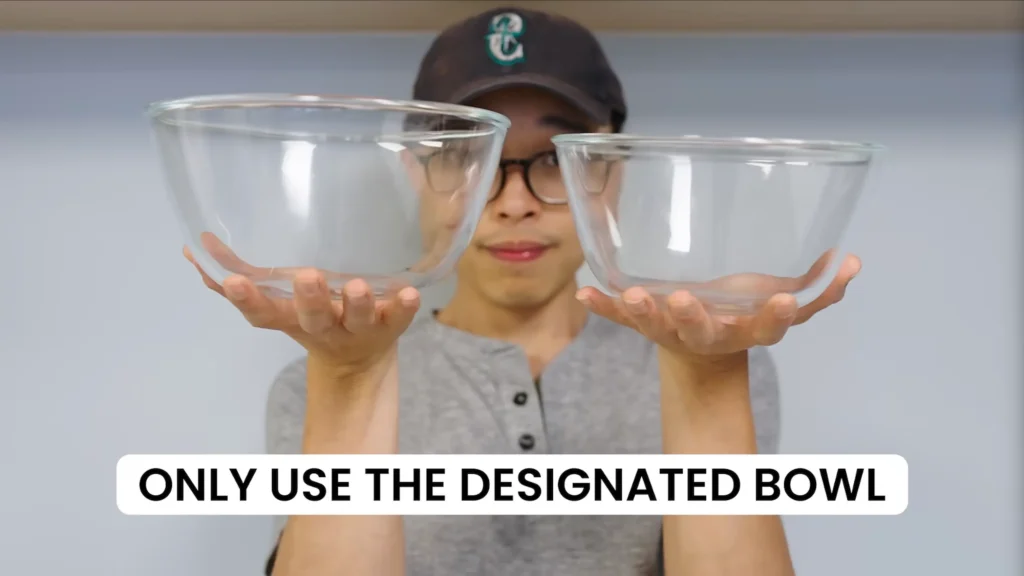
The bowls themselves weren't magic. They were intentionally massive so they could fit a lot of high volume low calorie foods, with Manson receiving a slightly larger bowl to account for his larger size.
Rule 1: Eat Three Meals Per Day From A Designated Bowl
Each participant received their own designated bowl and ate three meals per day. There was no calorie tracking.
Rule 2: Include Protein, Volume Food, And One Serving Of Fat
Every meal had to contain at least one food from each of three groups: protein, volume food, and fat.
The protein and volume foods were effectively unlimited within the confines of the bowl. Fat was different — they had to choose just one measured serving of fat per meal.
There was also no snacking between meals. Calorie-free sauces, seasonings, and sweeteners were allowed.
Rule 3: Fill The Bowl To The Top
This was the rule that made the experiment unusual: every meal had to fill the bowl all the way to the top. Instead of deliberately trying to eat less food while dieting, Manson and Melody were required to eat huge meals.
What Foods Were Allowed On The Diet?
Every food on the plan was a high volume low calorie food — chosen to provide a large amount of food, protein, or fullness for relatively few calories. These are the high volume low calorie foods that let you eat a lot while keeping calories low.
High Volume Low Calorie Foods
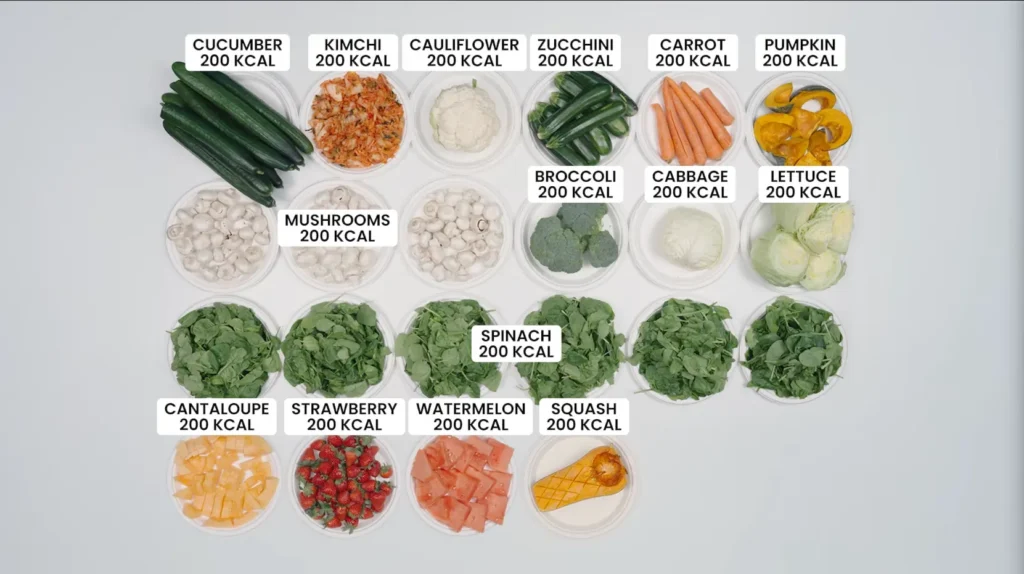
The volume-food list focused on extremely low-calorie fruits and vegetables.
Fruit options included:
- Strawberries
- Watermelon
- Cantaloupe
Vegetables included:
- Broccoli
- Cabbage
- Lettuce
- Spinach
- Mushrooms
- Cucumber
- Cauliflower
- Zucchini
- Kimchi
- Pumpkin
- Carrots
- Squash
The plan also included extremely low-calorie options such as konjac noodles and sugar-free Jell-O. These foods were unlimited within the meal.
Protein Foods
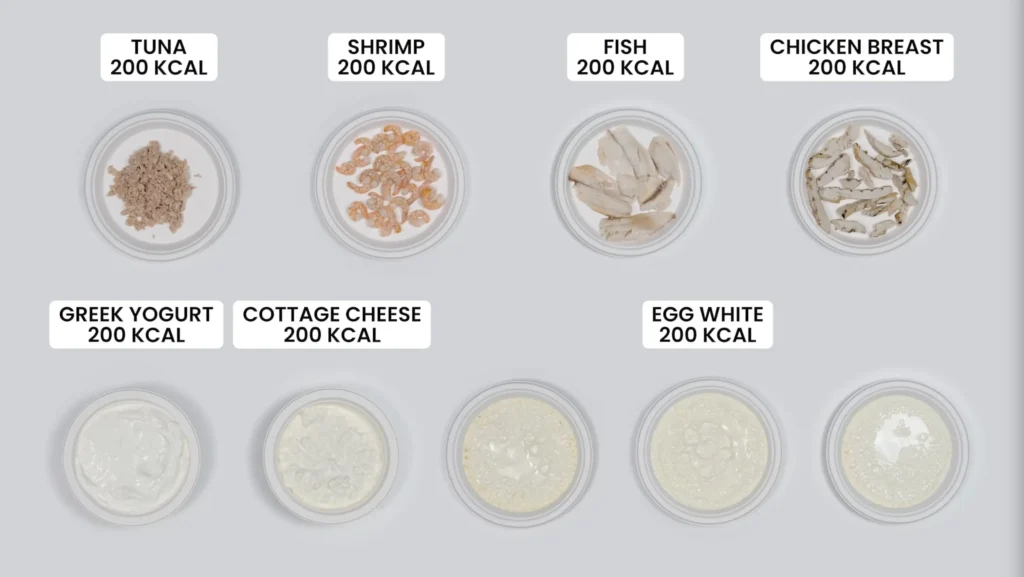
Protein choices included:
- Chicken breast
- Shrimp
- Egg whites
- Tuna
- Tilapia
- 0% fat sugar-free Greek yogurt
- 0% fat cottage cheese
These were also unlimited within the bowl.
Fat Sources
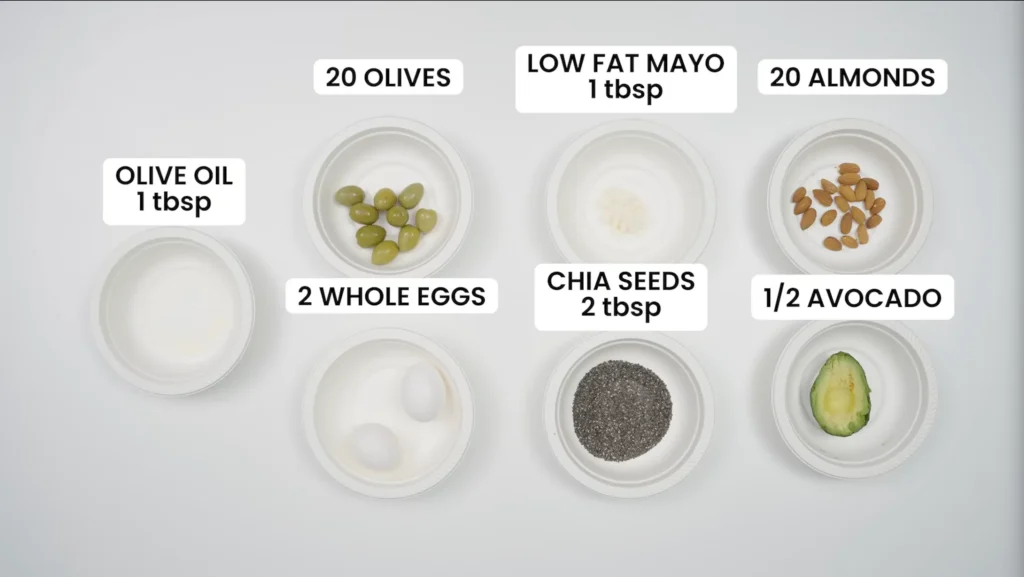
Fat was the only major food category that was deliberately portioned. For each meal, they chose one serving from options such as:
- 1 tablespoon of olive oil or sesame oil
- 1 tablespoon of half-fat mayo
- 2 tablespoons of chia seeds
- 20 olives
- ½ avocado
- 2 whole eggs
- 20 almonds
- 2 tablespoons of light cream cheese
Seasonings, Sauces, And Drinks
Salt, pepper, spices, herbs, Splenda/Stevia, and sugar-free syrup were allowed on this high volume low calorie foods diet. Sauces could include options such as:
- Soy sauce
- Fish sauce
- Sriracha
- Salsa
- Hot sauce
- Mustard
- Fat-free tomato sauce
- Sugar-free/fat-free sauces or dressings under 15 calories per tablespoon
Liquid calories were not allowed. Cooking spray was limited to one serving per meal, and a fish oil supplement was included as part of the plan.
Why Are High Volume Low Calorie Foods So Filling?
The central idea of the diet — an approach often called volume eating — was to maximize the amount of food Manson and Melody could physically eat for relatively few calories.
Take 200 calories of steak, for example, one of Melody's favorite proteins. Compare that with 200 calories of shrimp from the diet, and the shrimp gives you more than twice the amount of food.
The difference becomes even more dramatic with the volume foods. Two hundred calories of many of the fruits and vegetables on the plan produces an enormous portion — some so large they barely fit on a plate. Compare that with 200 calories of something much more calorie-dense, like trail mix, rice, or pasta, and you can immediately see the difference.
That's also why fat was the only food group deliberately limited to a measured serving. Fat sources can pack a lot of calories into a relatively small amount of food.
How Does Food Volume Affect Fullness?
One of the mechanisms behind the diet is stomach distension.
Your stomach contains stretch-sensitive receptors that respond as the stomach expands during a meal. The greater the physical volume entering the stomach, the more strongly that stretch can contribute to signals associated with fullness.
That link between stomach stretch and fullness is a big part of why high volume low calorie foods can help you stop overeating without leaning so heavily on willpower.
The same stretch principle is the idea behind gastric bypass surgery, where the stomach is made physically smaller so that it stretches more from less food; an approach that leads to an average of 12 to 18 pounds of fat loss in the first three months. The idea was to create a similar effect through food volume, without actually shrinking the stomach. My theory going into the 30 days was that, if that held, it might produce a comparable rate of fat loss without any surgery.
That was the basic principle I wanted to exploit. Instead of shrinking the amount of food Manson and Melody were eating, the plan gave them enormous portions made primarily from high volume low calorie foods that contained relatively few calories for their physical size.
I expected this to create very high levels of fullness while still allowing them to lose fat. The next 30 days would show whether that theory of high volume low calorie foods actually worked.
What Happened During The First Week?
Almost immediately, Manson and Melody approached the high volume low calorie foods diet in completely different ways. Manson cared primarily about convenience. Melody cared much more about variety. That difference eventually became one of the biggest lessons from the entire experiment.
Manson Chose Convenience
Manson hated cooking. Before he had even properly gone grocery shopping, one of his early lunches was simply two chicken breasts, a bag of spinach, and two eggs. After taking a bite, he realized the obvious problem: he needed to go shopping.
Once he found high volume low calorie foods he liked, he settled into an extremely repetitive routine. Strawberries. Shrimp. Eggs. Then more strawberries. He even documented what appeared to be the biggest strawberry in the batch and saved it for the end of the meal.
Vegetables were a much harder sell. “Every time I eat green vegetables, I feel disgusting,” he admitted. Fruit, particularly strawberries, was much easier for him.
Melody Chose Variety
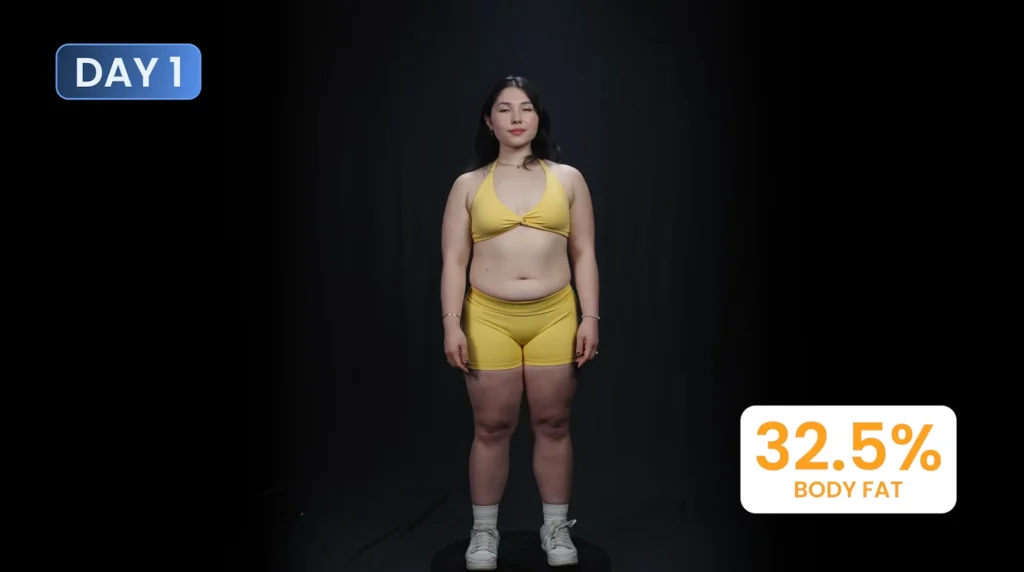
Melody had been lifting for five years and believed she was eating around 2,000 calories per day before the experiment. When we previously measured her actual intake, it came out closer to 3,000 calories per day. Her Day 1 DEXA scan placed her at 32.5% body fat.
Unlike Manson, she immediately started experimenting with various high volume low calorie foods. One breakfast included egg whites, spinach, Greek yogurt, and squash. Another meal used chicken breast and cucumber with cottage cheese and squash on a bed of lettuce.
She was preparing her own meals while simultaneously cooking lunches for her husband, though, and that created an obvious challenge: his food often looked a lot tastier.
Her bigger problem at first wasn't hunger. It was the opposite. At one point she had to stop eating because she was simply too full.
Why Variety Quickly Became Important
Manson technically had plenty of choices available to him. But because he repeatedly chose the same few high volume low calorie foods, I started getting worried about whether he could keep going for 30 days.
There was another issue. When I entered a full day of his diet into the BWS app, it showed he was missing a large number of micronutrients. The solution was not to abandon the basic structure of the diet — he needed to learn how to do more with the foods available.
What Meals Can You Make On A High Volume Low Calorie Foods Diet?
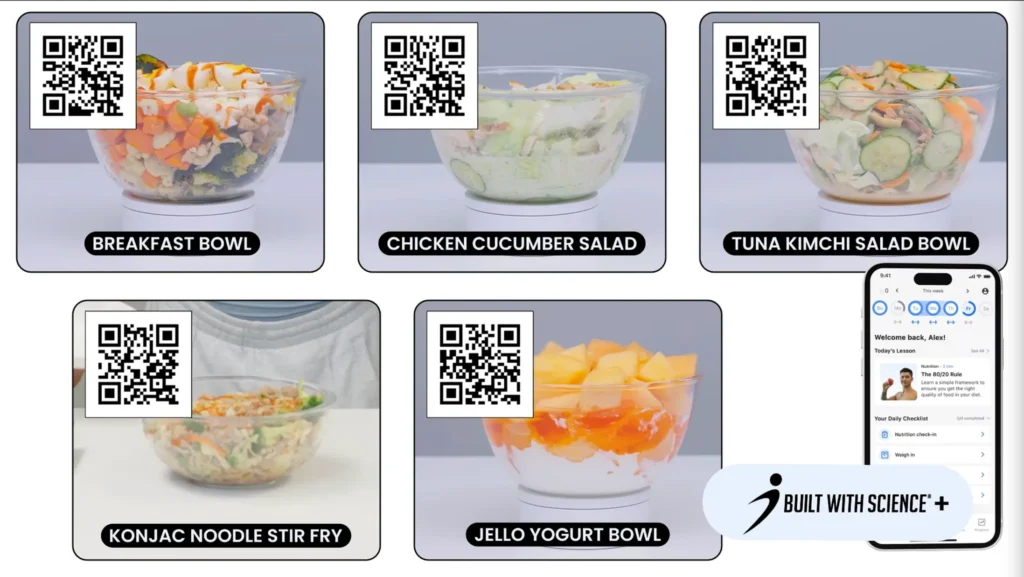
To show Manson and Melody how much flexibility the food list actually gave them, I brought them in and made four example meals covering breakfast, lunch, dinner, and dessert.
Savory Breakfast Bowl
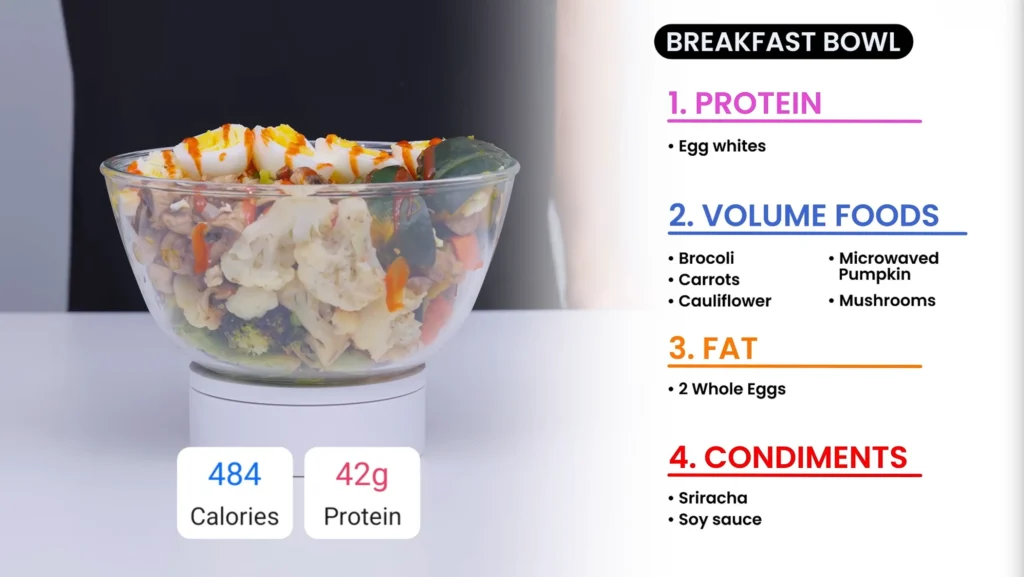
The breakfast bowl used a variety of high-volume vegetables, including microwaved pumpkin. Scrambled egg whites provided the lean protein, and two soft-boiled eggs served as the measured fat source. It was topped with sugar-free syrup and Sriracha.
Cucumber Salad
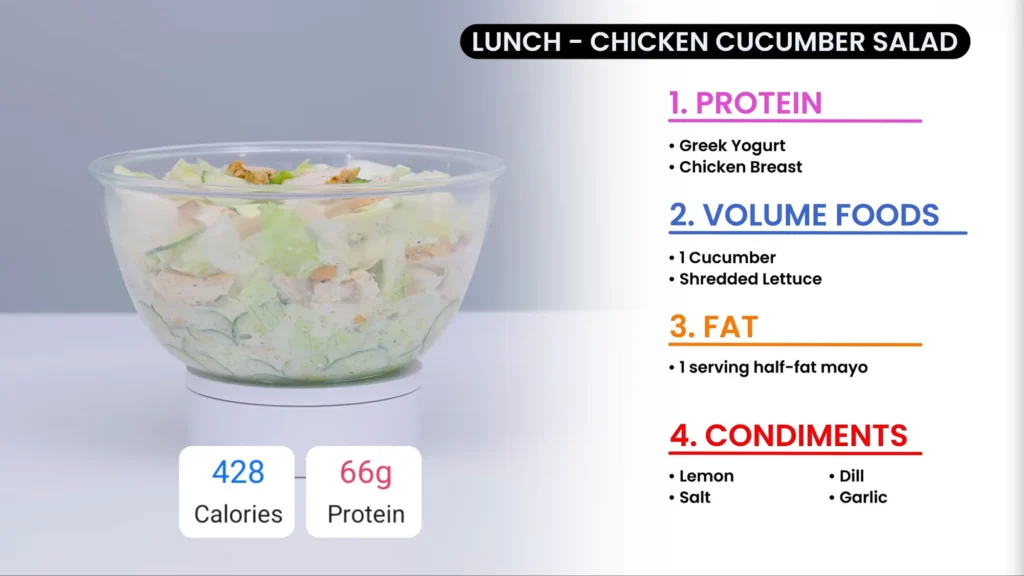
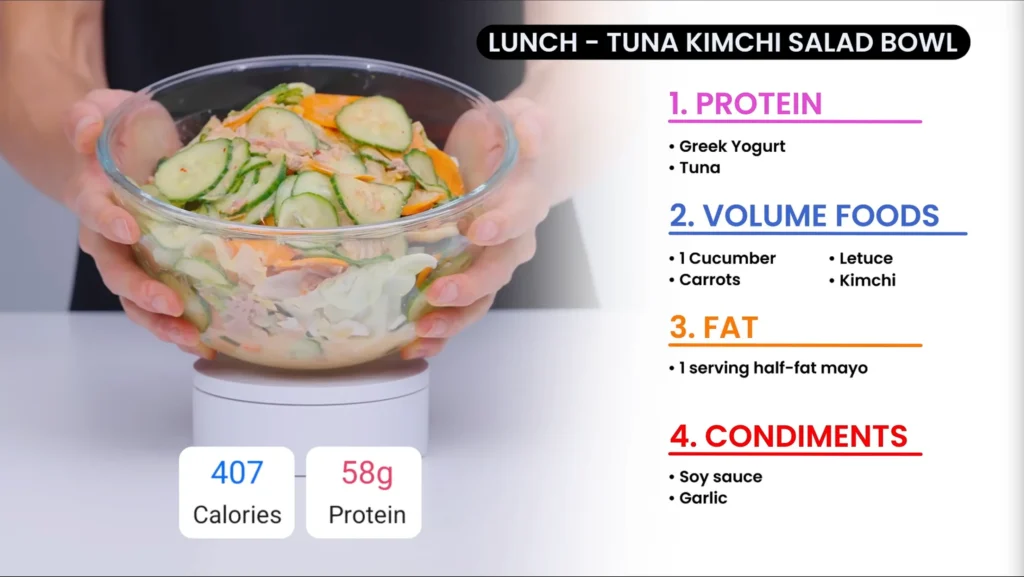
For lunch, I made a cucumber salad using a whole cucumber and chopped lettuce as the main volume sources. Greek yogurt and chicken breast provided protein, and half-fat mayo supplied the fat serving. Lemon, dill, salt, and garlic added flavor.
I also made an Asian-inspired variation using kimchi, another of the low-calorie foods on our list.
Chicken Noodle Stir Fry
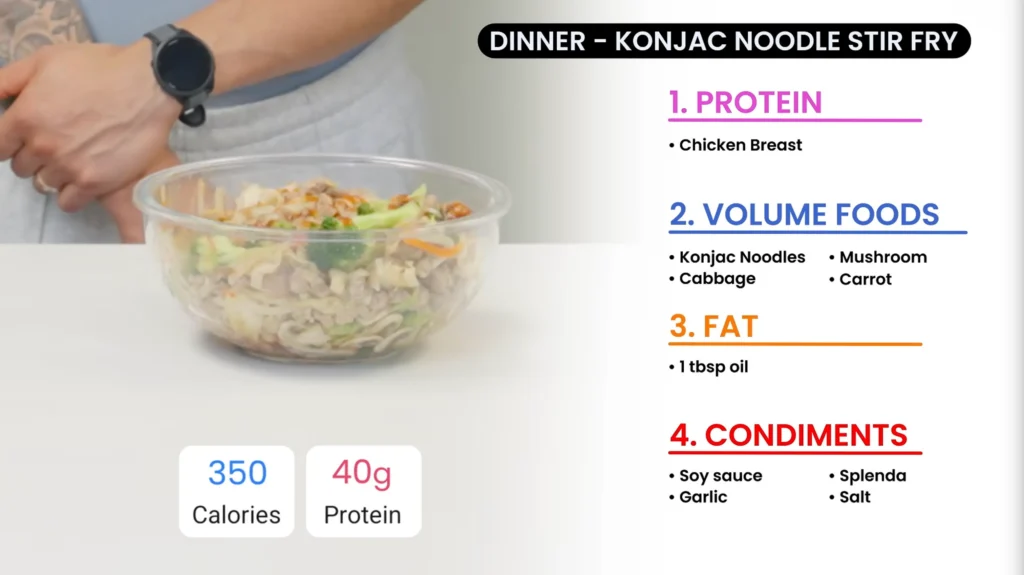
Dinner was a chicken noodle stir fry. It combined high-volume vegetables with low-calorie konjac noodles, chicken breast for protein, and a tablespoon of oil as the fat source. Soy sauce, garlic, and Splenda provided the flavor.
Sugar-Free Jell-O Dessert Bowl
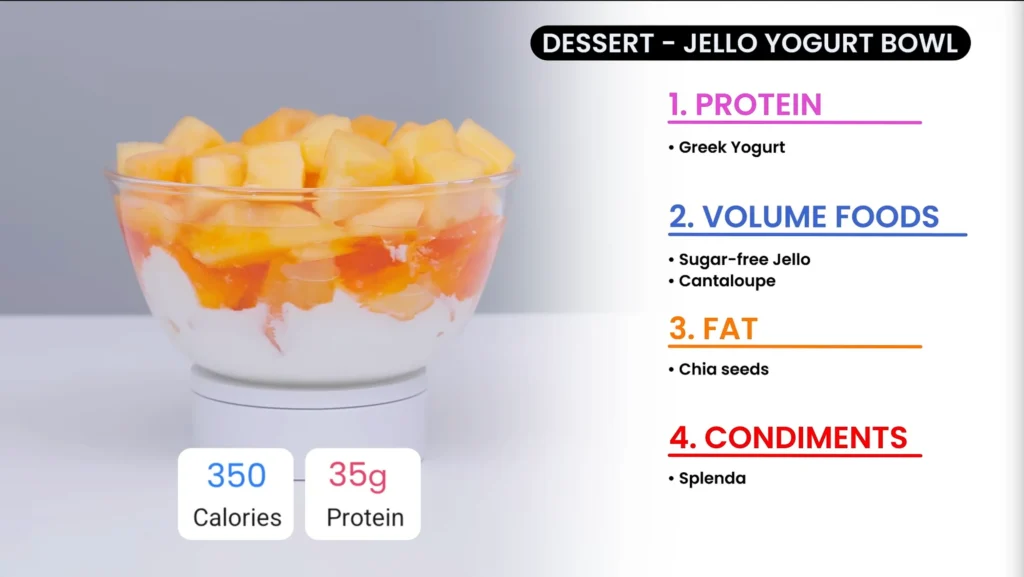
For dessert, I made two versions of a giant sugar-free Jell-O bowl, topped with Greek yogurt and low-calorie fruits such as strawberries and cantaloupe.
Manson liked the meals on the high volume low calorie foods diet enough to ask whether he could eat the dessert-style options for breakfast. The answer was yes, within the rules of the experiment, they could arrange the approved foods however they wanted. As Melody put it: “This plan is growing on me.”
If you're a BWS app member, you can add all of these high volume low calorie foods recipes straight to the app.
How Much Weight Did They Lose In Week One?
After just one week on the high volume low calorie foods diet, Manson and Melody were each already down approximately three pounds on the scale. And hunger was not their biggest problem; if anything, both were struggling to finish the enormous amount of food.
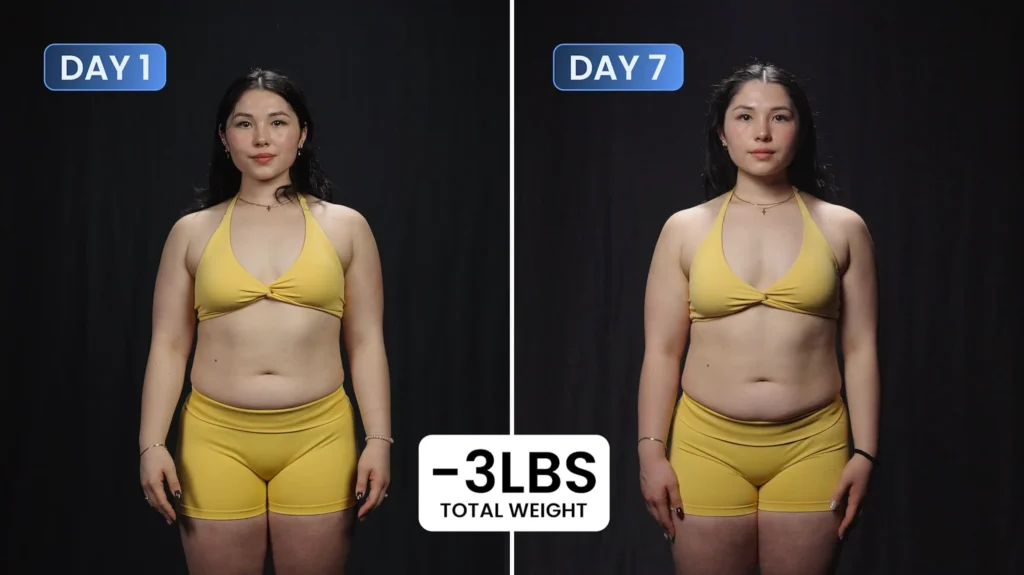
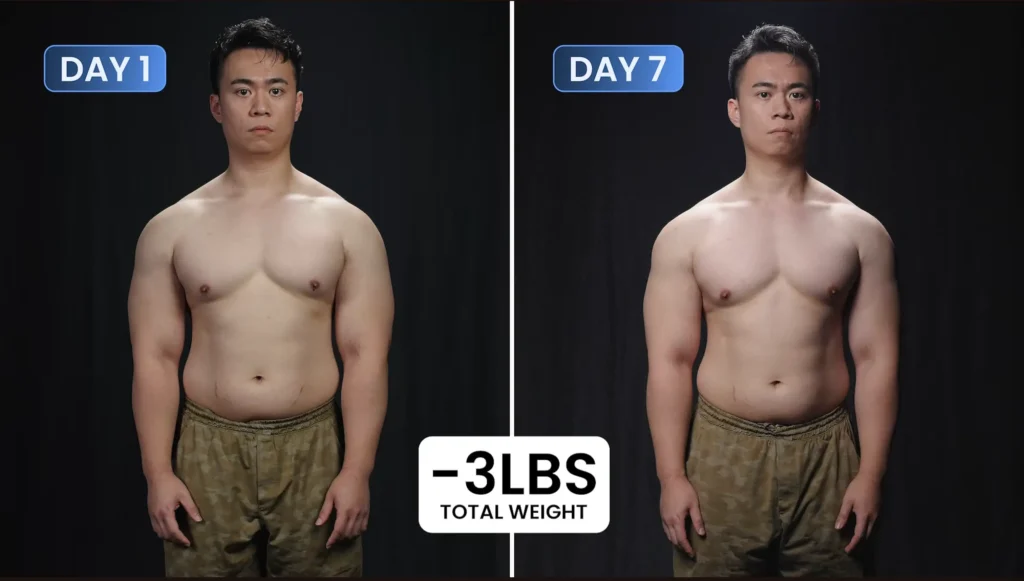
But I wanted to see whether we could push fullness even further. So I had prepared three additional science-based strategies. Each week, they would spin a wheel and add another strategy to the high volume low calorie foods diet.
Are Carbonated Drinks More Filling Than Still Water?
Carbonation may temporarily increase feelings of fullness because the gas in a carbonated drink expands in the stomach.
For the first spin, Manson and Melody landed on carbonated drinks. The new rule was simple: with every meal, they had to drink one diet soda or another carbonated beverage. Melody was not thrilled. She didn't like carbonated drinks.
The reasoning, however, came from research examining carbonation and satiety. When you drink something carbonated, the bubbles add gas to the stomach and increase its expansion.
In one study comparing carbonated water with still water, carbonation produced a larger increase in fullness that persisted for almost an hour after drinking.
The effect was immediately noticeable during the experiment. Melody was already struggling to finish her bowls, and drinking a carbonated beverage before the meal made that even harder. Manson also said the drink filled him up while helping with his cravings and making him feel more satisfied afterward.
Separate research also suggests diet drinks may help make a meal feel more satisfying and reduce the cravings that often follow eating.
What Happened During Week Two On The High Volume Low Calorie Foods Diet?
By the second week, an interesting pattern had emerged.
The high volume low calorie foods diet was succeeding at the exact thing it had been designed to do: Manson and Melody were not hungry. But eliminating hunger did not eliminate every problem associated with dieting.
Hunger Was Not The Biggest Problem
For Melody, social situations were becoming difficult. At family dinners, she had to bring her own food and sit there while everyone else ate something different. She admitted that it made her want to avoid those dinners altogether.
Manson surprisingly experienced less of that fear of missing out. He was settling into his routine and had even started reluctantly experimenting with vegetables. One day he tried pumpkin. His conclusion? Seasoning “saves the world.”
Manson And Melody Were Losing Weight Quickly
Fifteen days into the high volume low calorie foods experiment, Manson had lost six pounds and Melody had lost five. That sounded promising, but it also raised a legitimate concern for Manson. He was getting married the following year and was happy to be getting leaner, but he worried that losing weight this quickly might cost him muscle and strength.
How Did The High Volume Low Calorie Foods Diet Plan Try To Prevent Muscle Loss?
The high volume low calorie foods experiment used two main safeguards against muscle loss: frequent lean protein intake and continued progressive resistance training.
Every meal had to contain at least one protein source. The approved list was deliberately focused on high protein low calorie foods that supplied a large amount of protein for relatively few calories — chicken breast, shrimp, egg whites, and 0% Greek yogurt — and participants could eat as much of those foods as they wanted as long as everything fit within their bowl.
Just as importantly, both participants continued lifting.
They tracked their workouts through the BWS app, which pushed them to train progressively harder over time, and their strength was actually increasing during the experiment. That was an encouraging sign, but it did not prove they had preserved all their muscle. For that, we had to wait for their final scans on Day 30.
If you want your workouts, progression, and nutrition structured the same way, you can try BWS free for two weeks at builtwithscience.com.
Can Soup Help You Eat Fewer Calories?
Starting a meal with a low-calorie soup may increase fullness and reduce how much food is eaten during the rest of the meal.
Week three added the second strategy: one meal per day had to include broth, either before the meal or incorporated into the meal as soup. Melody immediately figured out what to do with it. Manson had a steeper learning curve: armed with noodles, chicken, mushrooms, carrots, and bone broth, he attempted to make what he described as his first soup. It turned out better than he expected.
The scientific reasoning came from a study in which participants ate meals under different conditions. On some occasions, they began with a low-calorie soup. When researchers compared total energy intake, participants consumed around 20% fewer calories when they started with soup than when they did not.
By this point, the strategies were stacking. Manson and Melody were filling their stomachs with:
- Large amounts of high-volume, low-calorie food
- Carbonation from their drinks
- Around 1–2 cups of broth with one meal
That created an enormous amount of physical food and liquid volume in meals that were still under roughly 500 calories.
Why Their Weight Temporarily Stalled On The High Volume Low Calorie Foods
The broth also created an unexpected problem: both participants started seeing the scale stall on the high volume low calorie foods diet.
Melody went several days without seeing any change and admitted that the number was beginning to affect her mentally. Manson had the same reaction: he felt incredibly full from the combination of soda and soup, yet when the scale stayed unchanged, he wondered whether he was eating too much.
I suspected another explanation. Bone broth is high in sodium, and they were now consuming it daily. My theory was that the sudden increase in sodium had temporarily increased water retention and masked continued fat loss on the scale. If that was correct, the scale should eventually catch up. and a week later, that initial weight bump had reversed.
Why Did Food Variety Matter So Much On The High Volume Low Calorie Foods Diet?
The high volume low calorie foods experiment increasingly suggested that controlling hunger and enjoying a diet are not the same thing.
After around 20 days, Manson was completely tired of eating the same few high volume low calorie foods. His body might have been full, but mentally he wanted beef, rice, and fried chicken. He admitted that he could not imagine continuing to eat chicken breast and shrimp in the same repetitive way after the experiment.
Melody had approached the exact same food list very differently. Because she kept creating new meals, she appeared to enjoy the diet considerably more. She still had cravings: at one point she desperately wanted chocolate. Because the experiment took place during summer, she was also bringing her own chicken breast to barbecues while everyone around her ate other food, and she eventually became fixated on getting a steak.
That distinction matters. The plan could make them physically full, but it could not remove every craving, social pressure, or preference. Normally, I would not recommend following such a strict approach without more flexibility or at least an occasional treat meal. For the purpose of the experiment, however, I wanted to see what would happen if they followed it strictly for the full 30 days.
What they didn't know was that at the end of the challenge, I'd be rewarding Melody with a weekend getaway and buying Manson a wedding suit — hopefully a few sizes down.
Does Eating More Slowly Help You Feel Full?
Slowing down a meal gives fullness and satisfaction more time to develop while you are eating.
The final strategy on the high volume low calorie foods diet was deliberately simple. For the rest of the experiment, Manson and Melody had to replace their normal utensils with a tiny fork and spoon. The original idea had been to make them use chopsticks, but Melody was already too good with chopsticks for that to reliably slow her down. So baby utensils it was.
The reasoning was that smaller utensils force you to take more bites to finish the same amount of food, which makes the meal take longer.
Neither participant particularly enjoyed the experience. Melody wasn't sure whether it was truly slowing her down or simply making meals more frustrating, and Manson was extremely happy that they had not landed on the strategy earlier in the experiment.
But despite the frustration, something interesting happened. He eventually reported that he had gone from eating three meals per day to two because he simply could not finish all the food. In his words, the strategy was both “super helpful” and “super annoying.”
What Changed During The Final Week On The High Volume Low Calorie Foods Diet?
By this point, both participants had lost a considerable amount of weight.
Normally, rapid fat loss can make hunger increasingly difficult to manage. Yet hunger still was not dominating their experience. Manson said it was no longer an issue, and Melody said she felt satisfied and was never hungry; in fact, she sometimes had to stop halfway through a meal, go do something else, and return much later because she was too full to continue.
Manson also reported feeling more energized when getting out of bed in the morning.
Their physical changes were becoming visible. Melody noticed her upper abs starting to appear, and Manson was increasingly happy with the changes he saw in the mirror. We had also taken headshots on Day 1, and by approximately Day 21, visible changes could already be seen around both participants' cheeks and jawlines.
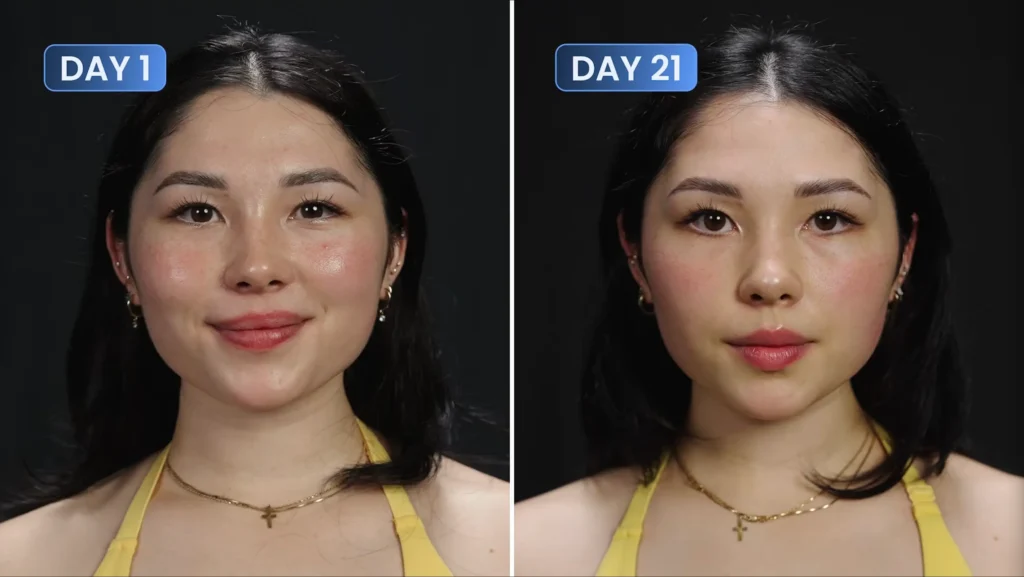
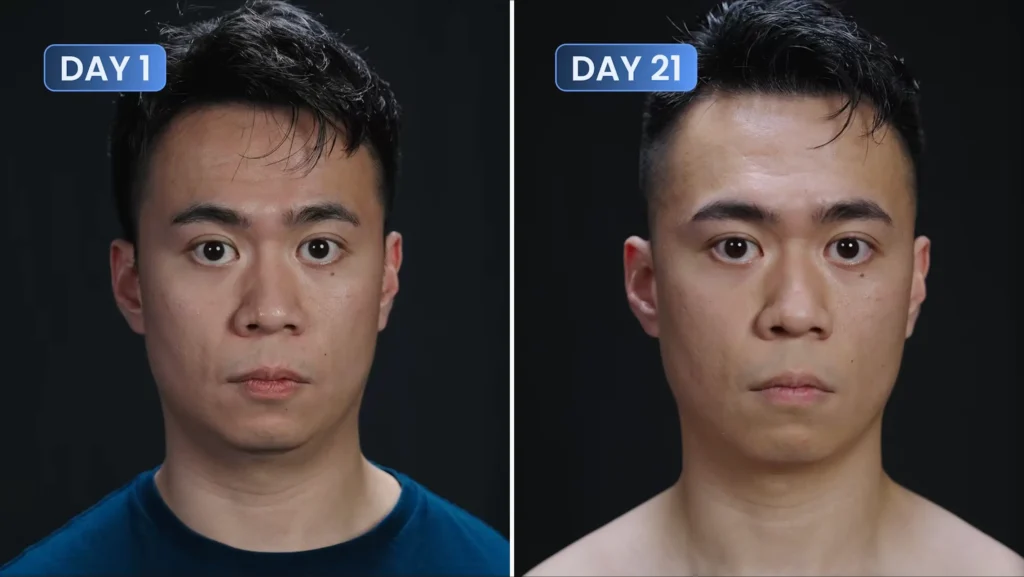
For Melody, the change affected more than what she saw in the mirror. She filmed herself wearing a short-sleeved shirt to the gym and explained that it was the first time she had felt comfortable doing so without choosing something dramatically oversized.
Manson had changed in another way. The experiment had forced someone who hated cooking to cook more and even start eating vegetables. When he told his mom, she was proud of him. Melody said the 30-day plan had also changed the way she thought about food and how it fueled her body.
Want to try the exact diet yourself? You can download the full guide for free at builtwithscience.com/fillingdiet.
Which Foods And Fullness Strategies Worked Best On The High Volume Low Calorie Foods Diet?
At the end of the high volume low calorie foods experiment, I asked both participants to choose the food and strategy that had helped them feel the fullest. Their answers were surprisingly similar.
Manson chose shrimp as his top food and the small spoon and fork as his top strategy. Melody also chose shrimp/prawns as one of her top foods. For the strategy, she chose carbonated drinks. Her explanation was simple: they made her incredibly full.
That was useful because even someone who never follows this exact 30-day diet can still take something from the experiment. The foods and strategies did not affect everyone identically, but both participants identified specific changes that noticeably increased how full their meals felt.
How Much Fat Did Manson And Melody Lose On The High Volume Low Calorie Foods Diet?
The final DEXA scans were the most important test of the high volume low calorie foods diet.
The scale could tell us how much weight they had lost; the scans could show how much of that change came from fat versus lean tissue; the difference between simple weight loss and a true body recomposition.
Melody's Final Results
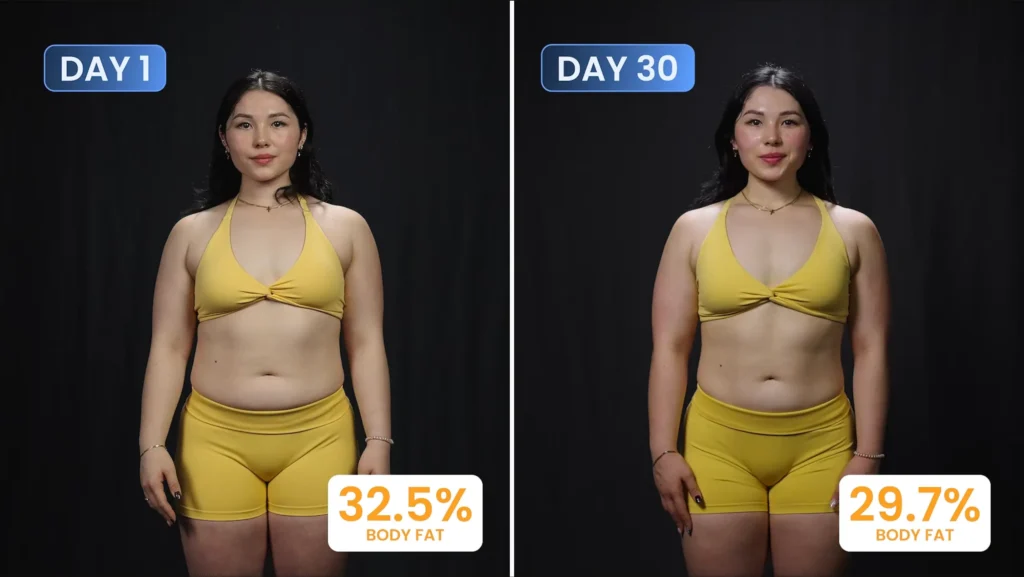
Melody lost just over 8 pounds on the scale, and according to her final scan, almost all of that loss came from fat. Her body-fat percentage changed from 32.5% to 29.7%; roughly a three-percentage-point reduction. Most importantly, the scan showed no muscle loss.
Manson's Final Results
Manson lost 10.4 pounds, of which 10.2 pounds were fat. His body-fat percentage changed from 24.7% to 20.7% — a four-percentage-point reduction. Like Melody, his final scan showed no muscle loss.
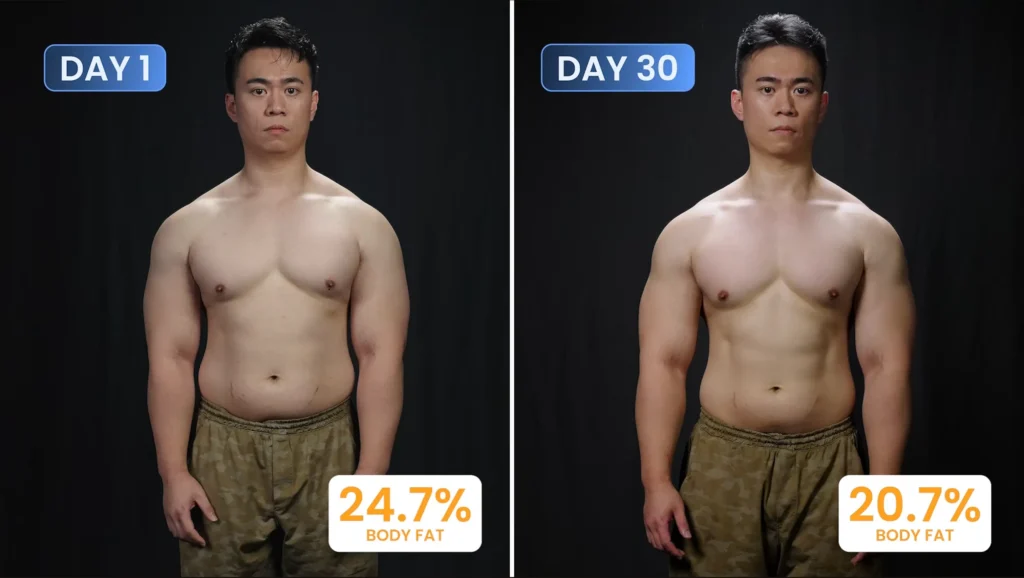
Despite being a man and a woman starting from different body-fat levels, their overall pattern of results was remarkably similar relative to where each had begun.
What Did The 30-Day High Volume Low Calorie Foods Experiment Actually Show?
This high volume low calorie foods experiment showed that, for Manson and Melody, a diet built around enormous portions of low-calorie foods successfully produced substantial fat loss without the hunger they normally associated with dieting. But it also showed why hunger is only one part of adherence.
Manson's biggest problem was monotony.
He found a few convenient high volume low calorie foods, ate them repeatedly, and eventually became sick of them. Melody created far more variety and consequently found the basic diet considerably more sustainable, but social meals and cravings still became difficult.
So the lesson is not simply that everyone should eat giant bowls of shrimp, vegetables, and sugar-free Jell-O.
It is that the amount of food you can eat for a given number of calories can make an enormous difference to how physically full a diet feels, which is often what separates a diet you abandon from the best diet to lose weight for you. For these two participants, combining high volume low calorie foods with lean protein, controlled fat portions, carbonation, soup, and slower eating made hunger almost irrelevant even while they were losing fat quickly. And the final DEXA scans showed that both managed to lose predominantly fat while preserving their muscle over the 30-day period.
That does not mean everyone would achieve the same result with high volume low calorie foods. It does mean the experiment answered the question we started with: at least for Manson and Melody, it was possible to lose a substantial amount of fat while spending most of the diet feeling extremely full.
And with Melody enjoying her getaway and Manson getting ready for his wedding, their fitness journey has actually just begun. I'll be continuing to work with them on another experiment, so don't forget to stick around to stay updated.
By the way, here’s the article summed up into a YouTube video:

Frequently Asked Questions
Can You Lose Fat Without Feeling Hungry?
For these two participants, yes. The diet produced substantial fat loss while making hunger almost irrelevant, and they more often struggled to finish their meals than to fight hunger. That doesn't guarantee the same outcome for everyone, but it shows hunger isn't an unavoidable part of dieting.
What Are High Volume Low Calorie Foods?
High volume low calorie foods are foods that take up a lot of space in your stomach for very few calories — low-calorie fruits and vegetables, konjac noodles, and sugar-free Jell-O, plus lean proteins like shrimp, chicken breast, and egg whites. They're the most filling foods for weight loss because they deliver far more food per calorie than calorie-dense options. In this experiment, they let Manson and Melody fill an oversized bowl at every meal while keeping calories low enough to lose fat.
Why Do High Volume Low Calorie Foods Keep You Full?
Your stomach walls contain stretch receptors that respond as the stomach expands during a meal, and greater stretch contributes to fullness. High volume low calorie foods trigger that stretch with very few calories, so large portions of them feel filling without adding many calories.
Does Volume Eating Help With Weight Loss?
In this experiment, volume eating (building meals around large portions of high volume low calorie foods) helped both participants lose substantial fat while rarely feeling hungry. It works by making meals physically filling for very few calories. It still requires keeping overall calories low, though, and it doesn't remove cravings or make dieting effortless.
Can You Lose Weight Without Counting Calories?
Manson and Melody both lost substantial amounts of fat during this 30-day experiment without tracking calories. However, they were still following very strict rules that heavily constrained their food choices and portions of calorie-dense fats. Their results therefore do not mean that simply ignoring calories will automatically cause fat loss.
How Do You Stay Full In A Calorie Deficit?
To stay full in a calorie deficit, this experiment built meals around high volume low calorie foods and then layered on three strategies: drinking a carbonated beverage with meals, starting a meal with low-calorie soup, and eating more slowly. Together these made the participants' meals feel far more filling without adding many calories.
Why Can Your Weight Stall While Losing Fat?
Your weight can stall even while you're still losing fat, often because of temporary water retention. In this experiment, adding daily high-sodium bone broth likely caused a short-term water-retention spike that masked continued fat loss on the scale, and the weight caught up about a week later.
Can You Lose Fat Without Losing Muscle?
In this experiment, yes, both participants lost fat with no muscle loss on their final DEXA scans through the high volume low calorie foods experiment. The two safeguards the diet relied on were eating lean protein at every meal and continuing progressive resistance training, and their strength was actually increasing throughout. That doesn't guarantee the same for everyone, but it shows fat loss and muscle preservation can happen together when protein and training are in place.. The two safeguards the diet relied on were eating lean protein at every meal and continuing progressive resistance training, and their strength was actually increasing throughout. That doesn't guarantee the same for everyone, but it shows fat loss and muscle preservation can happen together when protein and training are in place.