Cardio for Weight Loss: 10 Myths That Keep You Stuck (and What Works Instead)
by Jeremy Ethier - December 24, 2025
Cardio for weight loss isn’t about sweating more or chasing 10,000 steps. Debunk 10 myths and learn what actually moves the scale without burning out.
Running burns fat faster than walking.
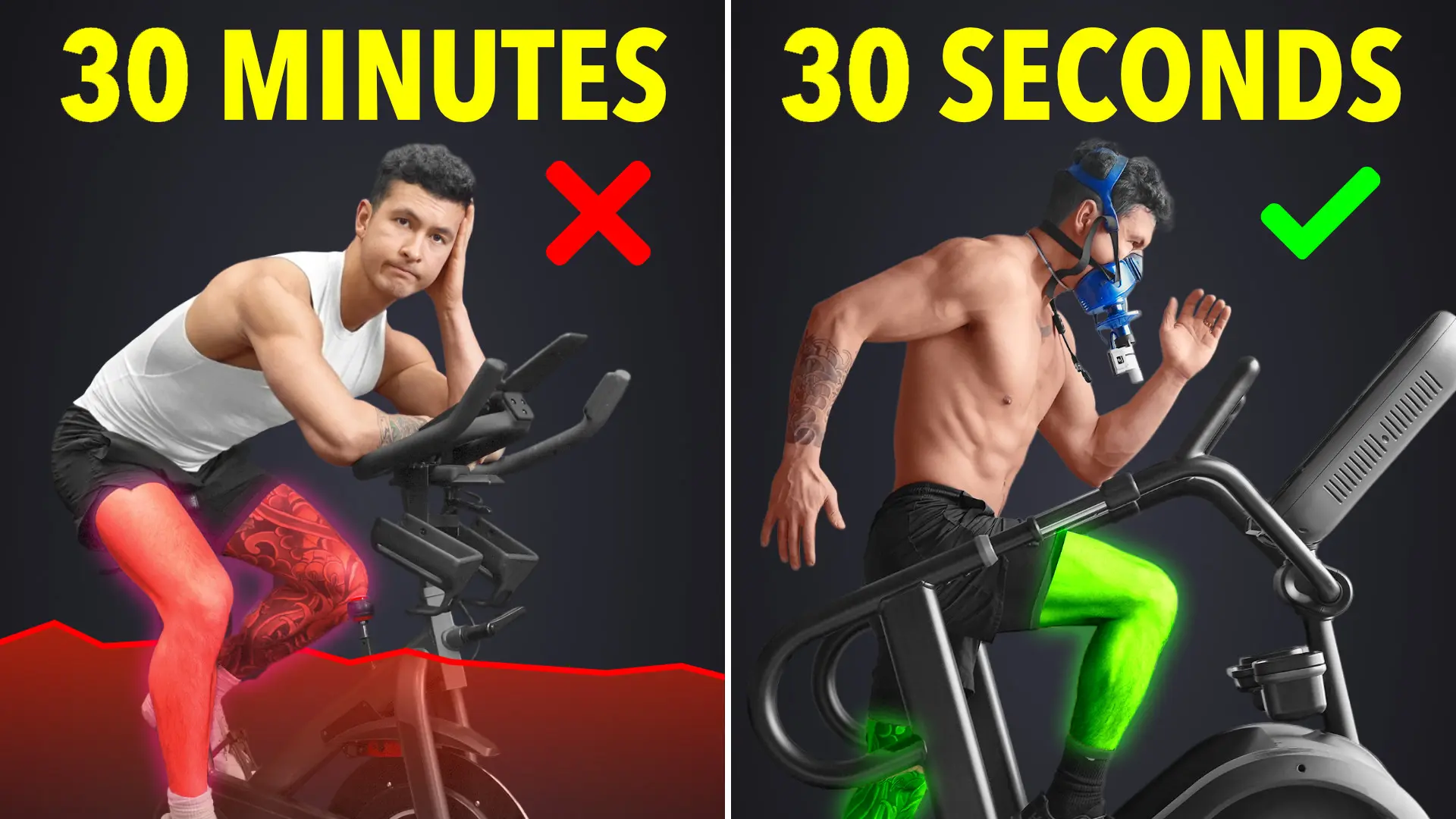
A 30-second workout can never compete with 40 minutes.
And if you do too much cardio, then you’re gonna lose muscle.
But are these actually true? If you’re doing cardio for weight loss, getting these wrong can waste months.
In this article, I’m using the world’s most accurate calorie and fat burn tracker and talking to the top sports scientists to bust the 10 biggest cardio myths.
Myth #1: Walking Isn’t Enough To Improve Conditioning
Starting with one of the most common myths: walking isn’t hard enough to improve your conditioning.
And if you’re doing cardio for weight loss, this is the kind of myth that can stop you from even getting started. To find out, my editor Andy is walking 30 minutes a day for the next two weeks to find out if his conditioning actually improves. But first, we need his baseline. Ready?
The Test: 30 Minutes Of Walking A Day For 2 Weeks
We’re running two before and after tests to see if walking improves Andy’s fitness, because if walking can move the needle, doing cardio for weight loss becomes a viable strategy for a lot of people.
Baseline Test #1: VO₂ Max (How Hard You Can Push)
The first one is a VO₂ max test.
You basically push your body as hard and as long as possible until you physically can’t go anymore.
Many scientists consider this score to be one of the strongest predictors of how fit you are and even how long you’ll live.
In fact, local firefighters are tested right here in this lab here to make sure they’re fit enough to do their jobs. But the highest scores ever recorded have come from elite cyclists, cross-country skiers, and Olympic-level triathletes.
Andy… is not one of those people.
He averages less than 3,000 steps a day and only recently got back into the gym.
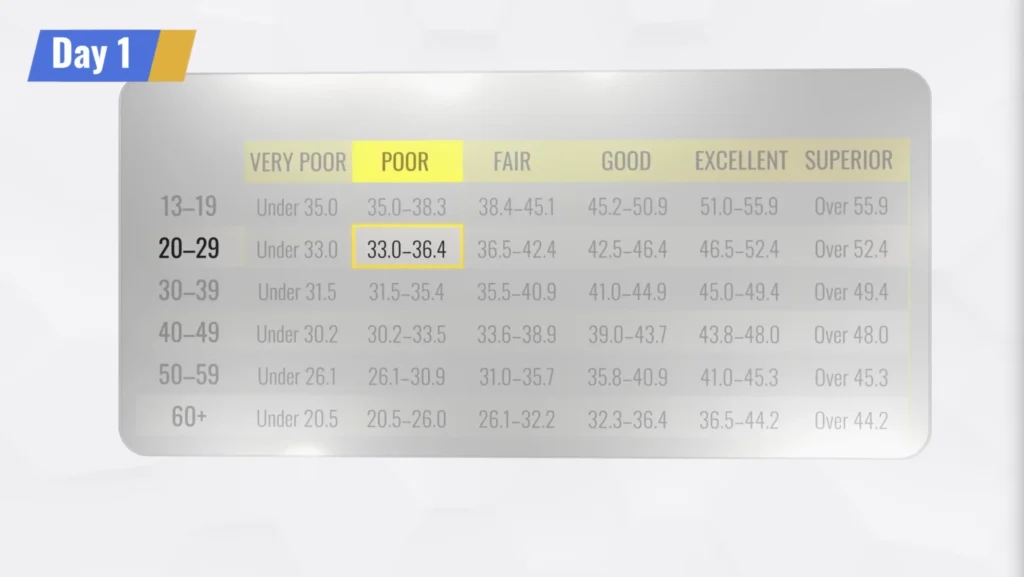
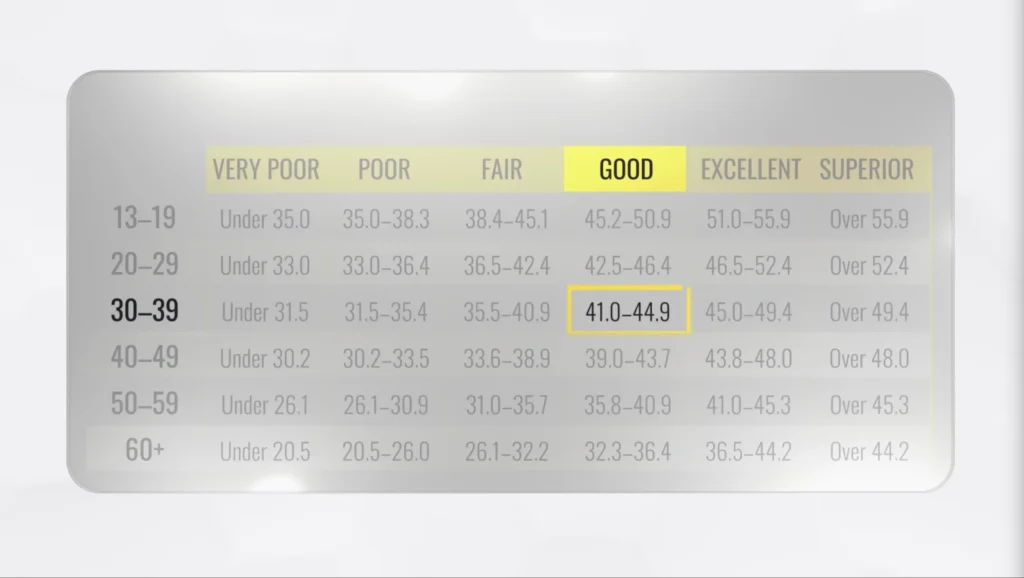
Giving him a day one VO₂ max score of 34.2, which puts him below average for his age.
Baseline Test #2: Submaximal Test (Real-life Intensity)
But we also want to measure if his heart improves under normal, less intense conditions, which is why we’re also running what’s called a submaximal test.
But Andy’s isn’t our only guinea pig…
I’ve recruited multiple test subjects with completely different body types and fitness levels to see whether or not these myths affect everyone the same way.
So while Andy is working on our first myth we still have 9 more cardio for weight loss myths to bust, including our next one: does more sweat in a workout mean more fat burn?
Myth #2: More Sweat = More Fat Burn (And What This Means For Cardio For Weight Loss)
Cycling In A Cold Gym (The Baseline Test)
To test this myth, we have Elisha cycling for 10 minutes in a cold gym while we use a metabolic cart to monitor every calorie she’s burning as well as her fat burn.
If you’re doing cardio for weight loss, this is exactly the kind of “proof” people think sweat is giving them.
The Test Setup: Same Time, Same Pace — Cold Vs Hot
And once her 10 minutes are up, she’s going to take a break for her heart rate to return back to baseline, while we turn up the heat.
Then we’ll find out if she actually burns more calories cycling for the same time and at the same pace, only this time in a hot, high sweat environment.
“How would you rank out of 10 the difficulty of the workout?”
“I would say a good 7 and ½”
“Do you think you’ll burn more calories in the hot sweaty environment?”
“Yeah I think so. Cause I’ll be sweating a lot more for sure.”
And now cycling in the warmer environment, Elisha is already breaking a sweat after just 6 minutes.
Why Fitter People Sweat Sooner (Sweat Isn’t A Fat-Loss Score)
But here’s the surprising part: fitter people actually start sweating sooner.
Your body gets better at cooling itself — it activates sweating earlier and in greater capacity so you can sustain harder efforts without overheating.
But all that extra sweat would only improve her fat loss, if it’s also causing her body to burn more calories — and for cardio for weight loss, that’s the part that actually matters.
After just 10 minutes cycling in the heat, Elisha literally had sweat dripping on the floor.
“Was this harder?”
“Yeah.”
“Last one was a 7.5 what was it this time?”
“Like a nine.”
“Do you think you burned more calories”
“Yeah for sure.”
Results: Sweat Went Up, But Calories (And Fat Burn) Didn’t
In the cool workout, Elisha burned 131 calories at an average heart rate of 150 bpm.
But in the heat?
Even though her heart rate was actually higher the whole time (160 bpm) … she burned just 120.
How?
Well, even though her heart was pumping harder to cool her body, the workout now felt much harder, and even though I tried my best to keep her on pace, I noticed her performance dipped more often, explaining the lower calorie burn.
And when we compared how much fat she burned in each workout, the percentages were quite similar.
So all that extra sweat was basically just for show.
Takeaway For Cardio For Weight Loss
If you’re doing cardio for weight loss, sweat can make a workout feel more intense, but it doesn’t automatically mean you burned more calories or more fat.
Later on I’ll use the mask to test how different workouts affect how much fat you burn, but first:
Can you eat back whatever calories you burn from exercise?
Myth #3: Can You Eat Back Whatever Calories You Burn From Exercise?
You’ve probably seen the invites to a run club that ends with donuts, ice cream or even beers.
And the assumption most people make is that as long as you workout hard first, you can eat back the calories you just burned off — which sounds great if you’re doing cardio for weight loss.
The Snack Table Test: Can You Guess What You Just Burned?
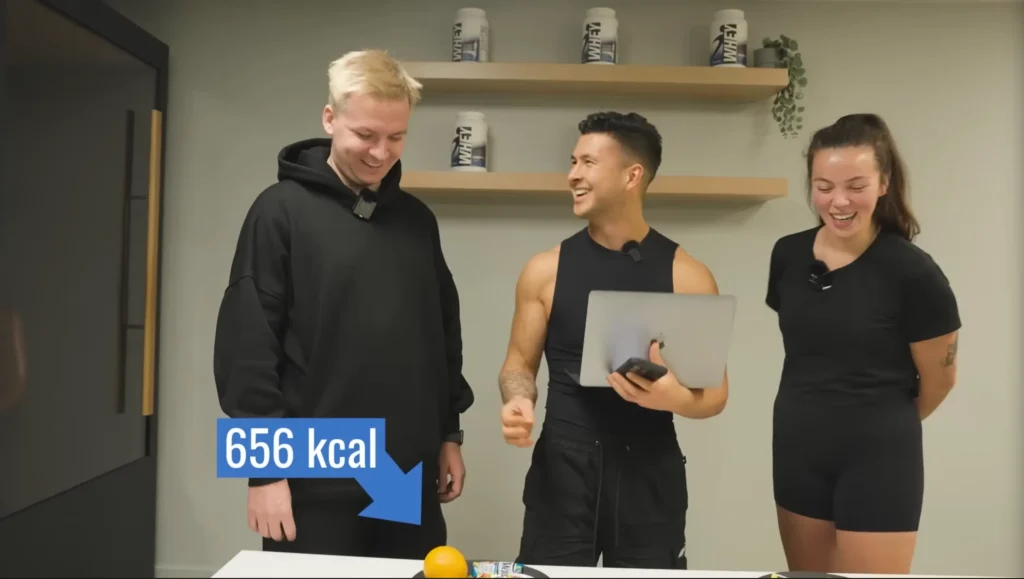
And to test this, I prepared a table of snacks for Andy and Elisha.
“Alright, so I know you’ve both been working hard. And now I want you guys to fill up a plate with what you think would be the same amount of food each of you just burned off.”
Why Most Of Us Get Calories Wrong
When I went back to analyze their plates using the Built With Science App meal scanner, their total calories added up to:
“So your plate’s 535 Calories.” “Oh God”
“Your plate’s 656 Calories”
Now, to be fair, Andy and Elisha had no idea how many calories they’d actually burned during their workouts.
So here’s the real question:
What Happens If You Eat Back The Exact Calories?
What would happen to their weight if I had them eat back that exact amount of calories?
Would their weight go up, down… or stay exactly the same?
You’d think it would just balance out — but here’s the problem:
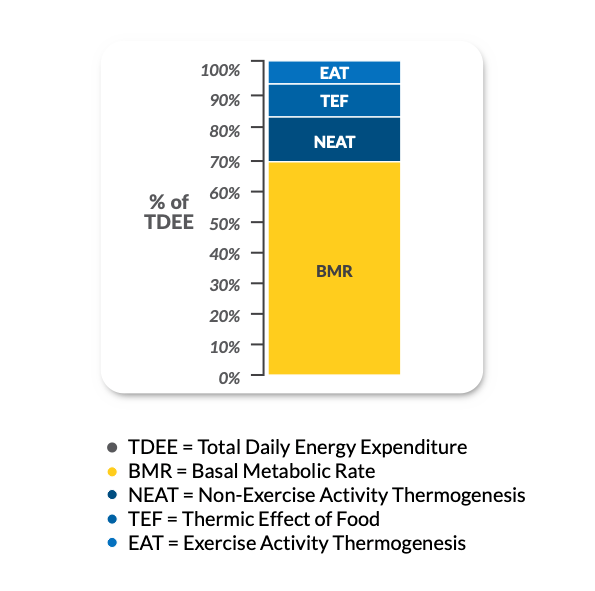
If you’re dieting, then after cardio your body tends to compensate by burning fewer calories for the rest of the day. It lowers something called NEAT — things like fidgeting, walking around, and movements you probably aren’t even aware of.
This matters a lot for cardio for weight loss, because it’s one reason the “eat back what you burned” approach often doesn’t play out the way people expect.
This is one reason why research consistently shows that when people try losing weight through cardio alone, they end up losing only 20% to 50% of what you’d predict based on the calorie burn from their workouts.
So if you burn 500 calories from cardio, then eat back 500 calories thinking you’re breaking even…
You’ll probably end up disappointed.
Takeaway For Cardio For Weight Loss
And you’re probably better off looking at cardio as a health benefit, instead of as an excuse to load up on food — especially if you’re doing cardio for weight loss.
Set your daily baseline first using our calorie calculator — then treat exercise calories as a rough buffer, not a target.
But if you still like the idea of getting calorie data after every workout, how much can you actually trust the numbers from your wearables?
Myth #4: Are Fitness Trackers Useless For Tracking Your Calories? (And What This Means For Cardio For Weight Loss)
Many people assume these devices are basically useless since they’re just estimating calories from your weight, age, and heart rate.
And if you’re doing cardio for weight loss, it’s easy to see why you’d want to know whether you can actually trust those numbers.
How We’re Testing Tracker Accuracy (Metabolic Cart Vs Apple Watch)
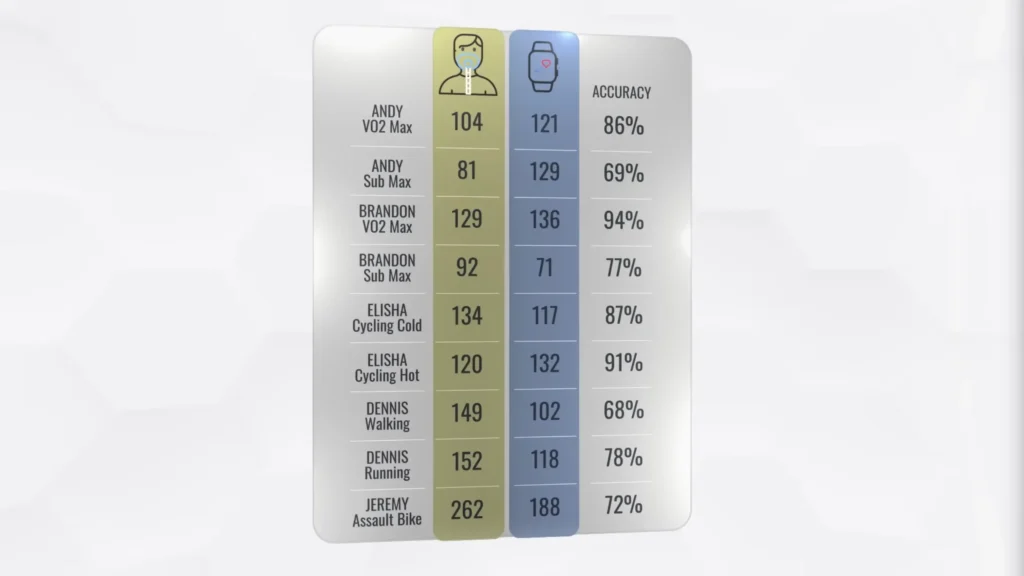
But to test this claim, we’re not only going to be collecting data with our Metabolic Cart, which has an accuracy rate above 98%, but we’ll also be using a normal Apple Watch.
So, at the end, we’ll be able to compare our results from every workout to find out just how reliable these wearable fitness trackers actually are for cardio and weight loss.
Early Results: 83% Accuracy So Far
Go ahead and lock in your prediction now, and I’ll even give you a hint. After measuring our first two exercises we are currently sitting at a respectable 83% accuracy. But it’s still early and we have 6 more myths left to test including…
Myth #5: You Need To Get 10,000 Steps Per Day
Do you actually need 10,000 steps a day to get the most health benefits — especially if you’re doing cardio for weight loss?
Where 10,000 Steps Came From (And Why It Stuck)
You see, our obsession with getting 10,000 steps per day actually dates back to the 1960’s when a Japanese Step Counter was released called the MANPO-METER with “MANPO” translating to 10,000 Steps.
But there was no actual science behind this number.
The marketing team just thought it sounded catchy.
And they were right, the 10,000 steps slogan blew up until it became synonymous with the bench mark for health.
But when you look at the new research backing this claim up, at first glance everything does actually check out.
According to an analysis from earlier this year, compared to people averaging less than 2,000 steps a day, getting 10,000 reduced all cause mortality, cardiovascular disease, type 2 diabetes and even dementia.
The Real “Minimum Effective Dose”: 7,000 Steps
But here’s where it gets interesting, the people in these studies didn’t actually need 10,000 steps to see these improvements.
Most of the health benefits actually started to level off once people were hitting a daily average of just 7,000 steps - which for many people is a more realistic target — and a more realistic way to stay consistent with cardio for weight loss.
Does Walking Still Help If You’re Already Fit?
But if you’re thinking walking only gives you big benefits if you’re older or just not very fit, I’m actually running our VO2 Max experiment with a second subject. My friend Brandon, who lifts weights and plays sports but doesn’t walk much outside of that.
So while Andy is trying to improve on a VO2 Max score of 34 Brandon will be following the same walking protocol to see if it improves his above average score of 43.
The Japanese Walking Method (A Simple Way To Make Walking Count)
To help them do that, they’ll be using what might just be the most effective way to walk: the Japanese Walking Method.
This involves 3 minutes of brisk walking at a pace that’s fast enough to get your heart rate up to 70% of its max. Then, you follow it up with 3 minutes of normal walking to get your heart rate back down, and repeat that for a total of 30 minutes.
Researchers in Japan compared this walking protocol in one group to just walking over 8,000 steps a day in another group.
After six months, the group who was assigned interval walking out performed the 8,000 steps group in every category including an almost 10% jump in aerobic capacity.
In just 2 weeks we’ll be re-testing Andy and Brandon to see if this interval walking actually improves their results …
But in the meantime, these brisk walking sessions may be good for more than just conditioning. Many people claim exercising at this low intensity, also known as zone 2 training, is the sweet spot for fat loss — and a “must” for cardio for weight loss.
Myth #6: Zone 2 Cardio = More Fat Loss
So to test this myth, here’s what I’m doing: two 10-minute workouts. If you’re doing cardio for weight loss, you'll hear this one of the most common “rules.”
The Test: Zone 2 Walk Vs Higher-Intensity Run (Same Time)
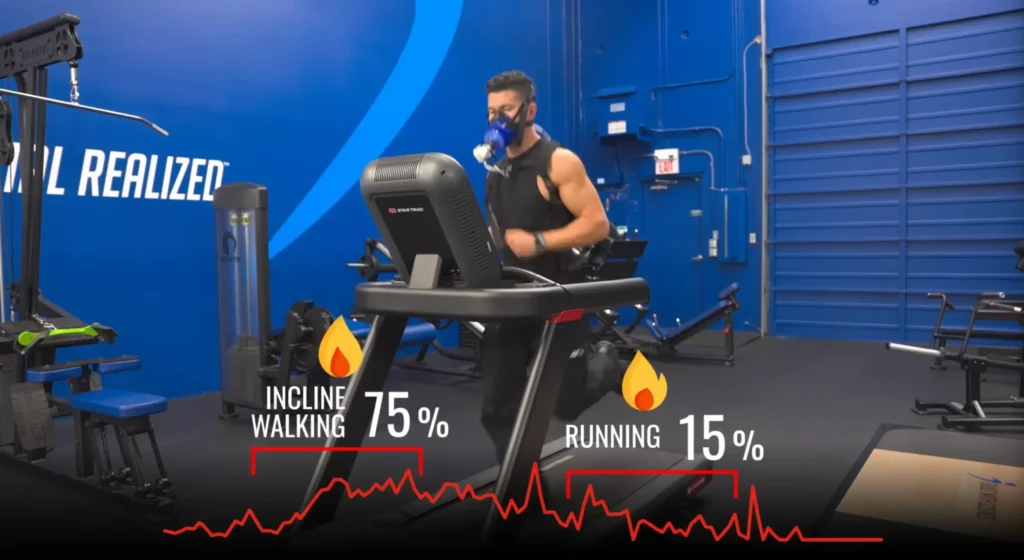
First, a zone-2 incline walk at around 60% of my max heart rate to get my body in the “fat burning zone”.
Then, I’m turning up the speed for a higher intensity run to find out if my body actually will burn less fat.
The results… might surprise you.
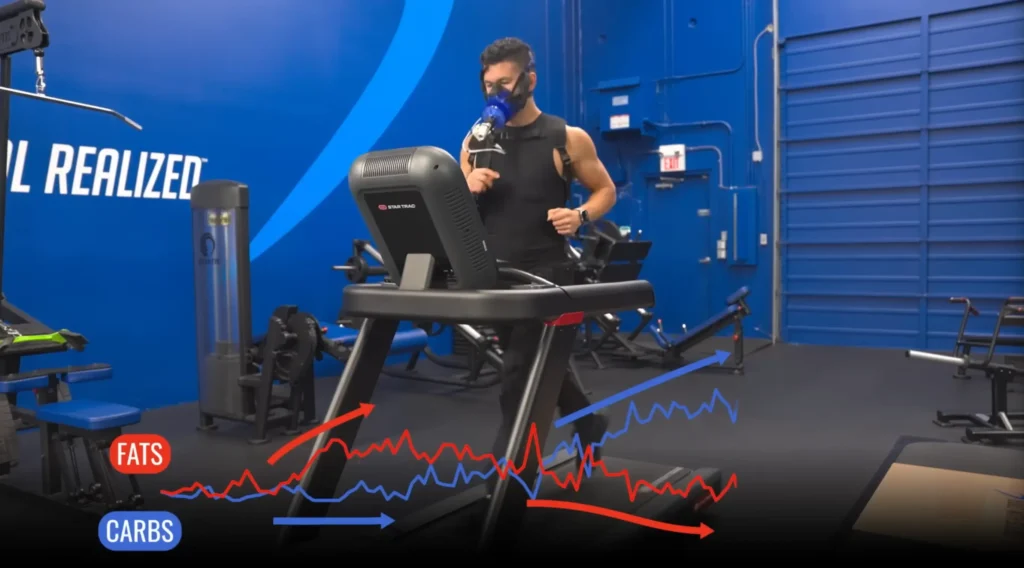
What The Data Shows: Zone 2 Burns More Fat During The Workout
So what you notice with the graph is that when I was doing the zone two training, my body was mainly using fats for energy and very little carbs. In fact, the fat burn was about 75%. And then as soon as I transitioned to running, it totally switched.
So now my body was relying on carbs and very little on fats.
We were getting only 15% fat burn with the running.
So when they say zone two training is actually the best exercise for fat burn. That’s actually true. However, there is a big difference between fat burn and actual fat loss. Let me explain.
Fat Burn Vs Fat Loss (Why This Matters For Cardio For Weight Loss)
Your body is smart. If you burn more fats during your workout, your body compensates by relying more on carbs the rest of the day. Whereas if you burned more carbs, the opposite happens.
So while Zone 2 is great for health and endurance, as it makes your body better at producing energy and recovering between workouts, when it comes to losing body fat, what matters most isn’t the heart rate zone of your workout, it’s how many total calories your body ends up burning, which is what really drives cardio for weight loss.
Aroll: Which should make it quite obvious that running is way more effective for fat loss than walking… right?
Myth #7: Running Is Better Than Walking For Fat Loss (And What This Means For Cardio For Weight Loss)
To test this claim, I sent Dennis out with our calorie tracker and asked him to walk for a mile, take a break, and then run for a mile — because if you’re doing cardio for weight loss, this is one of the most common debates.
Now Dennis and I may have different definitions of the word run.
But while his slow jog was still burning more calories per minute than his walking, when I tallied up the total results, I was not expecting both workouts to burn almost the exact same amount of calories — around 150 each (149 for walking, 152 for running).
Why The Results Looked So Similar (Pace Matters)
But when I reviewed Dennis footage, things started to make sense.
I reverse-engineered his pace based on how long each mile took him. His walk came out to 3.2 mph — which for a guy his height is actually a very brisk walk. Honestly, it would make him the perfect walking coach for Andy and Brandon.
But his “run”… was only 4.6 mph.
And if you’ve ever tried walking faster and faster, you know there’s a point where jogging actually feels easier than continuing to walk. That borderline is important. Because, while yes, Dennis still burned more calories per minute while jogging, the difference wasn’t actually that big.
Controlled Test On A Treadmill (Walking Speed Vs Jogging Speed)
To confirm this, I tested this same experiment with my wife Tahnee using a treadmill to control for speed.
Plus, you can expect an extra 10% from the afterburn depending on how hard you push.
Takeaway For Cardio For Weight Loss: Brisk Walking Still Counts
But what both tests show is that while it does take longer, walking at a brisk pace is still a great calorie burner, and for some people can be much easier to stick to or just start out with compared to more demanding cardio — which can make it a very practical form of cardio for weight loss.
So the key is choosing what you’ll actually be consistent with.
And if you’re doing cardio for weight loss, consistency is the part that actually drives results. But with busy schedules, maybe you don’t have even 20 minutes a day to block off for walking or running. And if that’s your situation, there is a way to get an even better benefit from your cardio in as little as 30 seconds.
That probably sounds too good to be true, as some people believe Cardio has to last 20 minutes or longer in order to have any benefit to your health.
Myth #8: Cardio Has To Last 20 Minutes Or Longer To Have An Impact
If you’re doing cardio for weight loss and time is your biggest excuse, this one matters.
The Study: 40 Minutes Steady Cycling Vs “Exercise Snacks”
Researchers had two groups: One did the classic approach - 40 minutes of slow and steady cycling. The other did what’s called exercise snacks — just a 30-second all-out burst running up a staircase, done 3 times throughout the day.
Both groups did their workouts 3 times a week.
After six weeks of this, the long cardio group didn’t significantly improve their VO2 max. But the stair sprint group — who trained for just 90 seconds total each workout day — Improved their VO₂ max by 7%.
Why Short Bursts Work (If You Push Hard Enough)
And this isn’t some fluke. Study after study shows these short “exercise snacks” can improve nearly every marker of fitness (VO₂ max, blood sugar, blood pressure, overall conditioning).
Depending on your fitness level, this could be 30-second sprints using stairs or a stairmaster, 20 bodyweight squats, 15 burpees, a minute of fast jogging - the key is pushing hard enough to spike your heart rate and doing this multiple times to break long periods of sitting.
Takeaway For Cardio For Weight Loss (And Real Life)
Now to be clear, longer, slower sessions are still extremely beneficial for your health in other ways. But if you’re tight on time, this is a powerful workaround for cardio for weight loss.
But with just two myths left before Andy and Brandon’s re-test… it’s time to bust our next myth.
Myth #9: Cardio Is The Best Exercise For Fat Loss
Is cardio the best exercise for fat loss?
To find out, I first tracked my calorie burn during my main form of exercise: strength training. If you’re doing cardio for weight loss, this is where many people get confused about what matters most.
Calorie Burn Comparison: Strength Training Vs Assault Bike
A full lower body workout that’s easily my toughest workout of the week.
Complete with Barbell Squats, Hip Thrusts, Hack Squats, and Hamstring Curls. After an hour of heavy lifting … my total calorie burn added up to just 370 calories.
For comparison, it took just 25 minutes of moderate-intensity on the assault bike to match that number. That’s because lifting weights involves short bursts of effort, followed by rest periods where your heart rate drops back down. Whereas on the assault bike, I’m giving consistent effort, which keeps my heart rate high the entire time.
This helps explain why a meta-analysis from earlier this year found that subjects who stuck to cardio for 10 weeks or more lost more total weight and slightly more fat than subjects who were only strength training.
But here’s where it gets complicated.
The Problem With Cardio-Only Fat Loss (Muscle Loss)
If you’re relying on cardio alone for fat loss, only 50-75% of the weight you lose typically comes from fat, as your body taps into muscle to use for energy.
And muscle loss has been shown to be correlated with higher hunger and a higher likelihood you’ll eventually regain any fat you do lose.
Why Strength Training Changes The Result
Strength training fixes that by giving your body a reason to hold onto muscle, so that almost all the weight you lose comes from fat.
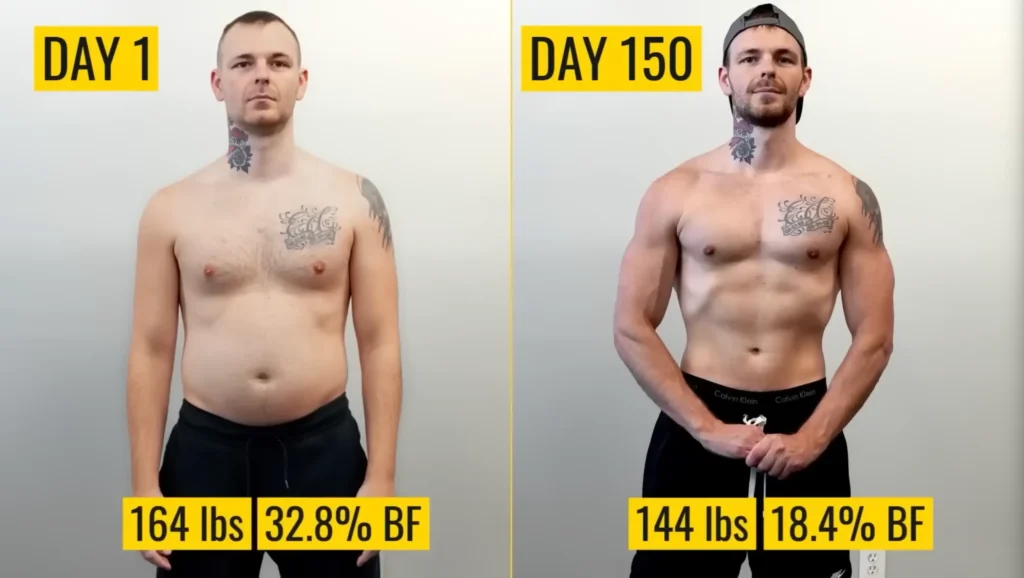
And in some cases, you could even get a similar result to my brother-in-law Dayton, who followed his workouts and diet plan made by my Built With Science plus app, and lost 19lbs. But also gained 6.8lbs of lean mass in the process. Which means he actually lost 26 lbs of pure fat in just 150 days.
If he had instead relied on cardio alone, while he may have lost a similar amount of weight, without the muscle gain, his transformation would have looked completely different.
Takeaway For Cardio For Weight Loss: Pair Cardio With Strength
So no, cardio alone isn’t the best exercise for fat loss. It strengthens your heart and burns more calories, but you need to pair it with strength training for the best long-term results — especially if you’re doing cardio for weight loss.
But what would have happened if I doubled or even tripled how much cardio Dayton was doing?
Would all that extra cardio lead to muscle loss even if he was still strength training? Well for the longest time my assumption was yes. It’s why in the past I wouldn’t even get close to a cardio machine when I was bulking because I was sure it was going to slow down my gains.
So to help me answer this question, I wanted to bring in an expert.
Myth #10: Too Much Cardio Kills Your Gains (Or “Burns Your Muscle”)
NFL Players Do Tons Of Cardio And Still Stay Jacked
“I would say that – our guys are on their feet – in terms of practice – 6 to 8 hours a week. Somewhere between 6 to 7 miles, of distance covered in a practice week.”
That’s Dr. Marc Lewis, the director of applied sports Science for the Houston Texans.
Where he’s working daily with athletes who do more cardio than any gym-bro you’ll ever meet, yet still manage to be incredibly jacked — which is worth knowing if you’re doing cardio for weight loss but also want to keep (or build) muscle.
“I’ve seen 650-pound squatters, like, with a good full range of motion squat. 400 plus bench presses. I’ve seen a 350-pound incline press. What’s crazy is that in most of those situations, we actually didn’t let them go to what their true max was – just for safety reasons.”
Now I know NFL players are a bit of an outlier compared to most lifters. Plus, they have a team of specialists helping them manage nutrition and recovery.
What Happens If An Average Lifter Adds 4–5 Cardio Sessions Per Week?
So what would happen to an average lifter who ramps up his cardio to 4-5 sessions per week?
“I don’t think there is anything that’s going to move you in an opposite direction. In fact, I think it would put you in a better place from a muscular development standpoint. I think it would help your work capacity in the gym and improve your body composition. It would help you recover between your strength training bouts. Ultimately, it’s going to help you put on strength and help you gain lean muscle mass.”
Evidence: Cardio Can Support Growth Under The Right Conditions
In fact, one group of researchers was so convinced certain cardio methods could HELP gain rather than hurt it, that they took subjects who were already fit and had them perform 45 minutes of single-leg cycling. Followed by both legs completing the same strength workout.
The results?
The cycling leg experienced grew almost twice as much, with a lot of that growth coming from Type I endurance fibers— which may respond better to low-resistance, high-rep work. But the researchers also think the cardio itself improved blood flow to and nutrient delivery to the muscle.
Which helps explain why the quads of many professional cyclists are absolutely massive.
How To Avoid The “Too Much Cardio” Problem (If You’re Doing Cardio For Weight Loss)
Now there is a point where too much cardio can actually interfere with muscle growth, but there’s 2 things you can do to prevent that from ever happening.
“Try to have strength training first and then do the aerobic.
If you can separate them, I think that’s ideal. And I would say separate them by, around six hours in a perfect world.
If you do a really long run, that’s like 90 minutes, two hours, you got to have protein after that. But you also have to make sure you, you get a good intake of carbohydrates as well. Probably somewhere between 1.5-2 grams of carbohydrates per kilogram of body mass.
A general rule of thumb, most people who worry about this stuff don’t really need to worry about it because there’s so far beneath a threshold of having to balance these things — strategically for it to actually manage or matter.”
So with no reason to fear cardio impacting your gains, it’s time to re-test Andy and Brandon to see if their 2 weeks of walking made any improvements to their fitness — and if you’re doing cardio for weight loss, this is a reminder that cardio can be part of the plan without “ruining” your strength goals.
Re-Test: Andy And Brandon’s Walking Results
“I’ve never felt as badly conditioned as now, well before I started doing workouts. And my hope is that today my results will be better and I’ll get to a better point.”
And we’ll start with their submax first, followed by their VO2 Max. So while they’re completing their first Test 1, have a chance to add up the remaining data from our Apple Watch tests, and the results were not what I was expecting.
Apple Watch Calorie Accuracy Results (And What To Do With It For Cardio For Weight Loss)
The data we got was all over the map.
With different exercises where the Apple Watch significantly over or underestimated calorie burn, and a few workouts where it seems like our data was bang on. Adding up to an average accuracy of 79%.
Which is a little better than I was expecting.
So while I won’t say it’s completely useless, given the range of estimates we got, I don’t think you should rely on it for anything more serious than just having interesting rough data. And that’s why for Brandon and Andy’s final tests. We’re relying on the most reliable equipment available for testing, which matters if you’re trying to use numbers to guide cardio for weight loss.
Andy’s VO2 Max Improvement
On his first test, Andy was only able to make it nine minutes and thirty-six seconds before he had to tap out. This time… when we hit that same 9-minute mark, he was still going.
Andy ran almost a full minute longer than he did in his first test, but how much did actually improve his score?
So if Andy chose to do nothing, by age 65, his score could drop to as low as 22, which means he’d struggle with simple things like going up the stairs or getting groceries. But in just two weeks of walking, he didn’t just slow that decline — he actually pushed it in the opposite direction.
And when we looked at the data from his submaximal test, the changes were even clearer.
At the exact same brisk walking pace as last time, Andy’s heart rate was now lower, it recovered faster, his breathing was more efficient, and he was relying more on fat and less on carbohydrates for fuel. In other words, his heart and muscles got better at doing the same work with less stress. And he could feel the difference too.
“Overall feeling in my body, I just feel better in general, feel healthier. But still, this is bad body condition, so I want to fix it by doing more workouts and taking a 90-day Calisthenics challenge.”
And that’s exactly why he decided not to stop there.
Andy’s Next Step (And Why This Matters For Cardio For Weight Loss Consistency)
Andy wants to take this to the next level, so I’ve decided to start personally coaching him through a calisthenics program to see just how fit we can get him using only his bodyweight. So make sure to stick around to make sure you don’t miss his transformation.
Brandon’s Results (And Why Fitness Level Changes The Response)
Brandon, on the other hand, his results looked quite different.
He’s quite fit, and while his already above average VO₂ max score managed to increase by 1 point, his submaximal tests didn’t show the same health improvements as Andy. Suggesting that the bump in his max score was likely from familiarity with the test, but his walking protocol wasn’t enough to drive actual improvements to his fitness - at least not within 2 weeks.
TL;DR
Myth 1 — Walking can improve conditioning — especially if you’re currently low-activity — because it can still challenge your heart enough to adapt, and you can see that in both max-effort fitness and “real-life” submax performance.
Myth 2 — Sweating more doesn’t mean you burned more fat — sweat mostly reflects heat regulation, and a hotter environment can make the workout feel harder while performance slips, lowering total calories burned even if heart rate is higher.
Myth 3 — “Eating back” exercise calories often stalls results because people misestimate both food and burn, and after cardio your body may compensate by moving less the rest of the day (lower NEAT), so the math doesn’t “cancel out” like you’d expect.
Myth 4 — Fitness trackers aren’t useless, but the calorie number is a rough estimate — useful for trends and curiosity, not precise enough to base serious decisions on (like exactly how much to eat back).
Myth 5 — 10,000 steps isn’t a magic science-based number — it started as marketing — and newer evidence suggests most benefits show up well before that, with improvements leveling off around ~7,000 steps for many people.
Myth 6 — Zone 2 does burn a higher percentage of fat during the workout, but fat burn isn’t the same as fat loss — your body can compensate later, so the biggest driver of fat loss is still total calories burned over time.
Myth 7 — Running isn’t automatically better than walking for fat loss — pace matters. A brisk walk can be close to a slow jog in total calories, and the best option is the one you can stay consistent with.
Myth 8 — Cardio doesn’t need 20+ minutes to have an impact — short, hard “exercise snacks” can improve fitness by spiking heart rate multiple times a day, making them a powerful tool when time is tight.
Myth 9 — Cardio can burn calories faster than lifting and often drives more total weight loss, but cardio-only increases the risk of losing muscle — and that can backfire long-term — so the best results come from pairing cardio with strength training.
Myth 10 — Most people don’t do enough cardio to “kill gains” — adding cardio can actually improve work capacity, recovery, and body composition — and if volumes get high, smart timing (separate sessions) and fueling help prevent interference.
Biggest Takeaway (And How To Apply It To Cardio For Weight Loss)
And that actually reinforces the biggest takeaway from this.
Exercise works in almost any form — as long as it’s challenging enough for you. It doesn’t have to be all-out or time-consuming. Moving most days — even just walking — already makes a difference. And occasionally adding something more challenging helps keep pushing your fitness forward. But there’s no magic exercise or perfect intensity. The best exercise is the one you can stick to long-term — and that’s exactly how cardio for weight loss works best too.
And that’s exactly the approach we take with our Built With Science Plus app.
It takes care of your strength training, your diet, and your cardio for weight loss for you - nothing extreme, just a clear plan that adjusts as you go. It’s even taken my brother-in-law, Dayton, from this, a similar starting point as Andy, all the way to this in just 150 days.
So if you’re not sure where to begin, click the button below to try it for free for two weeks. Because the longer you wait to take care of your health, the harder it gets to get it back.
Click the button below to try the BWS+ app for 2 weeks, for free, no strings attached: