

What 30 Minutes Of Cardio A Day Did To My Body
Quick Answer
Over 30 days of adding 30 minutes of cardio a day alongside lifting, my VO2 max rose from 58 to 61, my body fat dropped 1%, and MRI scans showed no upper-body muscle loss, with a small trend toward lower-body growth. So no, 30 minutes of cardio a day did not kill my gains. But adding it aggressively demanded smarter timing, more carbs, and careful recovery, and it exposed weak points along the way: foot pain on my first run, poor fat utilization, and very high lactate.
Key Takeaways
- Thirty minutes of cardio a day did not cause measurable muscle loss in this 30-day experiment.
- VO2 max improved from 58 to 61, showing a clear boost in cardiovascular fitness.
- Body fat dropped by 1%, even though calorie intake had to increase to support the extra training.
- MRI scans showed no upper-body muscle loss and a small trend toward lower-body growth.
- Cardio worked best when done after weights or later in the day, not before lifting.
- Extra carbs became important for maintaining workout performance and avoiding that “empty” feeling.
- Running exposed weak points that lifting alone did not, especially foot and lower-body impact tolerance.
- Zone 2 cardio helped build the aerobic base, while harder intervals helped with VO2 max and lactate clearance.
- Cardio did not ruin strength performance — it may have even helped with higher-rep fatigue.
- The biggest lesson: cardio does not kill gains by default, but poor recovery, under-eating, and bad timing can.
Running is cool as hell.
The problem is, I hate it.
I lift weights regularly, but cardio has never been the thing I naturally gravitate toward. And like a lot of lifters, I had the same question in the back of my mind: if I suddenly start doing a lot more cardio, like say, 30 minutes of cardio a day, is it going to kill my gains?
Then I got an invitation that forced the question.
A YouTuber named Browney asked me to represent Team Canada in Hyrox, an international hybrid fitness race, alongside my fellow YouTuber Will Tennyson, against some of the top athletes and influencers from around the world.

So I decided to use the 30 days of training as a chance to test the cardio-versus-muscle question properly.
For 30 days, I did 30 minutes of cardio a day while continuing to lift.
I used a VO2 max test to measure my cardiovascular fitness, MRI scans to measure what happened to my muscles, and DXA scans to track changes in body fat. At the end of the 30 days, I flew to London to compete in Hyrox against athletes and influencers from around the world.
The results were not what I expected.
What Happens When You Add 30 Minutes of Cardio A Day For 30 Days?
Adding 30 minutes of cardio a day improved my VO2 max, helped my body become better at using fat for fuel, dropped my body fat by 1%, and did not cause measurable upper-body muscle loss on MRI. My lower body even showed a very small trend toward muscle growth, likely because the Hyrox training added a lot of indirect leg volume.
But the experiment also exposed some serious weak points.
My first run triggered foot pain, my early testing showed poor fat utilization and very high lactate buildup, and my body weight dropped faster than I wanted until I increased calories.
In other words, 30 minutes of cardio a day did not “kill my gains.”
But adding it aggressively did require smarter training, better fueling, and more careful recovery than I expected.
Why I Started With A VO2 Max Test
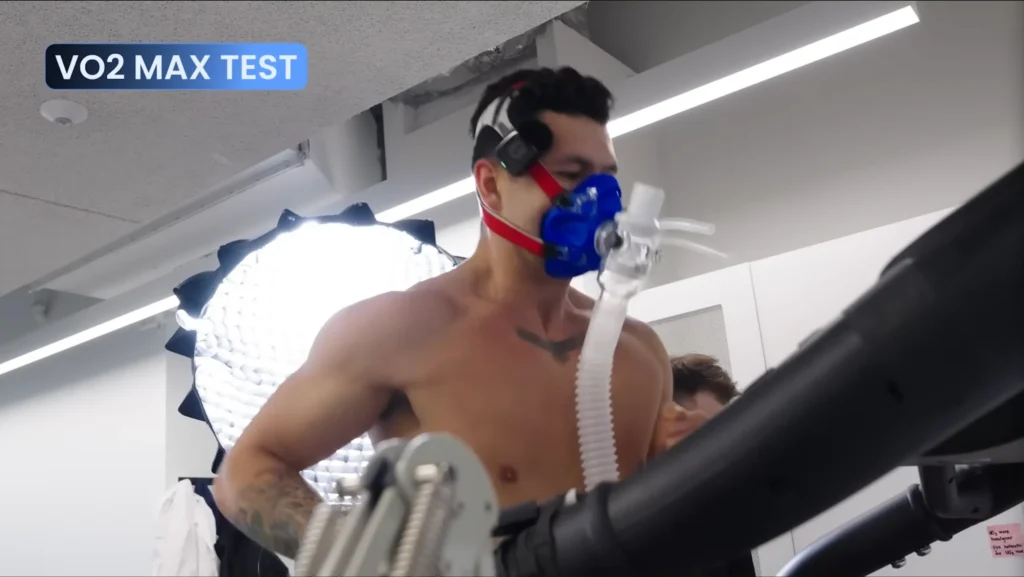
A VO2 max test measures how well your body uses oxygen during intense exercise. The higher your VO2 max, the better your cardiovascular fitness tends to be.
Before starting the 30-day experiment of 30 minutes of cardio a day, I needed to know where my cardio actually stood. The test itself is brutal: you run until you basically cannot continue.
The average gym bro typically lands somewhere in the mid-30s to 40s, while elite athletes can score much higher. Cristiano Ronaldo has been rumored to have scored around 75 in his prime.
My Day 1 score was 58.
That was not Ronaldo-level, but it did put me around the top 2% for my age. On paper, that sounded like a great start.
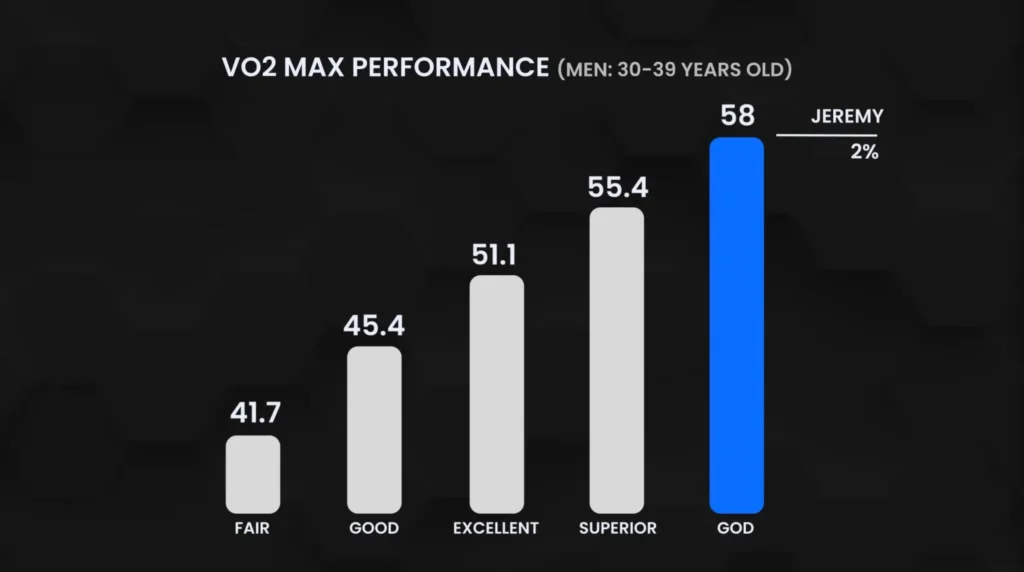
But when we looked more closely at the data, the test revealed two serious problems I needed to fix before race day.
What My Day 1 Test Revealed
My Day 1 test showed that having a big “engine” was not enough.
My cardiovascular fitness looked strong, but my body was not using fuel efficiently, and it struggled with lactate buildup under hard effort.
That mattered because the race I was preparing for was not a short lab test. It was Hyrox: a hybrid fitness race where you run 1km, move straight into a brutal workout station, then repeat that pattern eight times.
If I tried to rely only on grit and high intensity, I was probably going to burn out.
Why My Body Was Burning Through Carbs Too Quickly
My body was relying too heavily on carbs for energy instead of burning more fat. That is a problem because carb stores are limited and run out faster than fat stores.
So even though my VO2 max score suggested I had a strong engine, that engine could not last as long as it needed to. For a race like Hyrox, where pacing and repeat efforts matter, that was a major weakness.
The Lactate Problem
Lactate rises during intense activity. When your body is not good at clearing it, that buildup contributes to the painful burn you feel in your muscles.
After my VO2 max test, my lactate levels were extremely high.
That helped explain why I could push through a 20-minute test, but also why that same all-out approach would not work in a longer race.
I needed to train my body to clear lactate better and use fat more efficiently.
How Zone 2 Training Was Supposed To Help
Zone 2 training means exercising hard enough to raise your heart rate, but not so hard that you cannot sustain the effort. For me, that meant staying around 60-70% of my max heart rate, or roughly 120-140 beats per minute. If you are trying to build your own aerobic base, it helps to understand how cardio fits alongside strength training.

A simple way to tell if you are in Zone 2 is the conversation test. If you can talk, but with a little heavier breathing, you are probably close.
The goal of Zone 2 training was to help my body get better at using fat for energy and build the aerobic base I was missing. The downside was that it was painfully boring for me. To get the full benefit, I had to stay there for at least an hour, and I would much rather do shorter, more intense workouts.
But after just one run, I realized my cardiovascular system was not the only thing that needed work.
My First Run Exposed A Different Weak Point
Being “in shape” does not automatically mean your joints, tendons, and bones are ready for running. My cardio test went well, but my first run left me with brutal foot pain.
The timing could not have been worse. I was training for Hyrox, one of the toughest fitness races out there. The format is simple but vicious: run 1km, complete a workout station, then repeat that eight times. The best athletes finish in under 60 minutes.
At that point, I could not even run 60 seconds without pain.
I went to see my physiotherapist, Rajan, who suspected I had inflamed one of the joints and tendons across the bottom of my foot. The best-case scenario was still taking time off running, which was not exactly comforting when I only had 30 days to prepare.

That was the first big lesson: lifting regularly had not prepared my body for the impact demands of running.
Honestly, after the physio appointment, I was about 50/50 on whether to keep going. I did not want to fly across the world only to embarrass myself, so I gave myself until the end of the week to decide.
For the first few days, I swapped running for cycling and the assault bike, which were much easier on my joints and my foot. That kept my cardio moving forward while giving the injury a chance to settle.
But I still had one major question hanging over the whole experiment.
Does Cardio Kill Muscle Growth?
Cardio does not automatically mean muscle loss, but the outcome depends on context.
In the research discussed here, beginners seemed less affected, while more-trained lifters showed a slight negative effect, which is why timing, fueling, and leg-day recovery mattered to me. We cover the lifting mistakes that can make muscle retention harder in this separate guide.
To test what would happen to me, I got MRI scans of my upper and lower body on Day 1. The scans measured muscle thickness and cross-sectional area, so if I lost muscle during the 30 minutes of cardio a day experiment, I would know how much and where it came from.
I also used DXA scans to track changes in body fat.
The research was at least somewhat reassuring. A 2021 meta-analysis combined results from 27 studies looking at whether cardio paired with strength training negatively affected muscle growth. Overall, people who combined cardio with weight training saw essentially the same muscle growth as those who only lifted weights.
But there was an important caveat: this was mainly true for beginners. The researchers found a slightly negative effect in more trained individuals, which was not exactly comforting for me.
So I followed three rules while doing this 30 minutes of cardio a day experiment to give myself the best chance of preserving muscle while adding cardio.
Rule 1: Do Cardio After Weights
Doing long or intense cardio before lifting can fatigue your energy systems and nervous system. That can affect your strength when you get to the weights.
So, for this 30 minutes of cardio a day experiment, cardio went after weights or later in the day. The goal was to protect performance in my lifting sessions as much as possible.
Rule 2: Refuel Properly
Protein matters for muscle retention, but with all the extra cardio I'm doing during this 30 minutes of cardio a day experiment, carbs became a much bigger priority than usual.
I was burning through more carbs and started feeling “empty” during weight workouts. So it was not just about eating enough calories to prevent excessive weight loss. A lot of those calories needed to come from carbs.
That meant quick carbs like bananas and rice cakes before workouts, and more complex carbs like potatoes and rice after.
Rule 3: Protect Leg Days
Long runs are one of the most taxing forms of cardio for your legs. They can leave your legs sore the next day, almost like a heavy leg workout.
Because my legs were already a weak point, I needed them as fresh as possible when I trained them. That meant no long runs the day before leg day.
How I Trained For Hyrox
Hyrox training combines running with repeated workout stations, so I could not only build general cardio. I had to practice running while fatigued and moving straight into stations like sled pushes, rowing, SkiErg work, burpees, and wall balls.

Rajan had competed in Hyrox before, so once my foot started improving, he helped me learn what the race would actually demand.
He pointed out that I was moving from bodybuilding-style training into hybrid training. That transition was going to be tough because I was not just trying to get fitter. I was asking my body to handle running, strength endurance, and repeated high-output stations in the same session.
Zone 2 Conditioning
Two cardio sessions per week were focused on Zone 2 conditioning.
These sessions were meant to improve my ability to sustain effort, use fat as fuel, and build the aerobic base I lacked. They were not the most exciting workouts, but they directly targeted one of the biggest weaknesses from my VO2 max test.
What Is The Norwegian 4x4 Training Method?
Three times per week, I added more intense training sessions.
One of the key protocols was the Norwegian training method, which has been used by some of the top endurance athletes in the world. One famous version is simple: choose a cardio modality, push as hard as you can for four minutes, recover for three minutes, and repeat that four times.
It is a brutal 30-minute workout.
It was also similar to the way I had always preferred doing cardio: short, hard efforts instead of long, steady sessions. That may help explain why my VO2 max was already high on Day 1, even though I had not been doing much traditional running.
Hyrox-Specific Stations
The only way to prepare for Hyrox stations was to practice them.
That meant learning how to move efficiently on the sled push, SkiErg, rower, burpees, and other race stations. Some of the technique work felt good. Some of it was humbling. But the more specific the training became, the more confident I started to feel.
By the end of the first week, Rajan was surprised by how quickly I was improving. That gave me some hope — until I saw the list of competitors.
Some teams had athletes who had already competed in major Hyrox events. The South Korean team had won the Asian “Fit 100,” and another competitor was a pro UFC fighter. Suddenly, this did not feel like a casual fitness challenge anymore.
Why Running Started To Feel Better Mentally
Running can feel awful at first, but sustained cardio, specifically, 30 minutes of cardio a day, can also create a mental high that is hard to replicate with weights.
By Week 2, something unexpected happened: I started to understand the runner's high.
During moderate to high-intensity cardio, your body gradually releases a compound called anandamide, often called the “bliss molecule.” It acts on some of the same brain receptors as THC, the compound associated with cannabis.
The catch is that most people do not sustain the right conditions long enough to feel it. Once you reach roughly 20-40 minutes of cardio, enough of these molecules may be released for you to experience that runner's high.
That helped explain why I did not get the same feeling from lifting. Weight training is usually made up of short, intense bursts followed by rest periods. You do not sustain the same consistent effort long enough.
For me, that healthy high became one of the biggest motivators in the experiment. If the MRI showed I had not lost much muscle, I could actually see myself keeping running in my routine after the race.
What My First Mock Hyrox Revealed
A mock Hyrox showed me that my conditioning had improved, but also that pacing would make or break the race.
With just over 16 days before flying to London, I asked my friend Jeff to test my conditioning. He had competed in Hyrox twice, and we planned to run about 80% of a full race together.
The test was simple: run 800 meters, move straight into a station, and keep repeating the pattern.
My goal was to finish the circuit in under one hour. If the top athletes were completing a full Hyrox in around 60 minutes, and I could not complete 80% of one in that same time, I would have no shot at doing well in the final race.
Jeff's advice was to play to our strengths.
In a duos race, both teammates run the same amount, but they can split the stations strategically. Will Tennyson, my original teammate, was strong and likely would have handled more of the sled pulls and pushes. I was probably better suited to burpees, SkiErg, and rowing.
As the mock race went on, my body started hitting its breaking point. By the final stations, everything became mental. I just had to push through.
We finished in 55:21.
That was the turning point. For the first time, finishing well actually felt possible, and a lot of the doubt from the foot injury lifted. Then I got a call that changed the plan: Will had a scheduling conflict and had to drop out.
So I needed a new teammate. Jeff stepped in.
How I Prevented Rapid Weight Loss From Becoming Muscle Loss
Rapid weight loss during heavy training can increase the risk of muscle loss, especially when the goal is to maintain strength and performance.
Two weeks into the 30 minutes of cardio a day experiment, I was down almost four pounds.
That was not good. I had been eating around 2,600 calories per day, which would normally maintain my weight, but all the extra activity had pushed me into a much bigger deficit than expected. If you want to estimate your own maintenance level before accounting for training like this, the TDEE calculator is a good starting point.
Because I was logging my food and weight consistently in the Built With Science Plus app throughout this 30 minutes of cardio a day experiment, the app detected that I was losing weight too quickly and bumped my calorie target to 2,800.
That adjustment mattered because my muscles were starting to look and feel flatter than usual from the training and weight loss. If the deficit continued at that pace, the risk of losing muscle would likely become a much bigger concern.
Can Cardio Improve Strength?
Cardio may support strength performance by improving lactate clearance and helping muscles produce energy more efficiently. That can matter during higher-rep lifting, where fatigue and burning sensations build as you get closer to failure.
In Week 3 of our 30 minutes of cardio a day experiment, something unexpected happened: I hit a volume PR on the hack squat.
That was surprising, especially with all the extra cardio I had been doing. But it started to make sense when I thought back to my Day 1 test.
My body had been inefficient at clearing lactate.
Lactate also builds up during higher-rep strength training, along with hydrogen ions that contribute to the burning sensation in your muscles as you approach failure.
Cardio, especially high-intensity cardio, can train your muscles to clear that more efficiently. It can also train your cells to produce more energy, which may help your muscles work harder, recover faster, and ultimately support better workouts.
That may help explain why, at least in this 30 minutes of cardio a day experiment, cardio did not seem to interfere with my lifting as much as I expected.
But the real test would be the final MRI.
How My Final Race Strategy Changed
With one week left of our 30 minutes of cardio a day experiment, Jeff and I tried to complete a full Hyrox at the pace we thought we would need to match the strongest teams.
We made it about 70% of the way.
At that point, it was obvious there was not much more conditioning we could build in seven days. Instead, we needed a smarter race strategy.
So before flying to London, I spoke with Cole Learn, a pro Canadian Hyrox competitor who had set multiple records and competed in the race over 20 times.

His biggest advice was to control heart rate from the start. Because I was bigger, stronger, and carrying more muscle, I needed to preserve that strength for later in the race. If my heart rate got too high too early, my muscles would not work the way they needed to.
He also told us to treat the rower almost like a recovery station. It was not a place where we would make up a ton of time, but it was a place where we could lose a lot of energy and spike heart rate if we pushed too hard.
That changed the way I thought about the final race. The goal was no longer to chase every team that passed us early. It was to stay controlled, stick to the plan, and save enough energy to finish strong.
What Happened After 30 Days Of 30 Minutes Of Cardio A Day?
After 30 days of doing 30 minutes of cardio a day plus lifting, my cardiovascular fitness improved, my body composition improved, and my MRI scans showed no upper-body muscle loss. The final results were much better than I expected.
A few days before flying to London, I retested my VO2 max and repeated the body composition assessments.
VO2 Max Results
My VO2 max increased from 58 on Day 1 to 61 by Day 30.
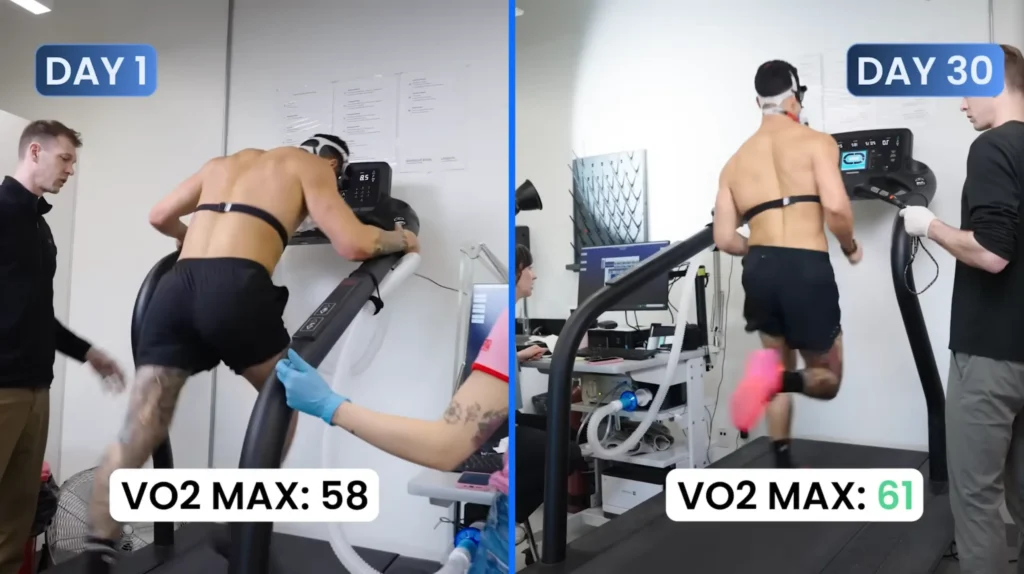
That was a massive jump considering I was already starting from a high score. Even more promising, my body's ability to burn fat rather than relying so heavily on carbs improved dramatically.
That meant I was going into race day with a better chance of avoiding the same burnout pattern I saw in my early testing.
MRI Muscle Results
After 30 minutes of cardio a day for 30 days plus weights, my upper-body MRI showed no change. I did not gain upper-body muscle, but I did not lose it either.
My lower-body MRI showed a very small trend toward muscle growth. That was not what I expected, but it may have been partly due to all the indirect leg volume from running and Hyrox-specific training.
DXA Body Fat Results
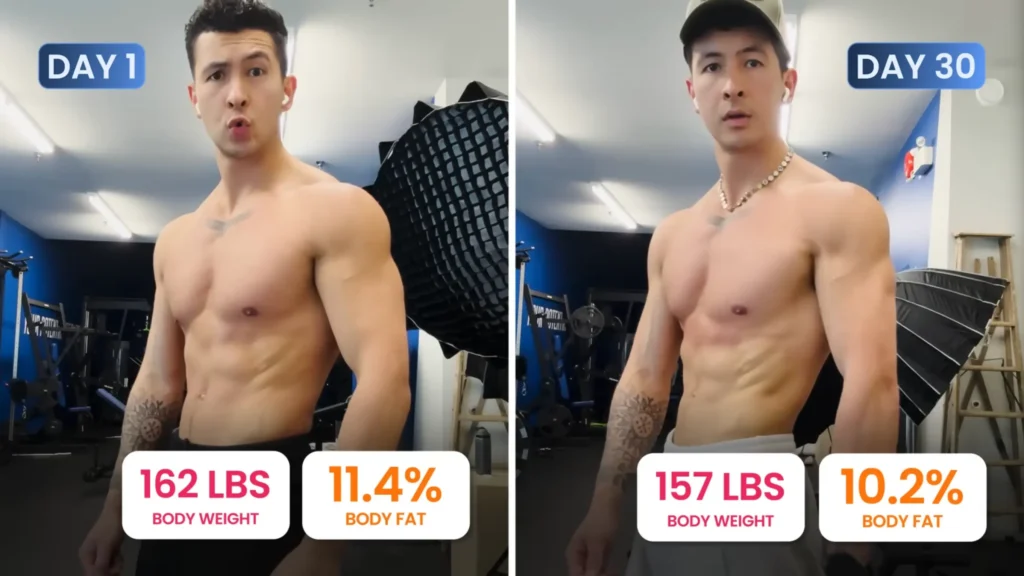
My DXA scan showed that my body fat dropped by 1% after this 30 minutes of cardio a day experiment.
That surprised me because I was eating more calories than I ever had while losing weight. But with the amount of extra training I was doing, my total activity had increased enough to still create fat loss. That said, this was a result of my total activity and calorie balance, not proof that cardio is required for fat loss.
Race Results
When Jeff and I arrived in London and saw the competition from 16 countries, I was intimidated. Team Korea looked strong. Team France had a Hyrox champion. Team USA looked much stronger than expected.
In the first lap, a lot of teams took off ahead of us. I immediately felt the urge to sprint and catch up.
But the whole point of the challenge was to push myself out of my comfort zone, even if I failed. So instead of panicking, Jeff and I stuck to our pace and focused on executing the plan.
The more we stopped worrying about the standings, the better we started doing. Team Canada climbed from around 10th place into 4th.
By the final wall balls, there was one podium spot left.
Jeff and I crossed the finish line in third place.
The Biggest Lesson From 30 Minutes Of Cardio A Day For 30 Days
The biggest lesson from 30 minutes of cardio a day was not just that cardio can improve fitness without automatically killing muscle. It was that doing something hard, unfamiliar, and uncomfortable can change how you see yourself.
At the start of this 30 minutes of cardio a day experiment, I was worried about failing.
I almost backed out because I did not want to embarrass myself. But by the end, I had improved my VO2 max, preserved my muscle, reduced body fat, competed on an international stage, and finished on the podium.
I also realized I want to keep regular cardio in my routine.
Not because I suddenly love every second of running, but because it gave me something weight training alone does not always provide. It challenged my fitness, my mental toughness, and my fear of failure in a completely different way.
Once a year, I want to do one hard thing. Something that scares me. Something that risks failure.
Because when you keep going despite those doubts, you never know what is possible.
By the way, here’s the article summed up into a YouTube video:

FAQs
Does 30 Minutes Of Cardio A Day Make You Lose Muscle?
Thirty minutes of cardio a day does not automatically make you lose muscle, especially if you keep lifting, eat enough protein, fuel properly, and manage recovery. In this 30-day experiment, MRI scans showed no upper-body muscle loss and a very small trend toward lower-body muscle growth.
Should You Do Cardio Before Or After Weights?
If the cardio is long or intense, it is better to do it after weights or later in the day. Doing hard cardio before lifting can fatigue your energy systems and nervous system, which may reduce strength performance during your workout.
What Is Zone 2 Cardio?
Zone 2 cardio is moderate-intensity training done at roughly 60-70% of your max heart rate. A simple way to estimate it is the conversation test: you should be able to talk, but with slightly heavier breathing.
Why Did Cardio Improve VO2 Max So Quickly?
The 30-day plan of doing 30 minutes of cardio a day included both Zone 2 conditioning and high-intensity interval work. Jeremy's VO2 max increased from 58 to 61, which may have been helped by the combination of aerobic base work, intense intervals, and Hyrox-specific conditioning.
Can Cardio Help Strength Training?
Cardio may help strength training by improving lactate clearance and energy production in your muscles. In this experiment, Jeremy unexpectedly hit a hack squat volume PR during Week 3, despite doing much more cardio than usual.
How Do You Avoid Losing Muscle While Adding Cardio?
The main priorities in this 30 minutes of cardio a day experiment were to keep lifting, do hard cardio after weights or later in the day, eat enough protein, refuel with enough carbs, and avoid losing weight too quickly. When I dropped almost four pounds in two weeks, I increased his calorie target from 2,600 to 2,800.
Why Did Running Feel Better Mentally Over Time?
Sustained cardio can trigger the release of anandamide, often called the “bliss molecule.” After roughly 20-40 minutes of cardio, enough of this compound may build up to contribute to the feeling often described as runner's high.
What Were The Final 30-Day Results Of 30 Minutes Of Cardio A Day?
After doing 30 minutes of cardio a day for 30 days, Jeremy's VO2 max increased from 58 to 61, his upper-body MRI showed no muscle loss, his lower body showed a very small trend toward muscle growth, and his DXA scan showed a 1% drop in body fat. He and Jeff also finished third in the final Hyrox race.